Tillandsia · Epiphytes
Air Plants in Alberta
Air plants — the genus Tillandsia— grow without soil, absorbing everything they need through their leaves. They're among the most forgiving houseplants you can keep, and Alberta's dry winter air suits many species surprisingly well.
This guide covers what air plants are, how to care for them in our climate, common varieties, and where to find them.
What are air plants?
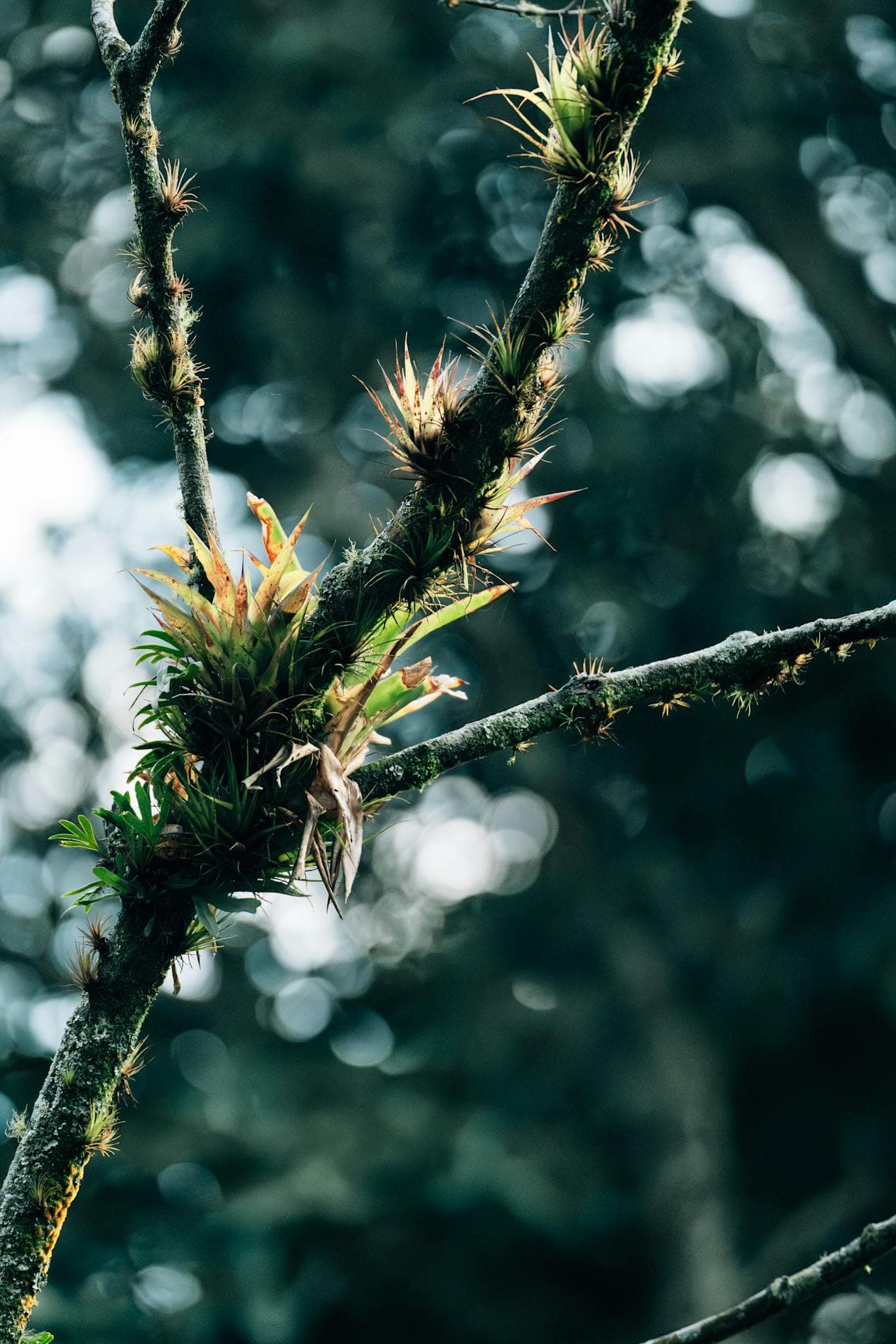
Air plants are epiphytes — they grow on other plants (usually tree branches) without being parasitic. In the wild, they're found from the southern United States through Mexico, Central America, and parts of South America. Instead of roots that absorb nutrients, they have specialized scales on their leaves called trichomes that pull moisture and nutrients straight from the air.
Because they don't need soil, you can display them almost anywhere — nestled in driftwood, mounted on cork, hanging in a glass globe, or simply sitting on a shelf. They're pet-safe, compact, and most species flower at least once in their lives before producing offsets ("pups") that carry on.
Caring for air plants in Alberta
Alberta's low humidity (often below 20% indoors in winter) and dramatic temperature swings create specific challenges. Here's how to keep air plants thriving through prairie winters and chinook-driven humidity crashes.
Watering
In our dry climate, soak air plants in room-temperature water for 20–30 minutes once a week. In mid-winter (when furnaces are running hard) bump this to twice weekly, or mist between soaks. Always shake off excess water and dry upside-down for a few hours — trapped water at the base is the #1 killer.
Light
Bright, indirect light. An east- or south-facing window filtered by a sheer curtain is ideal. In Alberta's long dark winters, a basic full-spectrum grow light for a few hours a day makes a noticeable difference in colour and flowering.
Air circulation
Air plants need to dry out within about 4 hours after watering or they rot. Keep them in rooms with moving air — avoid sealed terrariums. A small fan on low during soaks/drying is helpful in very still basement spaces.
Temperature
Happy between 10°C and 32°C. Keep them away from cold windowpanes in January and away from hot registers. A chinook that spikes indoor temperatures 10°C in an hour is fine; direct afternoon sun through a south window in summer can scorch them.
Feeding
Add bromeliad or air-plant fertilizer (¼ strength) to the soak water roughly once a month during spring and summer. Skip fertilizer in deep winter when growth slows.
Chinook alert
Chinooks can drop relative humidity to single digits within hours. If a chinook is rolling in and your plants were watered recently, they'll dry fast — consider an extra mist the next day. Wrinkled or curled leaves are the first sign of thirst.
Common varieties
A starter list of Tillandsia species commonly available in Canada and well-suited to Alberta's dry indoor climate.
Ionantha
EasyTillandsia ionantha
The classic starter air plant. Small, hardy, and blushes red-pink before blooming with purple flowers. Forgiving of beginner mistakes.
Xerographica
EasyTillandsia xerographica
The 'queen of air plants' — large silvery curled leaves forming a rosette. Extremely drought-tolerant, perfect for dry Alberta homes.
Caput-Medusae
EasyTillandsia caput-medusae
Snake-like twisting leaves. Tolerates neglect well and produces striking red-and-violet flower spikes.
Bulbosa
ModerateTillandsia bulbosa
Bulbous base with tentacle leaves. Prefers a bit more humidity — give it a bathroom or kitchen spot.
Stricta
EasyTillandsia stricta
Fast-growing with soft leaves and beautiful pink bracts. Clumps readily, producing offsets (pups).
Tectorum
ModerateTillandsia tectorum
Fuzzy white leaves from the high Andes. Loves bright light and very low humidity — well suited to Alberta winters.
Where to find air plants in Alberta
Local greenhouses & plant shops
Most larger garden centres in Edmonton and Calgary carry a small rotating selection of Tillandsia, especially in fall and winter when indoor plants move front-and-centre. Independent plant shops tend to carry more unusual varieties.
Browse nurseriesOnline specialty growers
For rarer varieties — xerographica, tectorum, or harrisii — Canadian online sellers ship across Alberta year-round (they pause during deep-freeze weeks). Look for sellers who use heat packs in winter shipments. We're compiling a list of trusted sources on our resources page.
See recommended resourcesPlant swaps & community
Air plants pup readily, and local plant groups (Edmonton Houseplant Club, Calgary Plant Trade groups on Facebook) are great places to pick up healthy offsets cheaply or for trade — often with care advice from someone who's already grown it in Alberta.
Grow air plants in Alberta?
We're building out this section with photos, care stories, and local sourcing notes from Alberta growers. If you have a thriving collection or a variety we haven't covered, we'd love to hear from you.
Contribute to this guide