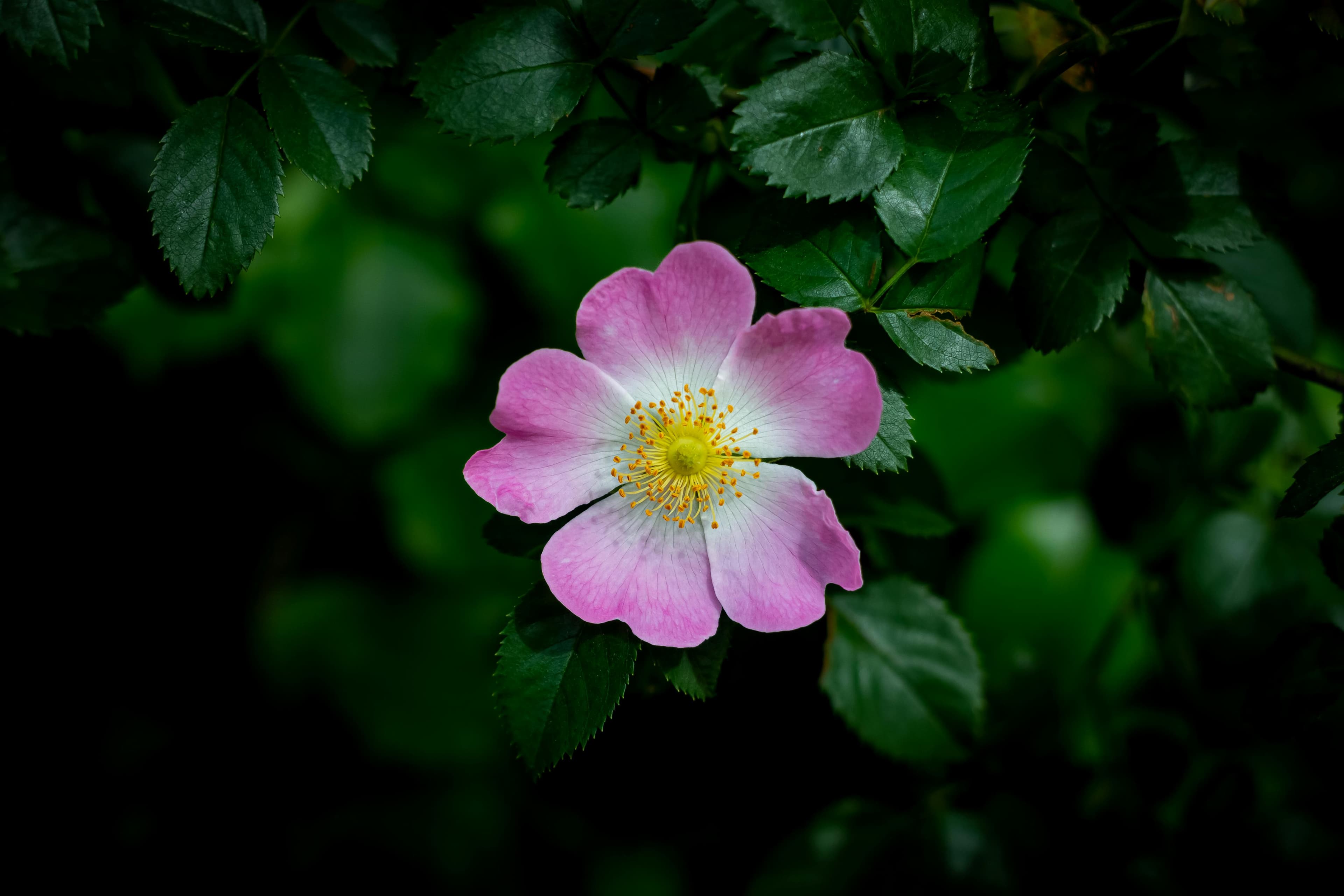
The Name
“In Plains Cree, okiniy names the rosehip — the fruit — not the flower. The Cree saw past the bloom to what endures.”
Indigenous Knowledge
okiniy
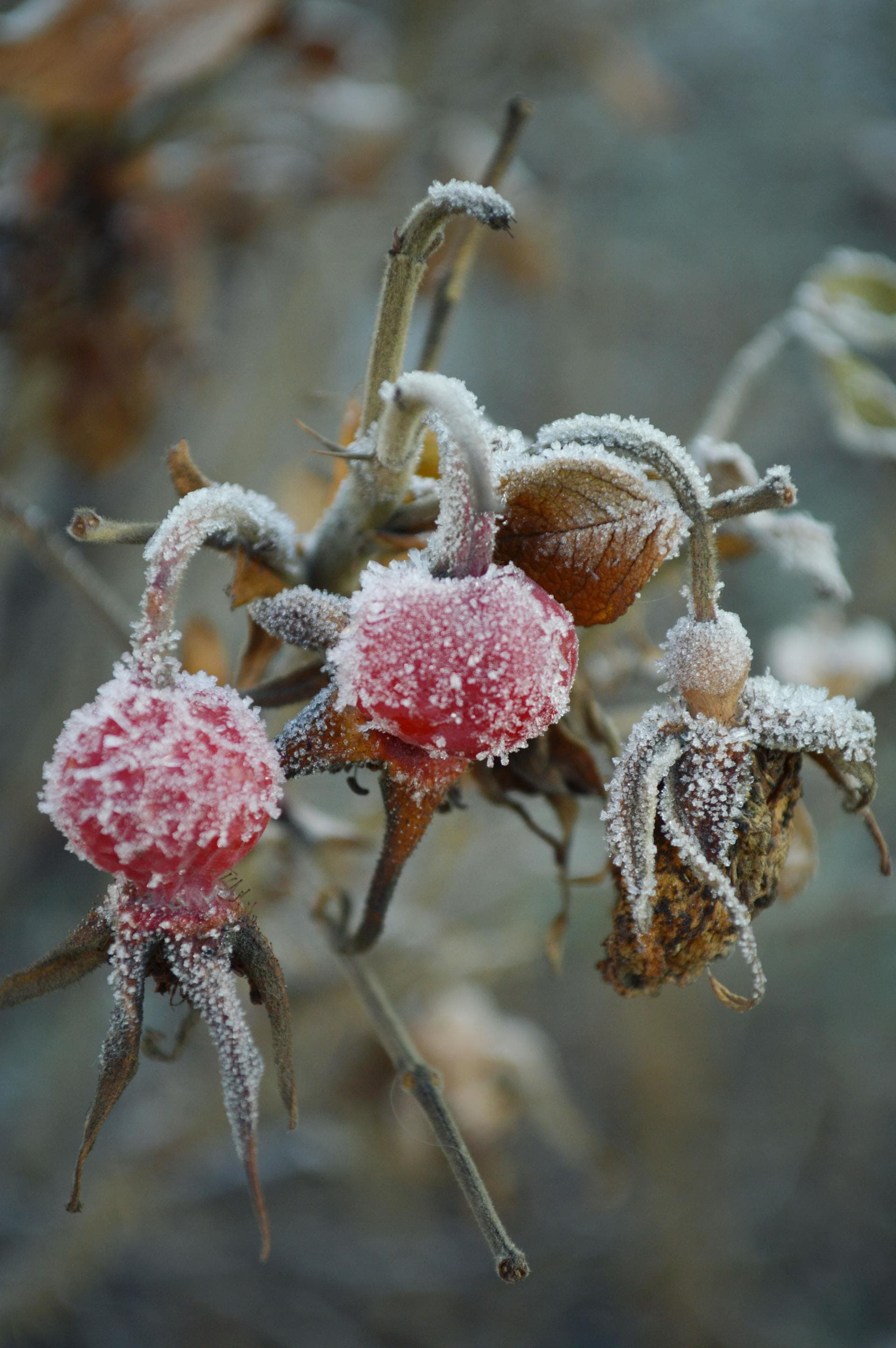
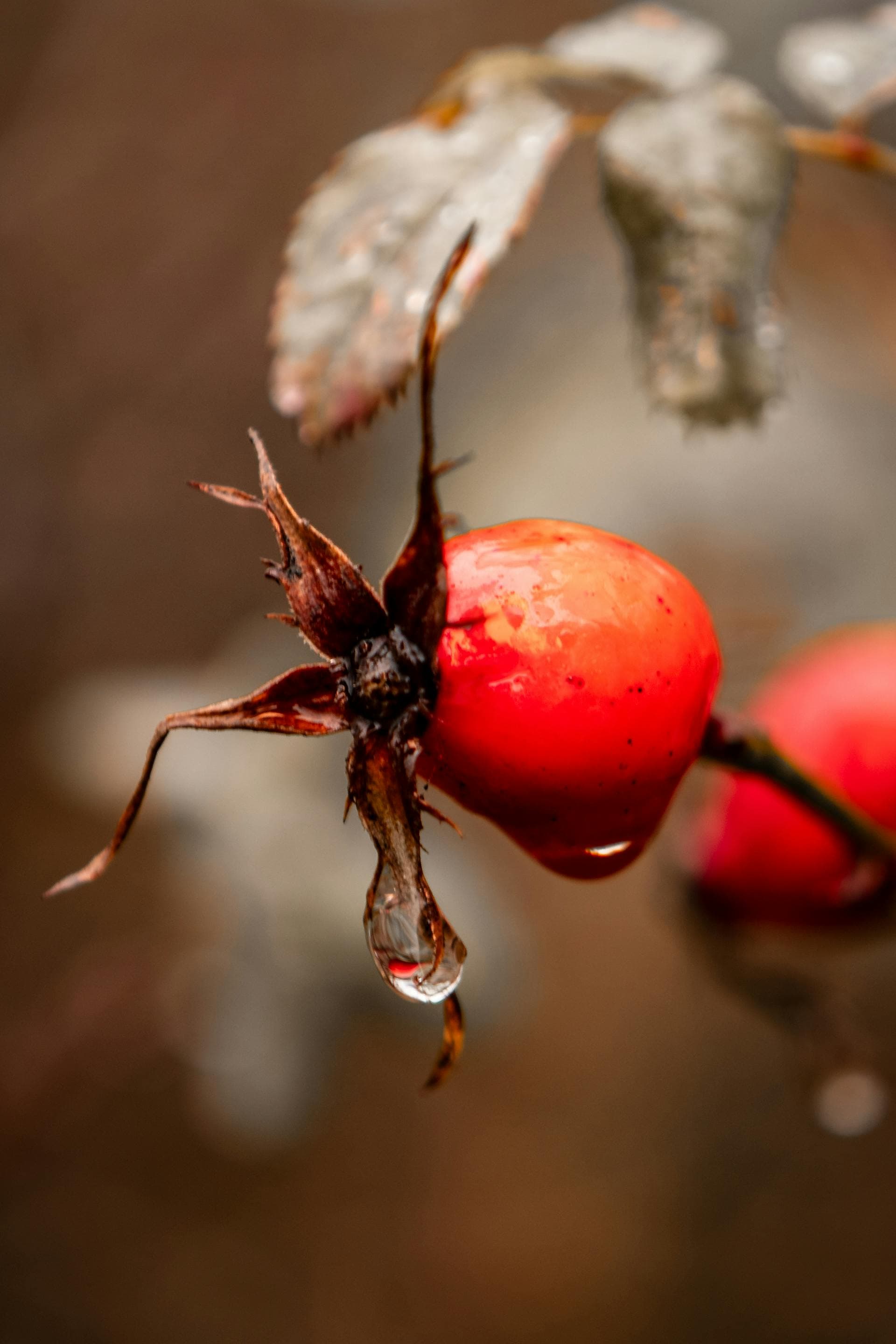
The Cree name okiniy — recorded in the Alberta Elders’ Cree Dictionary by Nancy LeClaire and George Cardinal — names the rosehip, the hard red fruit that remains when the petals fall. The Cree named what nourishes.
A single cup of rosehips holds more vitamin C than an orange. Long before vitamins had names, Cree people dried okiniy in autumn and stored them against winter — boiled into broths, mashed into pemmican for long journeys, kept as medicine.
- ◆
Soft petals lined cradleboards for newborns
- ◆
Rose motifs in beadwork marked coming-of-age garments
- ◆
Thorny canes used to guard sacred bundles
- ◆
Rosehips dried and stored for winter nutrition and medicine
- ◆
Petals and hips both edible teas, broths, and pemmican
1930
How children chose Alberta’s flower
In 1930, the Alberta government sent a ballot to every school in the province. Not to politicians. Not to botanists. To children.
The wild rose won. The plant that had grown in this land for ten thousand years — long before there was a province to name it — was chosen by the youngest Albertans.
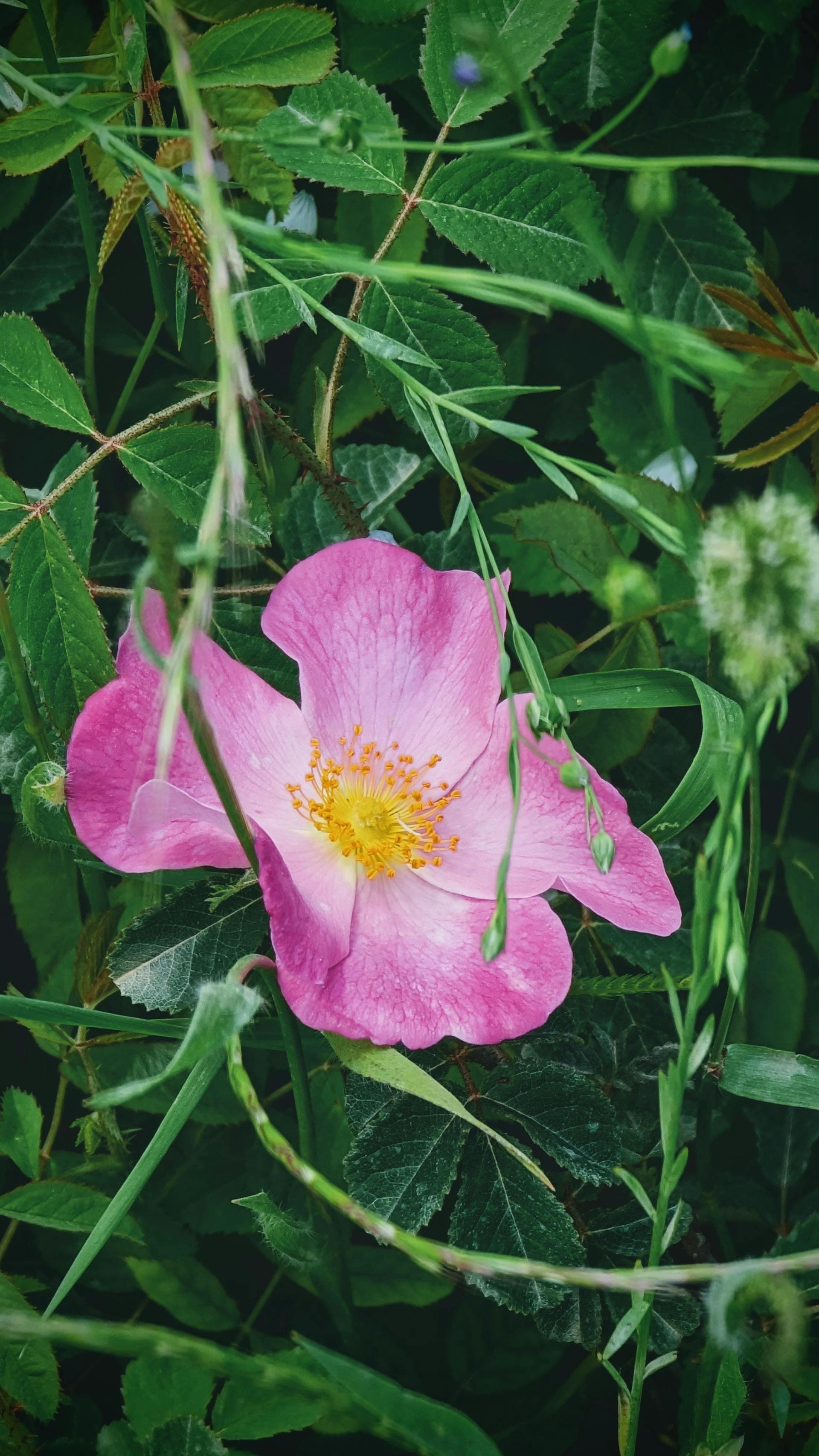
Rosa acicularis — growing in Alberta for ~10,000 years
Britain, 1941–45
When a hedgerow saved children from scurvy
German U-boats cut Britain’s supply of citrus fruits. With scurvy threatening civilians — especially children — the government turned to the hedgerows. The rose had been there all along. Volunteers, schoolchildren included, fanned out across the countryside to harvest it.
More than five hundred tons of rosehips were collected per year. Two and a half million bottles of rosehip syrup were produced — and distributed free to the children of Britain.
Biology
Prickles, not thorns
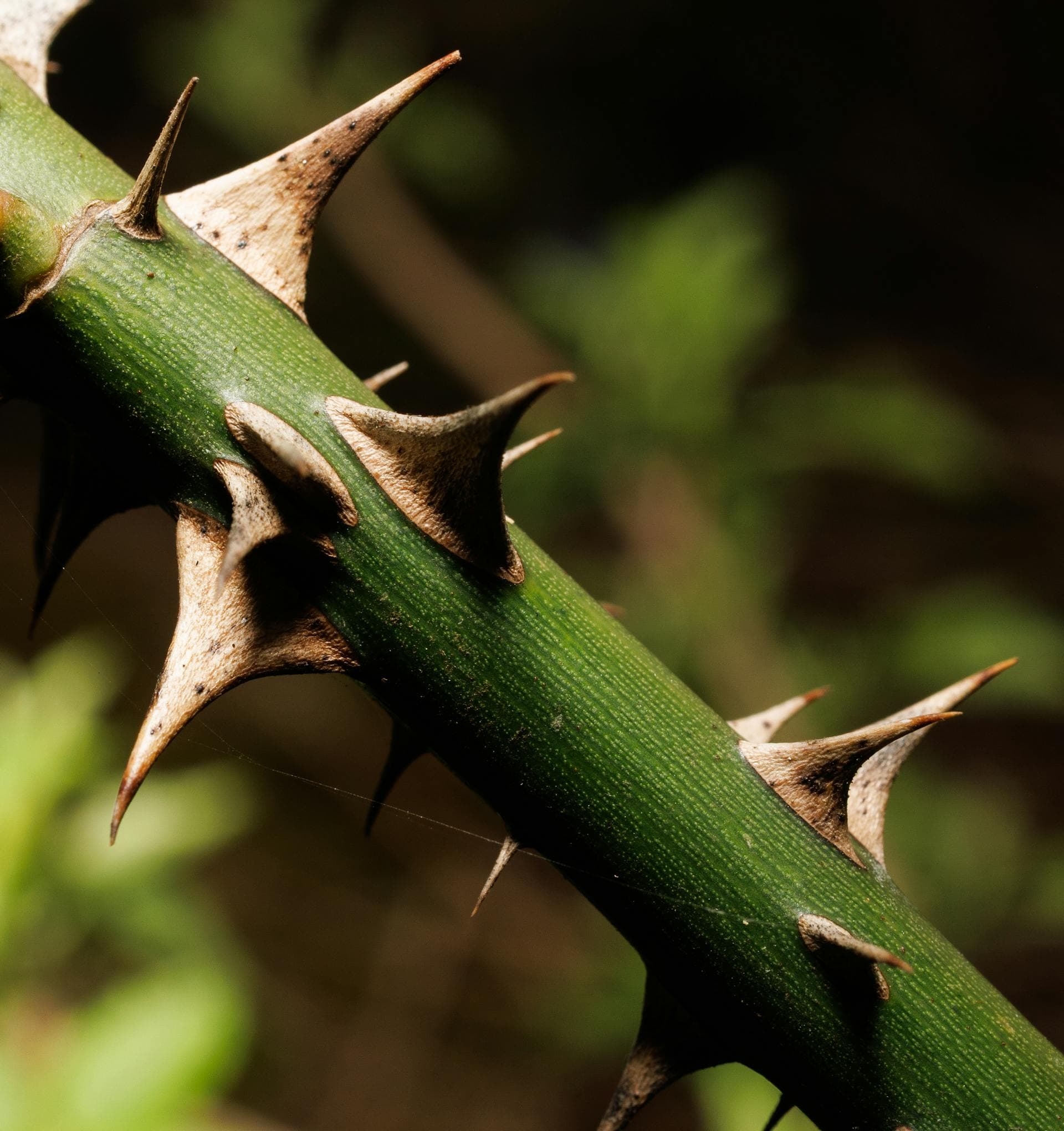
A small distinction
The spines on a rose are prickles — not thorns. Thorns grow from wood and cannot be snapped off cleanly. Prickles grow from bark and break away without tearing the stem.
What the name means
Acicularis is Latin for "needle-like" — the needle rose. The name describes the densely packed, fine prickles covering the canes, distinct from the paired thorns of other rose species.
Underground colonies
Wild rose spreads by rhizome. A single "patch" may be one organism, connected underground, potentially over 100 years old. What looks like many plants may be one.
Five is the rule
Rosa acicularis always has exactly 5 petals. It belongs to the Rosaceae family — the same family as apples, pears, strawberries, and almonds. All share this five-pointed symmetry.
The Strange
A world inside a growth
Itching powder
The seeds inside a rosehip are coated in fine silica hairs. Contact with skin causes intense, maddening itching. British children in the 1940s collected dried seeds and used them as prank itching powder — the same children whose wartime vitamin C came from the very same plant.
Robin’s pincushion
A gall wasp called Diplolepis rosae lays its eggs in rose tissue. The plant grows a dense, moss-like bedeguar gall in response. Inside: wasp larvae. Also inside: five or more parasitic species feeding on the wasps. A complete food web balanced on a single gall the size of a ping-pong ball.
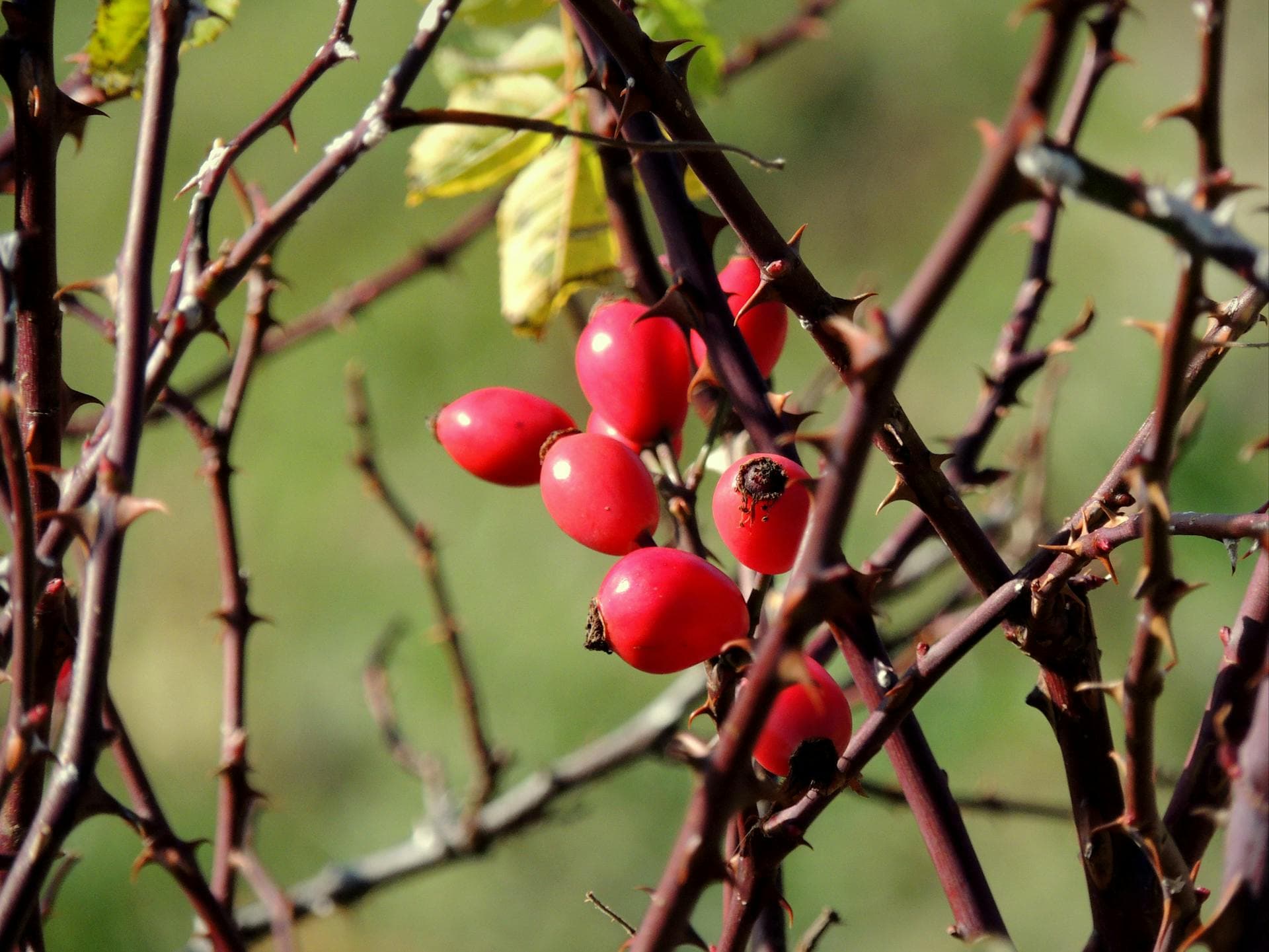
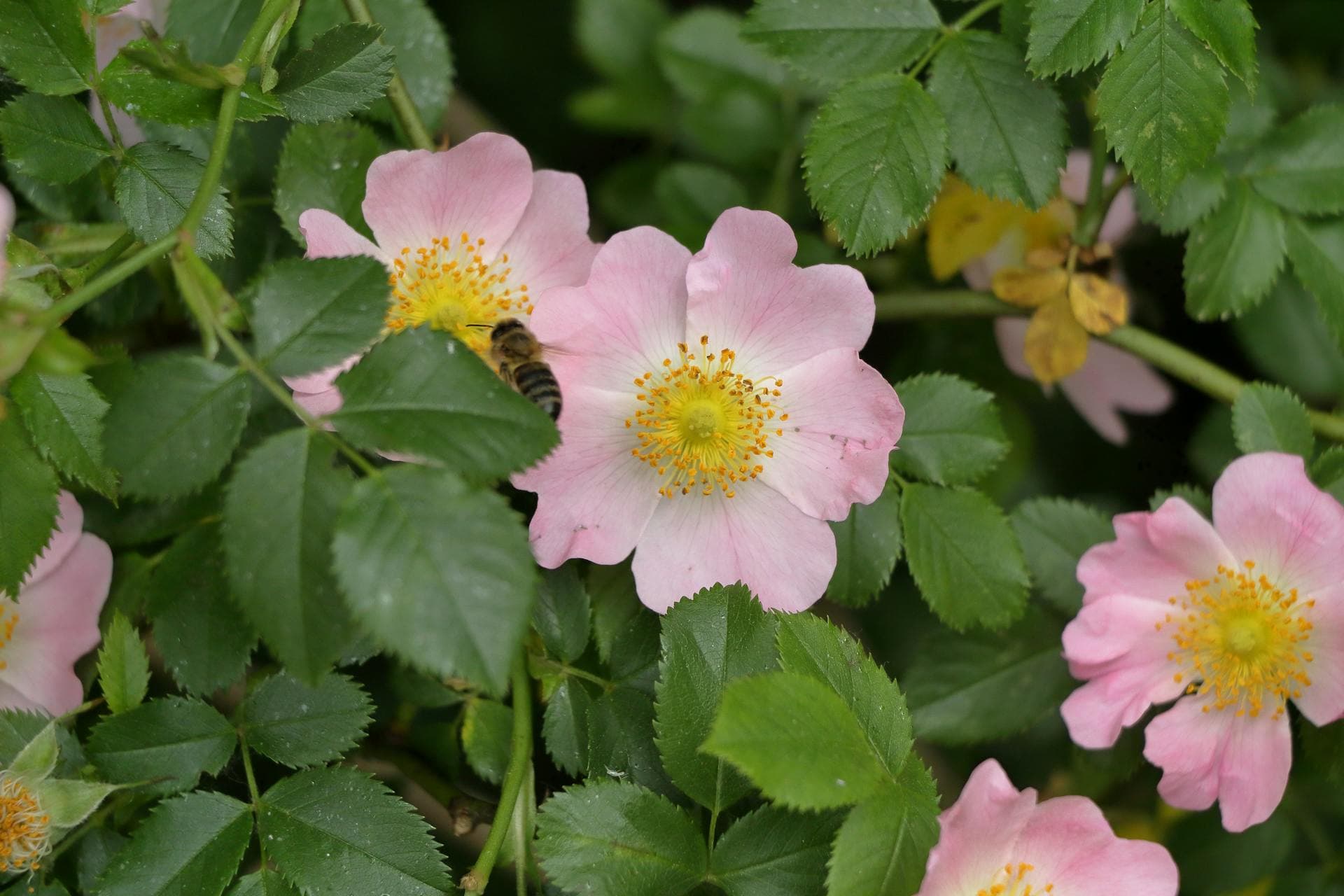
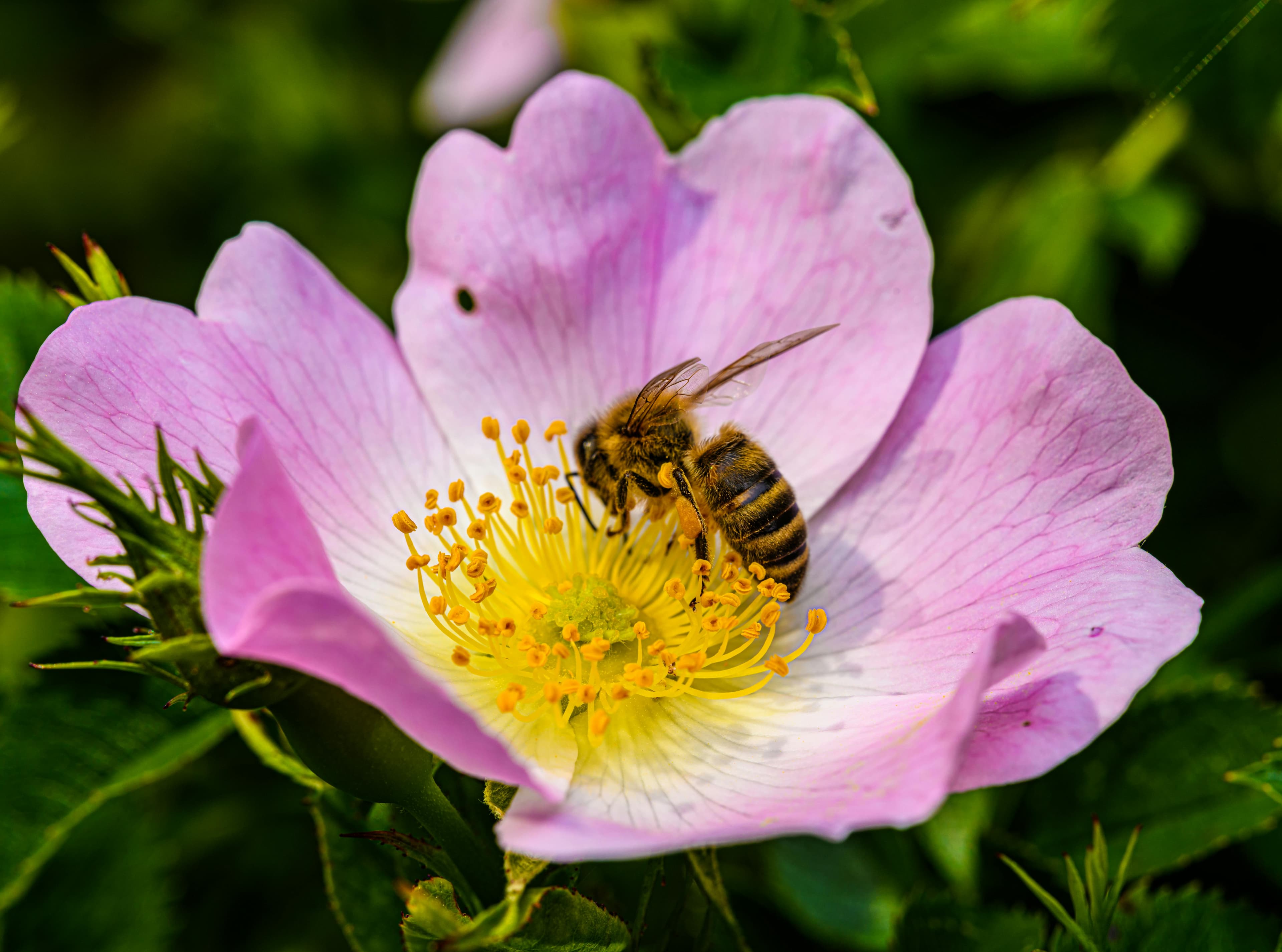
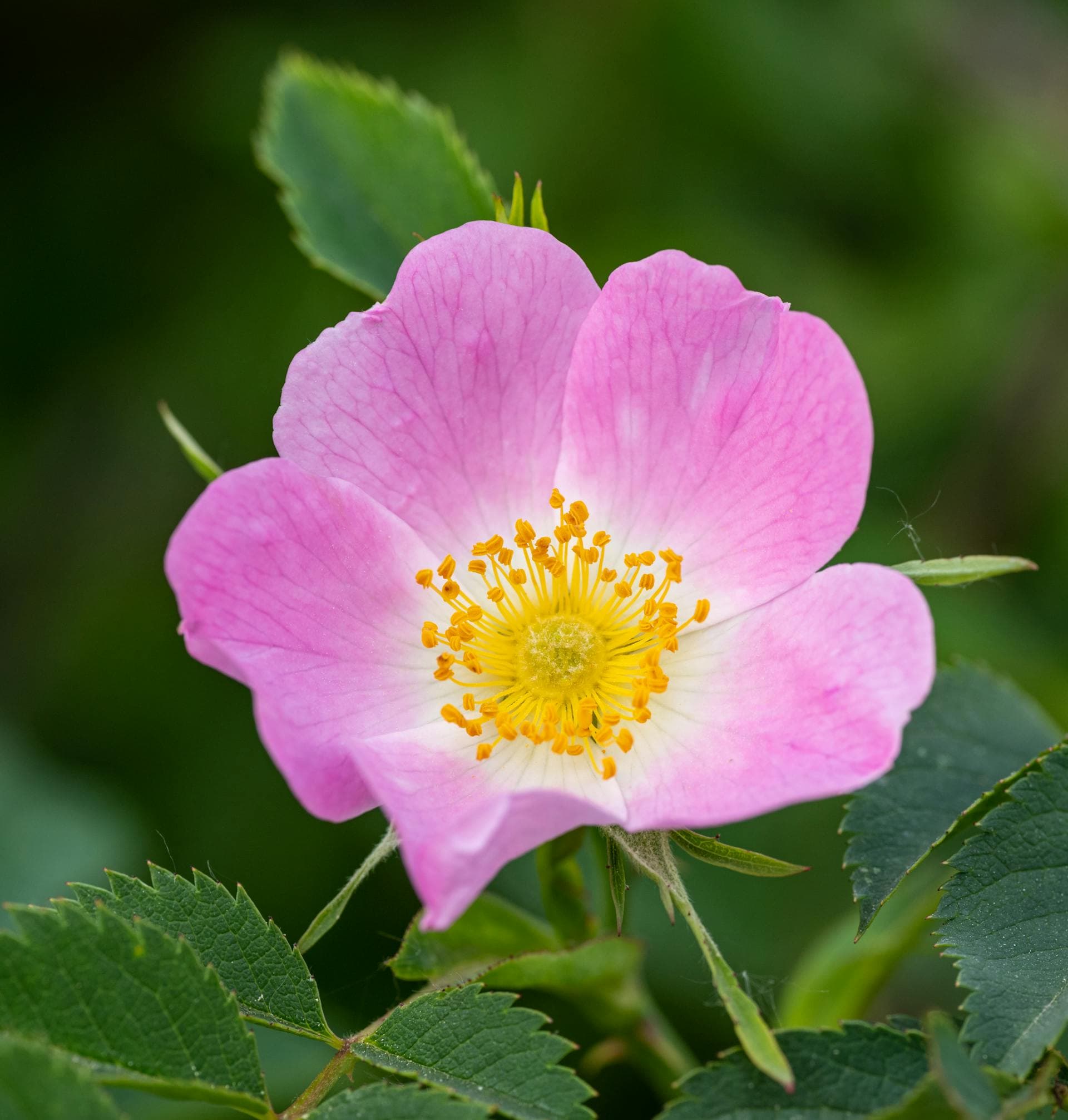
Photo: Petr Ganaj / Pexels
❤️ Mum, whose favourite plant is the Rose,
and who taught me most of what I know
about the green world.