Before the ground was ready
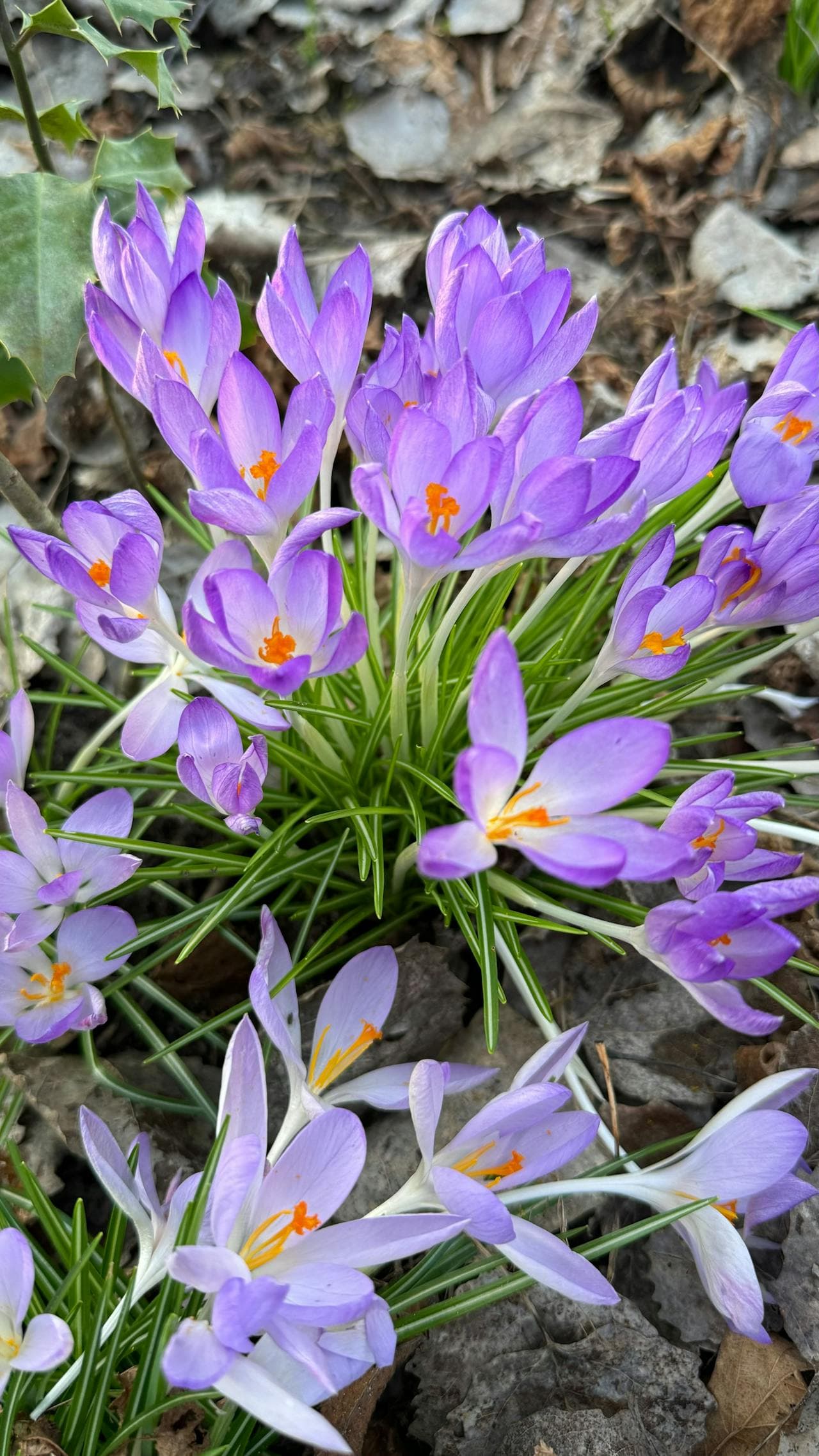
The prairie is still frozen when this flower opens. It appears in south-facing coulees, on ridge tops that catch the earliest sun, sometimes with snow still lying at its base. Its stems and buds are covered in fine silver hairs, a fur coat against the last cold nights.
It flowers at air temperatures that would kill everything else that grows here. Its first bloom is not celebrated in gardens. It is watched for.
The name is a beating
Three cultures have named this flower. None of the names describe how it looks. All of them describe what it does.
Pulsatilla
Latin
“Little beater,” from pulsare, to strike or pulse. The wind moves the flower, and the flower moves back.
Anemone
Greek
“Wind flower.” The plant that opens when the wind changes.
Pasque
Old French
“Easter.” The flower that arrives at the resurrection, on the calendar the church kept.
The flower has no name that describes its colour or its shape. Every name it has is a name for time.
The plant that was the calendar
Across the northern plains, communities watched for it. Its opening was the signal that winter had truly ended, that the ground could be trusted, that the spring hunt could begin. Where it grew, the year was measured by it.
The Cree name sipihkopiyak names the plant among the earliest signs that spring has returned to the grasslands. Similar seasonal significance is broadly documented across other Northern Plains peoples: the flower was a shared clock, understood without translation.
A shared clock
For as long as anyone has lived on this land, prairie crocus has been the first mark on the calendar.
The little solar oven
Here is the flower’s least-known trick.
The bowl of a prairie crocus is not simply pretty. It is a parabolic solar collector. The petals curve around the reproductive centre, focusing sunlight downward and inward. All morning the flower has been catching the sun in this bowl, and the reward is heat.
On a March morning in Alberta, this trick is life-changing. Bees and flies still cold and slow with the season fly to prairie crocus not only for pollen but to warm up in the bowl before they can go anywhere else. The flower feeds them heat.
+0°C
Interior temperature above ambient air
Documented in field studies of Pulsatilla and related early-spring flowers with parabolic corollas.
Come sit in my heater. I will dust you with pollen while you thaw.
The paradox of the medicine
This is a plant with a warning.
Every part of a fresh prairie crocus is poisonous. It contains protoanemonin, a compound that blisters skin and burns any mouth that meets it. Livestock avoid it. The plant that returns life to the prairie in spring cannot itself be eaten.
But wait.
When the plant is dried, protoanemonin degrades into anemonin, a much milder compound. In dried form, prairie crocus has been used across cultures as a sedative and antispasmodic. Where it appears in traditional medicine, it is always after time has done its work.
Even the medicine has a clock.
A vote in Manitoba, 1906
In 1906, Manitoba’s provincial government sent a ballot to every school in the province. The question: what should the province’s flower be? The children voted, and the prairie crocus won.
South Dakota had done it first, in 1903. Manitoba followed three years later. Alberta held the same kind of ballot in 1930 and picked the wild rose instead. Prairie crocus was already taken.
And yet it grows in Alberta more openly than anywhere else in the province’s spring: on ridges and coulees from the southern grassland to the aspen parkland north of Edmonton. Alberta’s calendar begins with a flower Alberta never named.
0
South Dakota adopts prairie crocus
0
Manitoba, by ballot of schoolchildren
0
Alberta’s ballot picks the wild rose
The disappearing signal
This clock is running down.
Prairie crocus does not tolerate disturbed ground. Its deep taproot cannot be transplanted. It reproduces slowly, sometimes three to four years from seed to first bloom, and never in newly cultivated soil. Everywhere the prairie has been broken, prairie crocus has been lost.
What is left grows on ridges too rocky to plough, on coulee slopes too steep to work, in the fragments of grassland that have not yet been touched. Do not pick them. Do not dig them. Watch for them, count them, remember them.
The plant that once told the whole prairie the year was beginning is now watching to see whether we can keep the year.