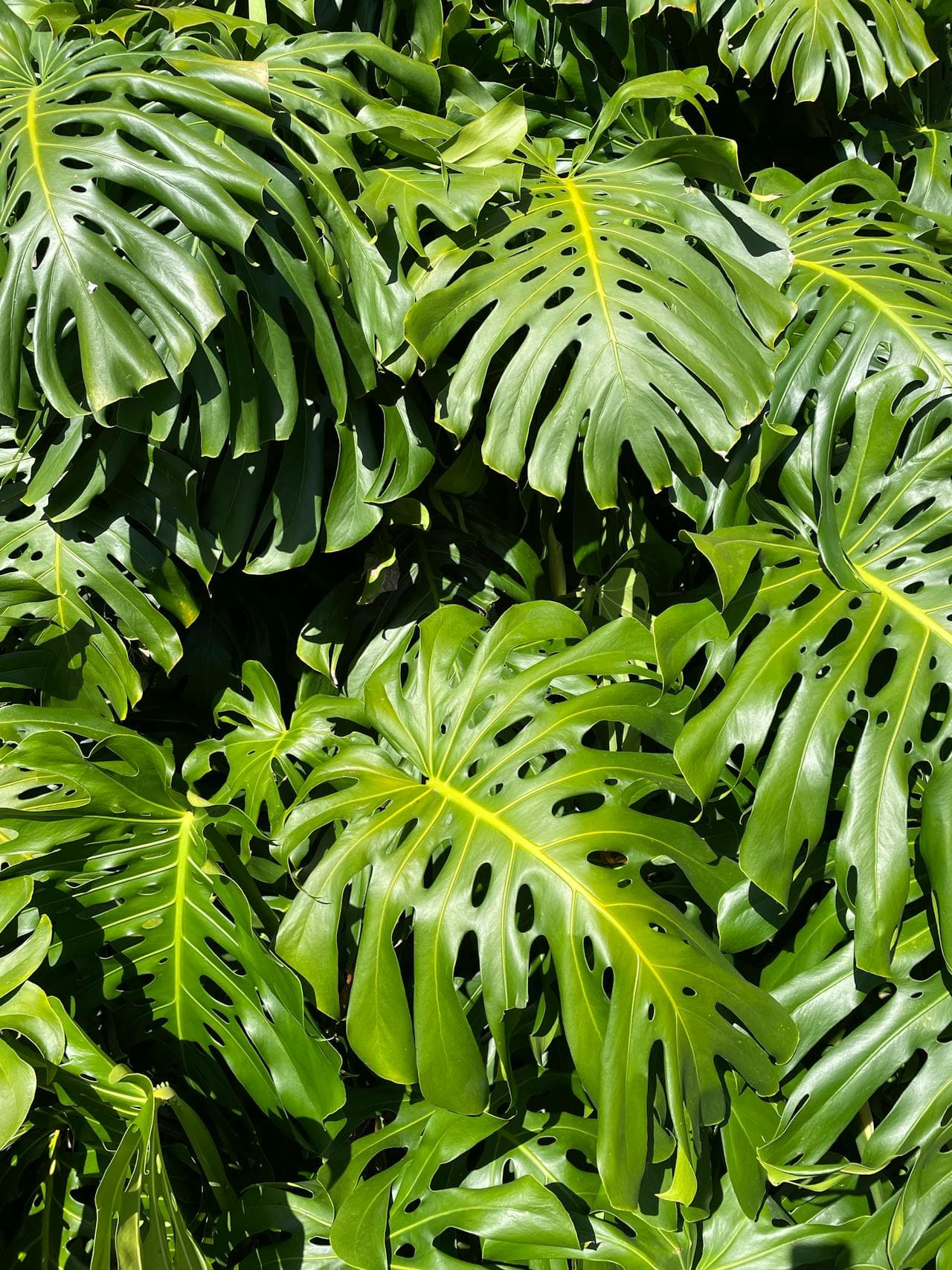
Monstera Care Guide: Everything You Need to Know
Quick Care Summary
The monstera deliciosais everywhere right now — and for good reason. It's dramatic, fast-growing, and surprisingly forgiving. But “easy” doesn't mean “no care required.” If your monstera isn't thriving, one of the basics is probably off.
This guide covers everything: the right light, how to water correctly, what soil to use, and how to fix the most common problems.
What Is a Monstera Deliciosa?
The monstera deliciosa — sometimes called the split-leaf philodendron, though it's not actually a philodendron — is a tropical climbing vine native to the rainforests of Central and South America. In the wild, it scrambles up trees toward the canopy, sending out aerial roots to anchor itself.
The iconic split leaves, called fenestrations, develop as the plant matures and receives adequate light. Young monsteras often have solid, unsplit leaves — the holes come later.
Monstera Light Requirements
Best: Bright, indirect light — a few feet back from a south or east-facing window.
Tolerates: Medium indirect light, though growth will slow noticeably.
Avoid: Direct sun (it scorches the leaves) and deep shade (leaves stay small and unsplit).
In Canada, south-facing windows are your best bet for year-round growth. During winter when daylight is short, you can supplement with a grow light — full-spectrum LED grow lights work well and don't need to run all day. Four to six hours is usually enough.
Pro tip: Rotate your monstera a quarter turn every few weeks so all sides get equal light. Otherwise it leans dramatically toward the window.
How to Water a Monstera
The rule: Water when the top 2–3 inches of soil are dry.
Stick your finger into the soil up to the second knuckle. If it feels dry at that depth, water thoroughly until it drains out the bottom. Then let it dry again before the next watering.
In summer: Typically every 7–10 days. In winter: Back off to every 14–21 days as growth slows.
The most common monstera mistake is overwatering. Soggy soil causes root rot, which is hard to reverse. When in doubt, wait another few days.
Signs of overwatering: Yellow leaves, mushy stem at the base, soil that stays wet for weeks.
Signs of underwatering: Drooping leaves, dry and curling leaf edges, very dry soil pulling away from pot edges.
Best Soil for Monstera
Monsteras need well-draining soil. Standard potting mix alone tends to compact and hold too much moisture. A good mix: 2 parts standard potting soil + 1 part perlite. The perlite keeps things aerated and prevents waterlogging. You can also add a small amount of orchid bark for extra drainage.
Repot when you see roots circling the bottom or poking out the drainage holes — usually every 1–2 years, stepping up one pot size at a time.
Humidity and Temperature
Monsteras are tropical, so they prefer humidity. They'll survive in typical household humidity (30–50%), but they thrive at 60%+.
In Alberta, winter air is particularly dry — forced-air heating drops indoor humidity significantly. A small humidifier near your monstera makes a real difference, especially from November through March. See our winter humidity guide for more strategies.
Temperature:Keep it above 15°C (60°F). Monsteras don't like cold drafts from windows or doors. In Edmonton, keep them away from exterior walls in winter.
Fertilizing
Feed once a month during spring and summer with a balanced liquid fertilizer (10-10-10 or similar). Stop fertilizing in fall and winter when growth naturally slows. Less is more — over-fertilizing causes salt buildup in the soil, which damages roots.
Common Monstera Problems
Yellow leaves
Usually overwatering. Check that your soil is draining well and you're not watering before it dries out. Occasionally caused by too little light.
Brown edges or tips
Low humidity or underwatering. Try a humidifier. Check that you're not letting it go bone dry between waterings.
No fenestrations (split leaves)
The plant isn't getting enough light, or it's still young. Move it closer to a window and be patient — splits appear on mature leaves.
Drooping leaves
Almost always underwatering. Water thoroughly and it should perk back up within a day.
Leggy growth with small leaves
Not enough light. Move it somewhere brighter.
Does Your Monstera Need a Moss Pole?
In the wild, monsteras climb. Given a moss pole or trellis to attach to, they'll grow larger leaves and develop fenestrations faster. It's not required, but if you want a truly impressive plant, it's worth the investment.
Found this useful? Share it with someone who'd enjoy it.
Want to learn more?
Explore more plant care guides or find a nursery near you.
More plant care guides
Newsletter — early list
Get on the early list
We're putting together a slow, seasonal newsletter for prairie plant lovers. Drop your email and we'll send the first issue when it goes out. No filler, easy out.
Get on the list