Harvesting Saskatoon Berries: Timing, Picking & Processing
Quick Care Summary
Saskatoon berries (Amelanchier alnifolia) ripen all at once across Alberta — the picking window is two or three weeks long, and birds will help you finish faster than you’d like. Knowing the exact day a bush is ready, picking efficiently, and processing the same day are the difference between a freezer that holds you through to the next summer and a pile of mushy purple stains in the bottom of your bucket.
When are they ripe
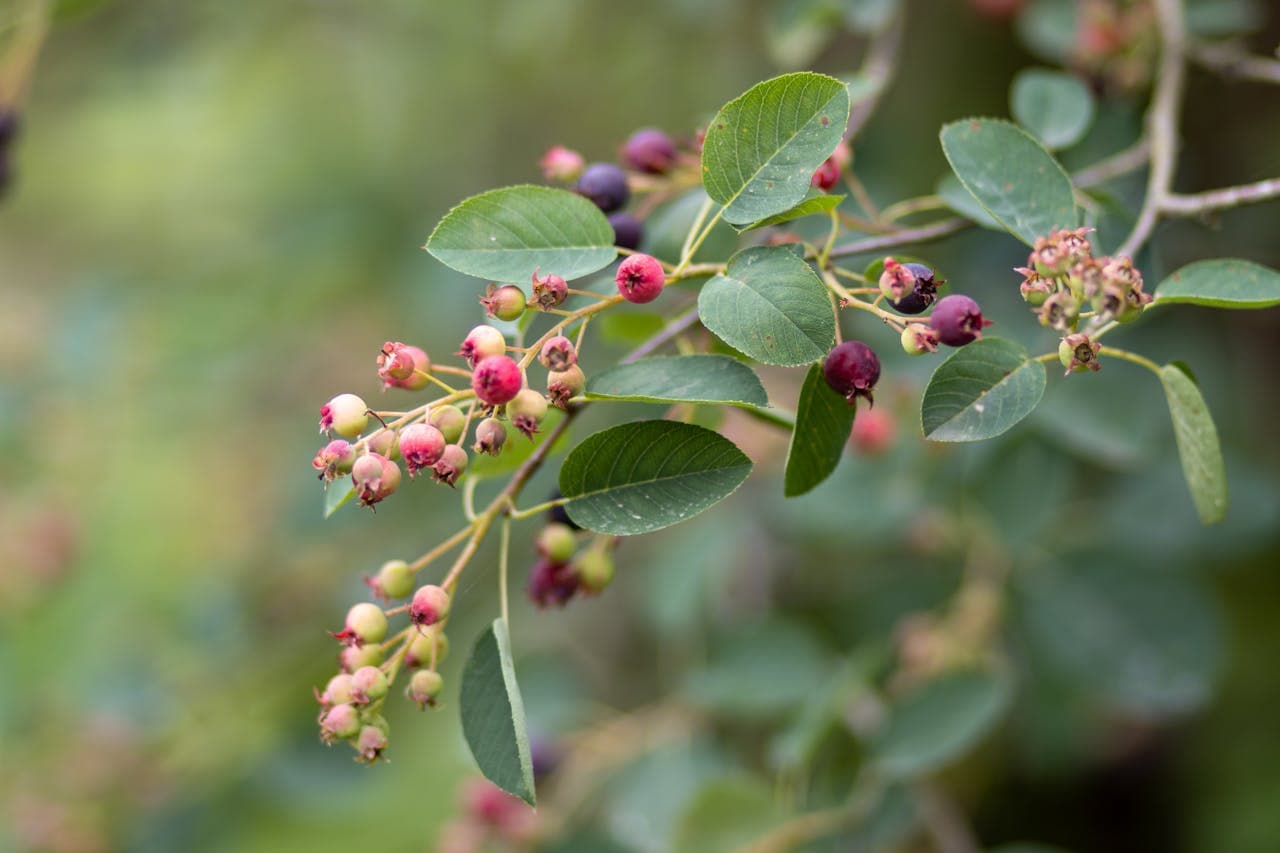
Saskatoons ripen through three colour stages: pink, then red, then deep purple-black with a slight whitish bloom on the skin. Only the third stage is ready. Reds and pinks taste sour and tannic; the purple-black are sweet and complex.
A whole bush ripens within about a week. Test by tasting one or two from the centre of the cluster — the centre ripens first. Outer berries follow over the next 5–7 days. By the time the outer berries are perfect, the inner ones are softening; that’s your harvest day.
In Edmonton, this is usually the first week of July. Southern Alberta runs 7–10 days earlier, the north 7–10 days later. Watch the bushes daily once you see the first colour change.
The bird problem
Cedar waxwings, robins, and chickadees love saskatoons as much as you do. A bush you were planning to pick on Saturday morning can be 30% lighter by the time you arrive if waxwings descended Friday evening. Two defences:
- Bird netting draped over the bush a week before harvest. Anchor at the bottom so birds can’t crawl underneath. Remove and store dry — same netting lasts 5–10 years.
- Pick early in the day, every day through the ripening week. Birds are most active mid-morning to early afternoon; first-thing-in-the-morning pickers beat them to the best fruit.
How to pick efficiently
A standard household saskatoon-bush yields 3–8 kg of berries depending on age. Picking takes 1–2 hours per bush. A few tricks for speed:
- Use a wide-mouthed container that hooks to your belt or hangs from your neck — both hands free.
- Strip whole clusters into your palm rather than picking single berries; you’ll sort later. Ripe berries release at a touch; underripe berries hang on, which is the easiest field-sort there is.
- Don’t pile berries deeper than 8 cm in a container — the bottom layer crushes from the weight above.
- Move from inner branches outward as the season progresses (inner ripens first).
Process the same day
Saskatoons turn from perfect to fermented in 24–36 hours at room temperature. Process them the day you pick or refrigerate immediately for next-morning processing.
Sort first — pick out leaves, twigs, and any reddish (underripe) or shriveled (overripe) berries. Don’t wash before storage; surface moisture causes mould. Wash just before using.
Preservation methods, ranked
- Frozen whole on a tray (best). Spread sorted dry berries in a single layer on a baking sheet, freeze 2–3 hours, then transfer to freezer bags or jars. They stay separate (don’t freeze into a single block) and keep 12 months. Best texture for pies, baking, and oatmeal.
- Saskatoon jam. The traditional Prairie use. Saskatoons are low in pectin — combine with rhubarb (high pectin, in season at the same time) for jam that sets without commercial pectin.
- Saskatoon pie filling. Cooked filling frozen in pie-shaped portions. A bit of work upfront pays off in winter.
- Dried. Dehydrate at 50–55°C for 12–18 hours until leathery. Use in baking like raisins. Lose some flavour but store at room temp for a year.
- Saskatoon wine or syrup. Specialty uses; reach for these only after the freezer is full.
Picking from public bushes
Saskatoons are abundant in Alberta’s natural areas and along creek banks. Picking is generally allowed in provincial parks for personal use (not commercial), but always check current regulations. National parks have stricter rules — usually no picking. Edmonton’s river valley has heavy stands; you’ll often find serviceberry-eating squirrels and birds well ahead of you.
Found this useful? Share it with someone who'd enjoy it.
Want to learn more?
Explore more plant care guides or find a nursery near you.
More plant care guides
Newsletter — early list
Get on the early list
We're putting together a slow, seasonal newsletter for prairie plant lovers. Drop your email and we'll send the first issue when it goes out. No filler, easy out.
Get on the list