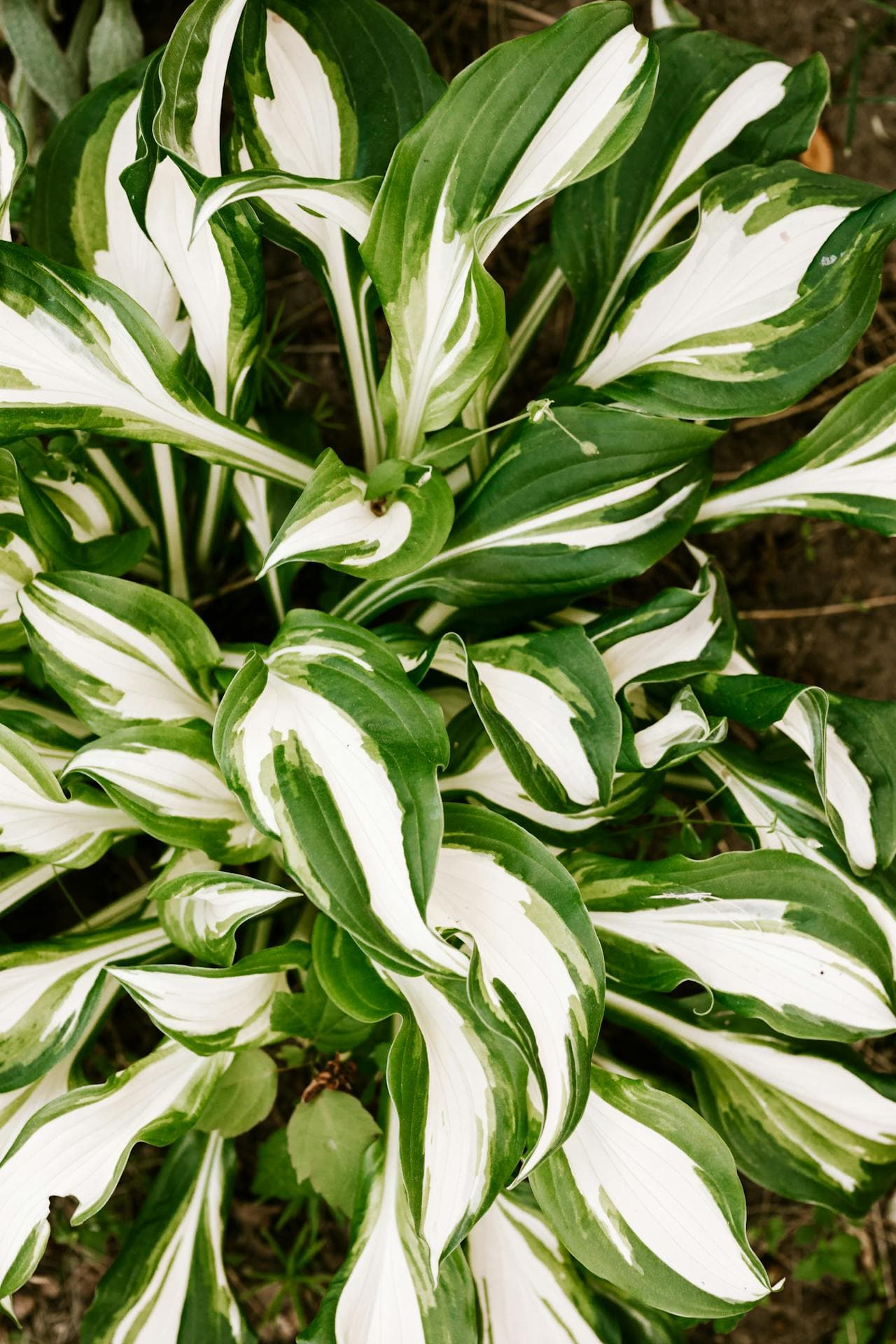
Hosta
Hosta spp.
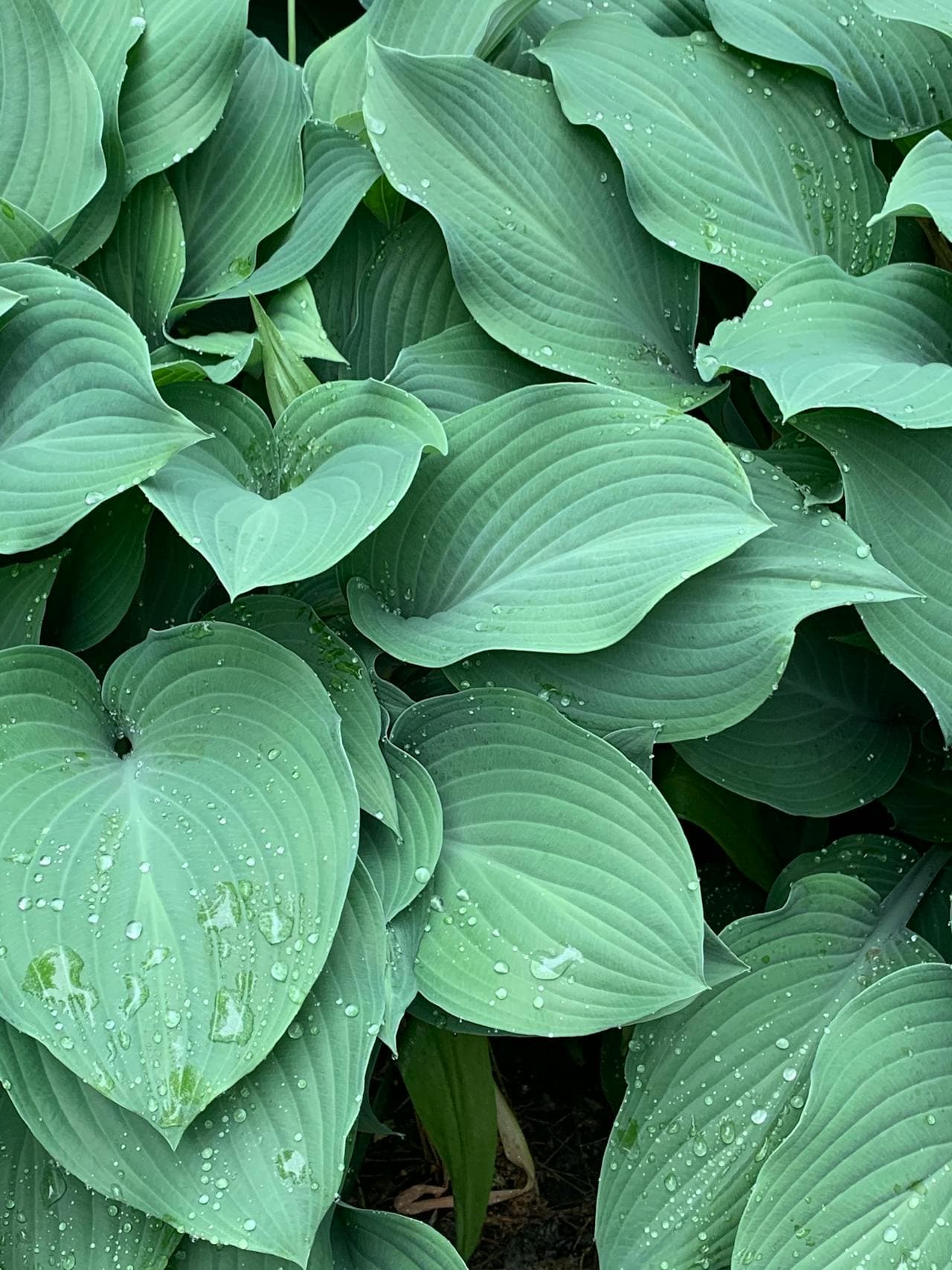
Hostas are the workhorse perennial for shady prairie yards: grown for their bold foliage in green, blue-green, gold, chartreuse, and dozens of variegated patterns, with summer flower scapes in white or lavender as a secondary feature. Hardy across Alberta to Zone 2 or 3 depending on cultivar. Originally from East Asia (Japan, Korea, China), hostas have been bred for over a century into thousands of named cultivars ranging from miniatures (10 cm tall, 'Blue Mouse Ears', 'Pandora's Box') to true giants (1.2 m tall, 'Empress Wu', 'Sum and Substance'). The classic Edmonton site is the north or east side of a building under high tree shade. Hostas in full prairie sun bleach and scorch, especially the blue-leaved cultivars; site them where they get morning sun and afternoon shade at most. Slugs are the most common pest; copper barriers, beer traps, and overnight slug-bait granules all work. Deer love hostas, so if you garden in an acreage or neighbourhood with regular deer pressure, consider Alocasia, Brunnera, or ferns instead. Cat owners take note: hostas are toxic to dogs, cats, and horses.
Quick Facts
Distribution
Garden perennial. Original species native to East Asia. Hardy across Alberta (Zone 2 to 3 depending on cultivar).
Light
Part to full shade. A few sun-tolerant cultivars (yellow-leaved 'Sum and Substance', 'August Moon') accept morning sun; blue-leaved cultivars scorch in afternoon sun.
Bloom Time
July through August
Soil
Rich, moisture-retentive, well-drained loam with high organic content. Mulch annually with compost or leaf mould.
Water
Moderate to high. Consistent moisture through the growing season; hostas wilt visibly in dry spells.
Growing & Cultivation
Best Planting Time
Spring (early May through June) or early fall.
Propagation
Division of mature clumps in early spring as eyes emerge. Slice through the crown vertically with a sharp spade, making sure each division has eyes and roots. Tissue culture is the commercial standard for new cultivars.
Pruning / Splitting
Cut scapes after bloom (or earlier if you prefer foliage-only). Cut foliage to the ground after killing frost; spent foliage harbours slugs over winter.
Spacing
Highly variable by cultivar: miniatures at 20 cm, mid-sized at 60 cm, giants at 1.2 m. Check the mature width of your specific cultivar.