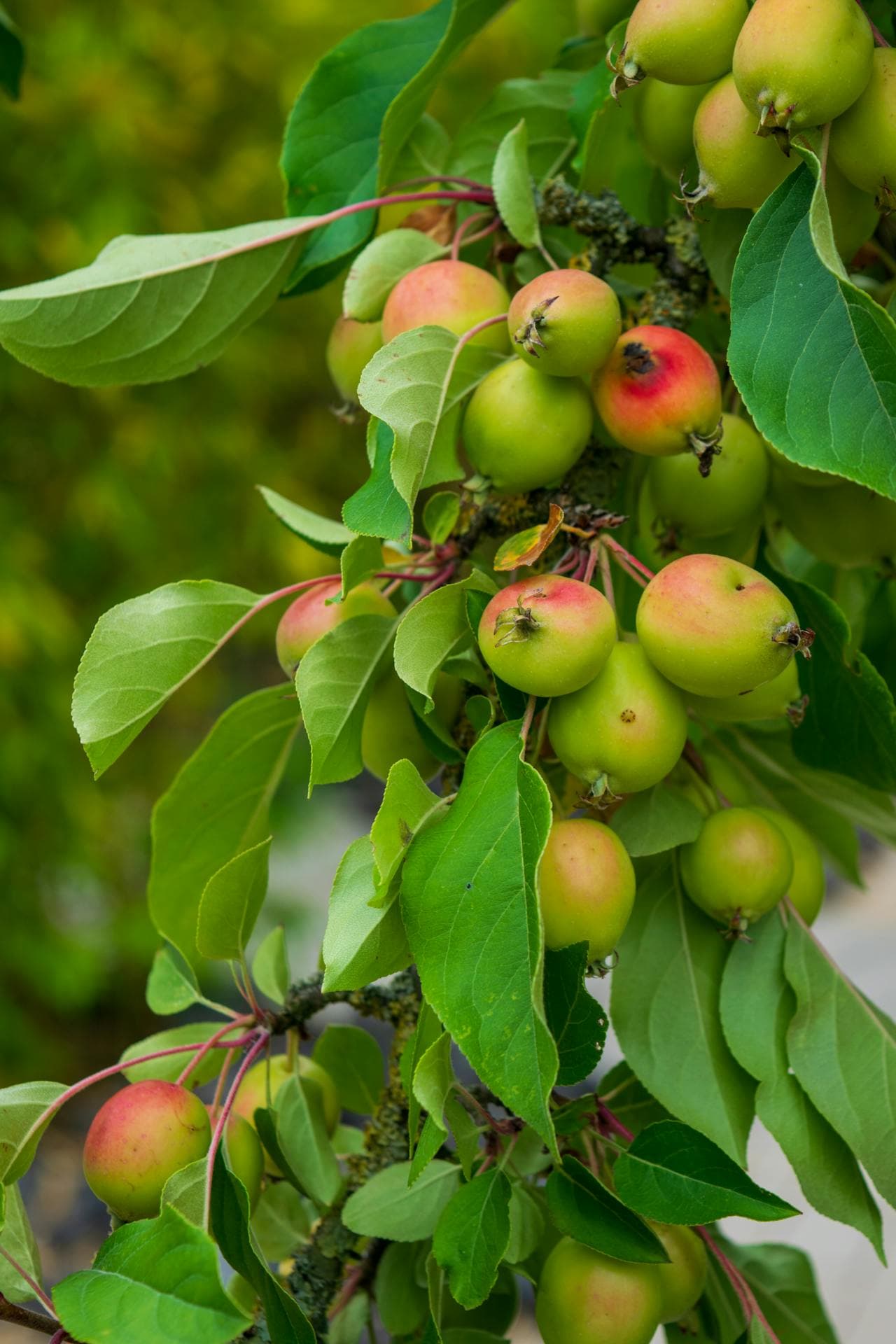
Harvesting Apples & Crabapples in Alberta
Quick Care Summary
A backyard apple tree in Alberta produces 50–200 kg of fruit in a good year. Harvest is concentrated into a few weeks in late September and October, and the difference between picking at the right moment and picking a week early is whether the apples are crisp or starchy. Knowing how to pick without damaging the tree, and what to do with three bushels you didn’t plan on, is most of the work.
When are they ripe
Three tests, applied together:
- The lift-and-twist test: Cup a fruit, lift gently, give a slight quarter-turn. A ripe apple releases easily from the spur. An apple that fights you isn’t ready.
- Background colour: Look at the colour of the apple where it isn’t red — the “ground colour” on the shaded side. A green ground colour means the apple is still maturing; a yellow or cream ground colour means ripeness.
- Seed colour: Cut one open. Brown seeds = ripe. White or pale tan seeds = not yet.
Apple varieties ripen at different times. In Alberta:
- September Ruby, Norkent, Norland: Late August to mid-September. Eating apples; don’t store well.
- Battleford, Heyer 12: Mid- to late September. Tart, good for sauce and baking.
- Honeycrisp (where it grows in Alberta — usually southern): Late September.
- Goodland, Honeygold: Late September to early October. Storage apples.
- Heritage / Norson / Prairie Magic: Late September. Well-suited to Zone 3.
- Crabapples: Various; usually mid-September through October. Most are ripe when richly coloured and slightly soft.
Picking technique
Apples grow on short woody “fruiting spurs” that produce fruit for 5–15 years if left intact. Tearing fruit straight off rips the spur and ruins next year’s production. Always lift and twist:
- Cradle the apple in your palm.
- Lift up and rotate gently. Don’t pull straight down.
- The stem should remain attached to the apple, not stay on the spur.
- Place into a basket or padded bucket; don’t toss. Bruised apples won’t store.
For high apples, use a fruit picker with a basket head on a long pole. Apple-picker poles are cheap and turn a hard job into an easy one. Don’t shake the tree — falling apples bruise themselves and crash through lower branches breaking spurs.
Frost considerations
Light frost (a degree or two below zero) is fine for apples on the tree — it doesn’t damage the fruit and may help ripening. Multiple light frosts are a normal part of the Alberta apple harvest.
Hard frost (-4°C or colder) does damage apples — soft spots develop, storage life drops dramatically. If hard frost is forecast, pick what you can the day before.
Storage
Storage apples (Goodland, Honeygold, Heritage, Norson) keep 2–6 months at 0–4°C with high humidity (80–90%). A garage refrigerator or cold room is ideal. Slightly above freezing, slightly damp:
- Sort first — remove anything bruised, scabbed, or pest-damaged. One bad apple really does ruin the bunch.
- Wrap individual apples in newspaper or store in vented bags. Layer in cardboard boxes or wooden crates.
- Don’t store with vegetables — apples release ethylene gas that ripens (and prematurely ages) other produce.
- Check monthly. Use anything starting to soften.
Eating apples (Norkent, Norland, etc.) don’t store well — eat fresh or process within a few weeks.
What to do with three bushels
- Applesauce: Quarter, cook with skins on, run through a food mill. Freeze in 1-cup portions or can in a water-bath canner.
- Apple butter: Cooked-down spiced applesauce. Excellent on toast, in baking, or as a holiday gift.
- Sliced and frozen for pies: Peel, slice, toss with lemon juice, freeze in pie-shaped portions.
- Dried apple rings: Slice into rings, dehydrate at 55°C for 8–12 hours.
- Apple cider: Worth investing in a cider press if you have a productive tree. Fresh-pressed cider freezes well.
- Crabapple jelly: Crabapples are loaded with pectin — jelly sets reliably without commercial pectin. The classic Prairie kitchen project.
- Share. Local food banks accept apples; neighbours appreciate them; grocery stores sometimes accept seconds for staff. Don’t let fruit rot on the tree if you can’t use it.
Found this useful? Share it with someone who'd enjoy it.
Want to learn more?
Explore more plant care guides or find a nursery near you.
More plant care guides
Newsletter — early list
Get on the early list
We're putting together a slow, seasonal newsletter for prairie plant lovers. Drop your email and we'll send the first issue when it goes out. No filler, easy out.
Get on the list