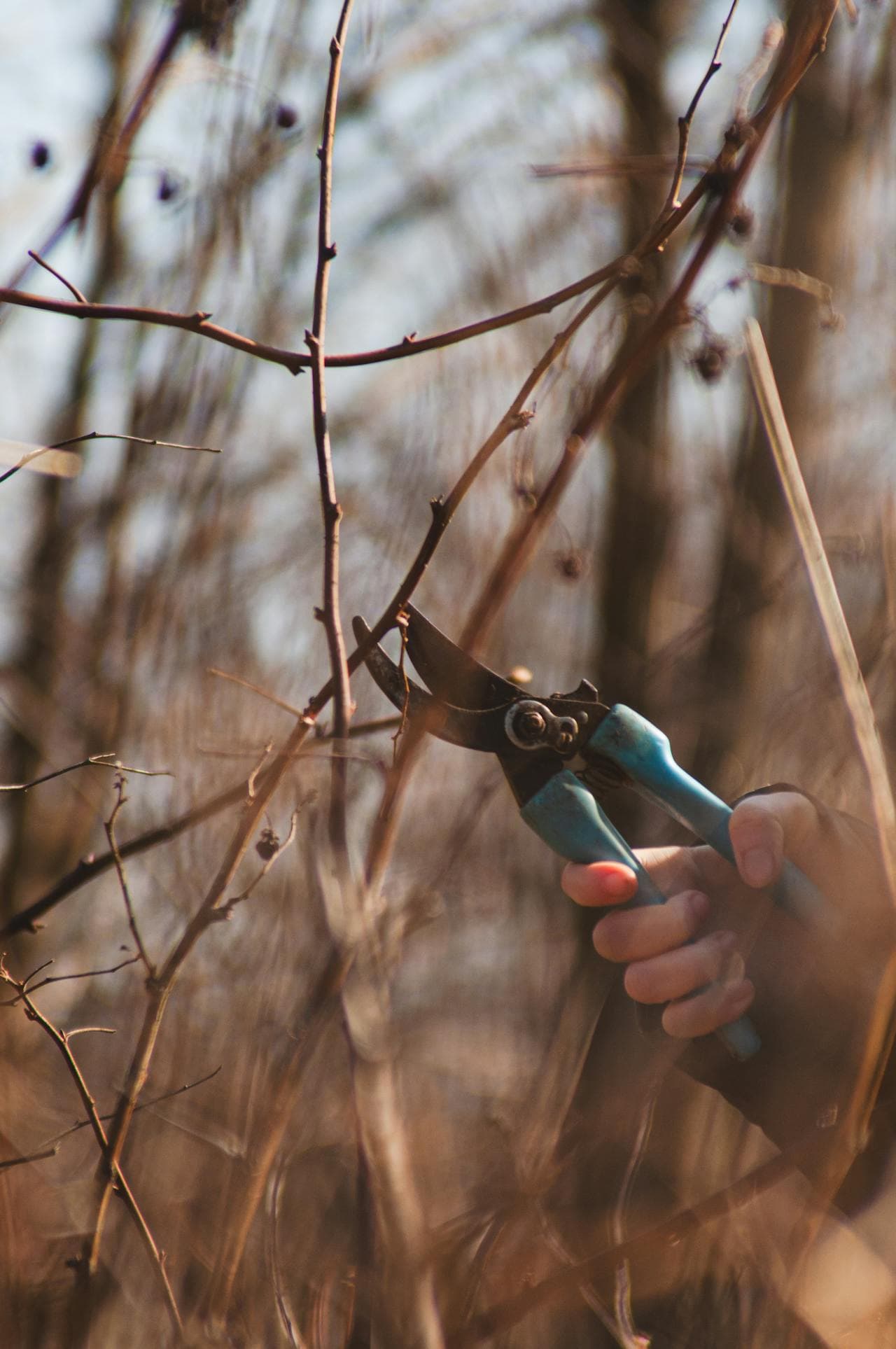
Pruning Dormant Fruit Trees in Alberta
Quick Care Summary
Late winter is the only safe window to prune apples, plums, cherries, and pears in Alberta. By March the worst cold has passed but the tree is still dormant — sap hasn’t started moving. Cuts made now heal cleanly. Cuts made in summer, when the tree is in full leaf and sap is up, bleed and invite disease. Once buds swell and the wood goes from dark to yellow-green, you’re done for the year.
Why prune at all
A fruit tree without pruning becomes a tangle of crossing branches, dense interior shade, and weak fruit-bearing wood. The result: small fruit, alternating heavy/light years, broken limbs in storms, and disease pressure from poor air circulation. A well-pruned tree has an open centre, light reaching every branch, and replacement wood ready to take over as old branches age.
Tools you actually need
- Bypass pruners for cuts up to 1 cm. Felco or ARS for life; cheaper brands wear out fast.
- Loppers for cuts 1–3 cm. Long handles give leverage; the bypass kind cuts cleaner than anvil.
- Folding pruning saw for cuts 3–15 cm. Don’t use a regular wood saw — pruning saws cut on the pull stroke and leave a smoother face.
- Sterilizing wipes or rubbing alcohol — sterilize blades between trees, especially if you suspect disease.
The four cuts every fruit tree needs
Walk around the tree once before making a single cut. Then work through these four categories in order:
- Dead and broken branches. Easy to spot — brittle, no green under the bark when scratched. Cut back to live wood, just past the swollen branch collar (don’t cut flush, don’t leave a stub).
- Crossing and rubbing branches. Where two branches grow into the same space, one has to go. Keep the stronger one, the better-positioned one, or the one growing outward (not into the centre).
- Downward-growing branches. Fruit-bearing wood needs to grow up and out. Branches angled below horizontal are usually weak and shaded; remove them.
- Water sprouts and suckers. Water sprouts are the vertical shoots growing straight up from main branches. Suckers come from the rootstock, below the graft union. Both rob energy without producing useful fruit. Cut at the base.
How to make the cut
Look for the branch collar — the slightly swollen ring where the branch meets the trunk or parent limb. Cut just outside this collar, not through it, and not flush with the trunk. The collar contains the cells that grow over the wound; cutting through it slows healing and invites rot.
For larger branches (5 cm+), use a three-step cut to avoid tearing bark: undercut from below 30 cm out from the collar, top cut from above just past the undercut to drop the branch, then make the final clean cut just outside the collar.
The 20-25% rule
Don’t remove more than a fifth to a quarter of the live canopy in one year. Aggressive pruning shocks the tree into producing water sprouts everywhere — setting you back two years. If your tree is severely overgrown, plan a 2–3 year rehab: open the centre this year, thin the upper canopy next year, balance the structure the year after.
Species-specific notes
- Apples and pears: Open-centre or modified central-leader form. Most fruit on 2–4 year-old wood — renew bearing wood every year.
- Plums and cherries: More vase-shaped. Fruit on year-old or current-year wood; encourage replacement growth annually.
- Saskatoons and chokecherries: Bush form. Remove the oldest stems entirely (right to the ground), one-third per year, to renew the bush.
Aftercare
Don’t paint or seal cuts — old advice that’s now known to slow healing. The tree closes wounds faster on its own. Compost the prunings (or save straight branches as pea sticks). Disinfect tools after working on a tree you suspect of fireblight or canker; spread to a healthy tree means losing it.
Found this useful? Share it with someone who'd enjoy it.
Want to learn more?
Explore more plant care guides or find a nursery near you.
More plant care guides
Newsletter — early list
Get on the early list
We're putting together a slow, seasonal newsletter for prairie plant lovers. Drop your email and we'll send the first issue when it goes out. No filler, easy out.
Get on the list