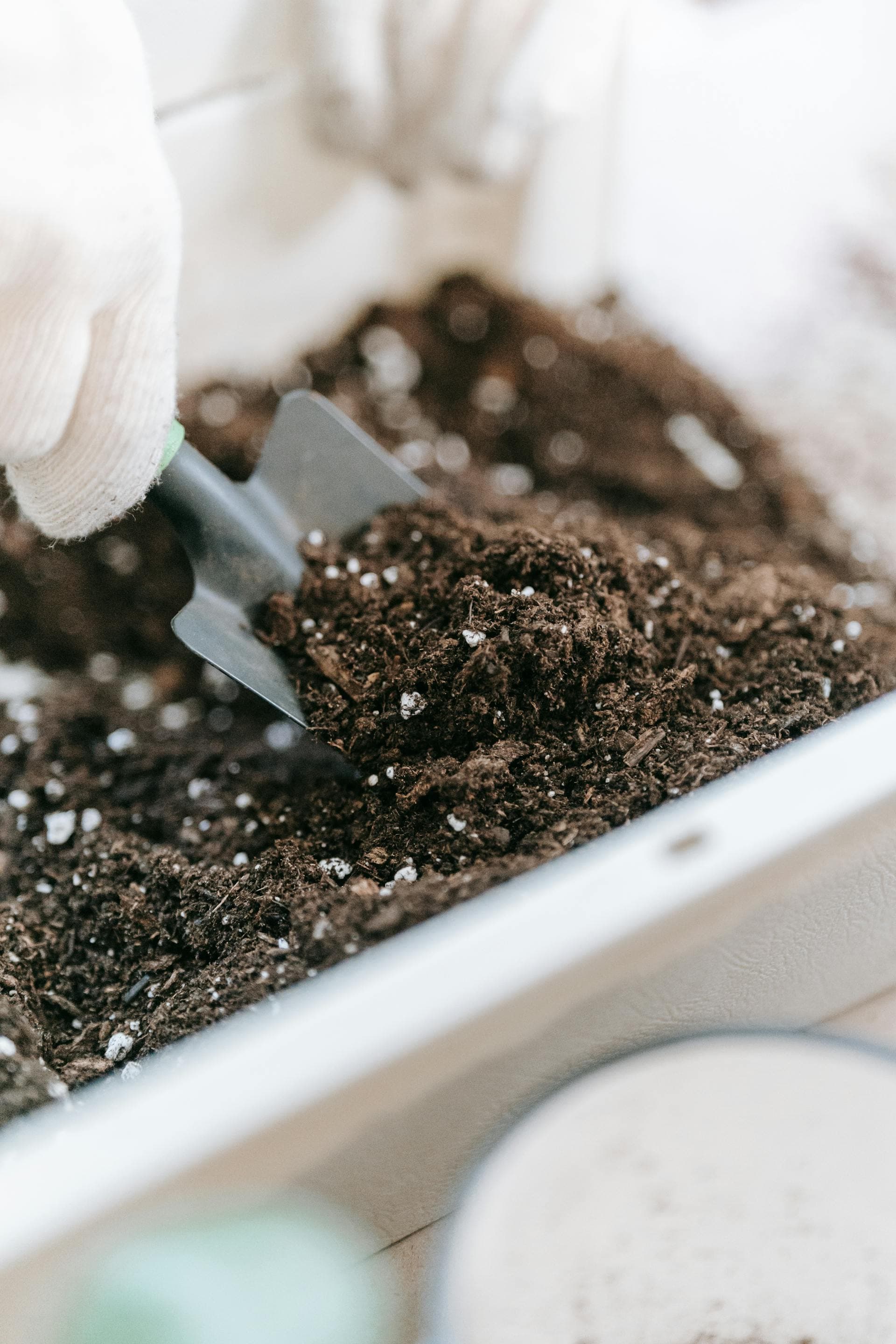
Edmonton Soil Guide: What You're Actually Digging In
Quick Care Summary
Edmonton sits inside one of the richest agricultural soil belts on the planet. The Black Chernozem soils that wrap around the city are the same soils that made the Canadian prairies famous for grain. They are dark, deep, organic-rich, and naturally fertile. They also have real quirks: heavy clay, slow drainage, freeze-thaw compaction, and a thin frost-free window that limits how fast a soil ecosystem can recover from abuse.
This guide explains what your soil is actually made of, how to read it, what genuinely thrives in it, and the maintenance habits that keep it productive long-term.
What Edmonton soil is, in one paragraph
Edmonton is entirely within the Black Soil zone of the Canadian prairies. The dominant soil order is Black Chernozem, with smaller pockets of Dark Gray Chernozem on transitional aspen-forest sites and Luvisols where forest cover has been long-established. Roughly 65% of soils in the Edmonton area are developed on glacial till (ground-up rock and clay deposited as glaciers retreated about 12,000 years ago). The remainder sits on lacustrine (old lake-bottom) and fluvial (old river) sediments. The result is fertile but heavy: most yards in Edmonton are some flavour of clay loam over a dense till subsoil that water moves through slowly.
The four soil signatures you'll meet around Edmonton
Even within a single neighbourhood, you can move between distinct soil types in a few blocks. Knowing which one is under your boots changes everything you do next.
1. Black Chernozem (the classic Edmonton soil)
A black topsoil layer (the Ah horizon) often 20 to 40 cm thick, dark from accumulated organic matter, sitting on a brown B horizon and a calcium-rich C horizon. Found across most established residential areas and the surrounding farmland (Sherwood Park, Leduc, Beaumont, Stony Plain). Naturally high fertility, granular structure, holds water well, and drains adequately if it hasn't been compacted. This is the soil your tomatoes want.
2. Dark Gray Chernozem (the parkland transition)
A grayish-brown topsoil thinner than the Black Chernozem, formed where aspen forest historically encroached on grassland. Common on the north and west edges of the city, including Spruce Grove, Stony Plain, and parts of north Edmonton. Lower organic matter than Black Chernozem (typically 4 to 6%), slightly more acidic, and often more leached. Still productive, but benefits from regular compost additions.
3. Gray Luvisol (the forest soil)
A pale, leached topsoil with a clay-rich B horizon underneath. Found on long-forested sites along the river valley slopes and ravines, and in some older treed neighbourhoods. Naturally lower fertility, more acidic (pH 5.5 to 6.5), and compaction-prone. Native acid-tolerant species (Labrador tea, lowbush blueberry, bunchberry) actually like this soil. Vegetables less so. You'll want to amend with compost and lime if you garden here.
4. Disturbed urban fill
New subdivisions get the topsoil scraped off, the lot graded with subsoil clay, and 5 to 15 cm of "topsoil" trucked back in at the end. This veneer is often a low-quality screened mix, sometimes mostly subsoil with a sprinkle of compost. If your house is post-2000 and your shovel hits hard pale clay 10 cm down, this is what you have. It can become real soil with three to five years of consistent organic matter additions, but it isn't there yet.
How to read your own soil in 30 minutes
You don't need a lab to know what you're working with. Three quick tests cover most of what matters.
The squeeze test (texture)
Take a moist (not wet) handful and squeeze it into a ball.
- Falls apart immediately: sandy. Drains fast, struggles to hold nutrients.
- Holds shape, crumbles when poked: loam. The target.
- Forms a slick ribbon when pressed between thumb and finger: clay. What most Edmonton yards have.
- Feels gritty AND ribbons: clay loam. Edmonton's most common signature.
The percolation test (drainage)
Dig a 30 cm hole, fill it with water, let it drain. Then refill it and time how long it takes to empty.
- Under 1 hour: excellent drainage (sandy soils).
- 1 to 4 hours: good (well-structured loam).
- 4 to 12 hours: slow (typical Edmonton clay loam).
- Over 12 hours: poor. You'll want raised beds, French drains, or plants that tolerate wet feet.
The pH test (chemistry)
A $15 home pH meter or a $5 vinegar/baking soda test will get you within half a point. Most of Edmonton lands between 6.5 and 7.5, a sweet spot for nearly everything you'd want to grow. Older treed lots and acid-loving soils (where pines have dropped needles for decades) can drop into the 5.5 to 6.0 range. River-valley calcareous soils sometimes climb to 8.0 or above.
For anything more precise, like nutrient levels, salinity, or organic matter percentage, send a sample to a Canadian lab such as A&L Canada Laboratories or Down To Earth Labs. A basic test runs about $35 to $50 and gives you a real baseline.
What thrives in Edmonton soil (and what doesn't)
The good news: Edmonton's Black Chernozem will grow almost anything hardy enough for our zone. The bad news: anything that hates wet feet, heavy clay, or alkaline pH will sulk.
Vegetables that genuinely love this soil
- Brassicas (cabbage, kale, broccoli, cauliflower, kohlrabi). Black Chernozem could not be more perfect.
- Alliums (onions, garlic, leeks, shallots). They love the organic matter and slightly alkaline pH.
- Root vegetables in loosened soil (carrots, parsnips, beets, turnips). Double-dig or use deep raised beds, otherwise carrots fork in clay.
- Tomatoes, peppers, squash, beans, peas, corn. All reliable performers given Edmonton's warm summer days and long daylight hours.
- Greens and lettuces. Spring and fall crops thrive in cool, moist clay loam.
Native plants matched to Edmonton soils
- Black Chernozem (most yards): wild rose, saskatoon berry, chokecherry, wild bergamot, smooth aster, blanket flower, prairie crocus, golden bean, showy milkweed, three-flowered avens.
- Wet/heavy clay corners: red osier dogwood, willow species, marsh marigold, blue flag iris, Joe-Pye weed, water sedge.
- Dry sun-baked spots: blue grama grass, prairie sage, common yarrow, blanket flower, wild blue flax, prairie crocus.
- Acidic Luvisol (treed lots): bunchberry, lowbush blueberry, Labrador tea, twinflower, wild lily of the valley, oak fern.
Plants that struggle without serious amendment
- Blueberries, rhododendrons, azaleas. They need acidic soil (pH 4.5 to 5.5) and excellent drainage. Plant in dedicated raised beds with peat-based mix or skip them.
- Mediterranean herbs (lavender, rosemary, thyme). They hate wet clay. Plant in raised beds or gritty mix with sharp drainage.
- Carrots in unworked clay. They will fork or stub. Either deep-dig or grow short varieties (Paris Market, Little Finger).
- Most stone fruits (peach, apricot, sweet cherry). Drainage is fine, but our zone, late frost, and short season are the real limiters.
Eight habits that keep Edmonton soil healthy
1. Add organic matter, every year
Compost is the single highest-return investment in any Edmonton garden. It feeds soil microbes, improves drainage in clay AND water-holding in sand, and slowly raises organic matter percentage. Aim for 2 to 5 cm of compost on beds each spring or fall. Edmonton's free leaf-collection program in autumn is a goldmine. Bagged leaves rot down to leaf mould in 12 to 18 months and it's the best soil amendment available.
2. Stop adding sand to clay
This advice is everywhere, and it's wrong. Sand mixed into clay in small quantities makes a substance closer to concrete. To meaningfully change the texture, you would need a 50/50 ratio, an enormous and expensive volume. Use organic matter instead.
3. Mulch year-round
A 5 to 8 cm layer of natural mulch (wood chips, shredded leaves, straw) on bare soil does five jobs at once: moderates temperature, conserves moisture, suppresses weeds, breaks down into more organic matter, and protects soil structure from rain compaction. Avoid dyed mulches and rubber mulch. Both can leach undesirable compounds and neither feeds the soil.
4. Stay off wet soil
Walking on, tilling, or working clay soil while it's saturated destroys the granular structure that took years to build. The squeeze test applies here too: if a handful holds a tight ball that doesn't crumble, the soil is too wet to work. Wait three to five days after rain.
5. Use cover crops on bare beds
Bare soil over winter loses structure, nutrients, and life. A late-summer sowing of fall rye, hairy vetch, or buckwheat (followed by rye) holds the soil, fixes nitrogen, and breaks up compaction with deep roots. Chop it in three weeks before planting.
6. Rotate your vegetable beds
Growing the same crop family in the same spot for years invites pest and disease buildup, and depletes specific nutrients. A simple four-year rotation (legumes, leafy greens, fruiting crops, root crops) keeps soil balanced. Clay loam soils with good organic matter are forgiving here, but rotation still pays off.
7. Test pH every three to four years
Soil pH drifts. Wood ash, lime, repeated heavy compost, or acidifying fertilizers all push it. If your established beds suddenly underperform, a $15 pH meter and a $35 lab test will often find the problem before you waste money on fertilizer that won't be absorbed.
8. Skip the rototiller after the first year
Heavy tilling pulverizes soil aggregates, kills earthworms, exposes microbial life to UV and dry air, and creates a hardpan layer at the bottom of the tilled zone. Use a broadfork or just rake compost into the top 5 cm. The plants will thank you.
Fixing common Edmonton soil problems
Soggy clay that won't drain
For garden beds: build up rather than dig down. A 30 cm raised bed with a quality soil mix sits above the wet clay subsoil and drains beautifully. For lawn or perennial areas: core-aerate annually, top-dress with compost, and avoid traffic when wet. Long-term, the organic matter additions will improve structure dramatically.
Compacted soil from construction
A broadfork (sometimes called a U-bar) loosens compacted layers without inverting the soil. Cover crops with deep taproots (daikon radish, alfalfa) drill biological holes into hardpan. Avoid rototilling deeper than 10 cm or you'll just create a new hardpan one tiller-depth lower.
Sandy patches (river-valley lots)
Properties along the North Saskatchewan River and old riverbeds sometimes sit on sandy lacustrine deposits. These drain too fast and lose nutrients quickly. The fix is the same: organic matter, repeatedly. Sandy soil takes more compost than clay does (because it breaks down faster), but the effects are immediate.
High-pH calcareous soil
Some Edmonton soils, especially near the river valley, sit on calcium-rich glacial till and run pH 7.8 to 8.3. Iron, manganese, and phosphorus become hard for plants to absorb. Sulphur granules (elemental sulphur) lower pH slowly over a season or two. Iron chelate as a foliar feed handles short-term yellowing on susceptible plants.
Dead-looking topsoil from new construction
New-build "topsoil" is often subsoil with cosmetic dressing: biologically dead, low in organic matter, often chemically off. Don't try to fix it in one season. Plan three years: heavy compost the first fall, cover crop the first winter, more compost the second year, and start serious vegetable planting in year three. Your patience will be rewarded.
A note on local sources
Avoid bagged "garden soil" from big-box stores when you can. It's variable in quality and expensive by volume. Edmonton-area landscape suppliers (Burnco, Dirt Cheap, Rockland, Jil's, Cleanit Greenit) sell screened topsoil, compost, and custom mixes by the cubic yard at a fraction of the cost. Ask for the screened triple mix or a custom 50% topsoil + 30% compost + 20% sharp sand for raised beds. Your local Edmonton Horticultural Society and the City of Edmonton Compost Depot (free finished compost in spring and fall, in limited quantities) are also excellent resources.
When in doubt, the cheapest and most reliable amendment available to Edmonton gardeners is the bag of leaves your neighbour rakes to the curb every October. Take them.
Sources
Found this useful? Share it with someone who'd enjoy it.
Want to learn more?
Explore more plant care guides or find a nursery near you.
More plant care guides
Newsletter — early list
Get on the early list
We're putting together a slow, seasonal newsletter for prairie plant lovers. Drop your email and we'll send the first issue when it goes out. No filler, easy out.
Get on the list