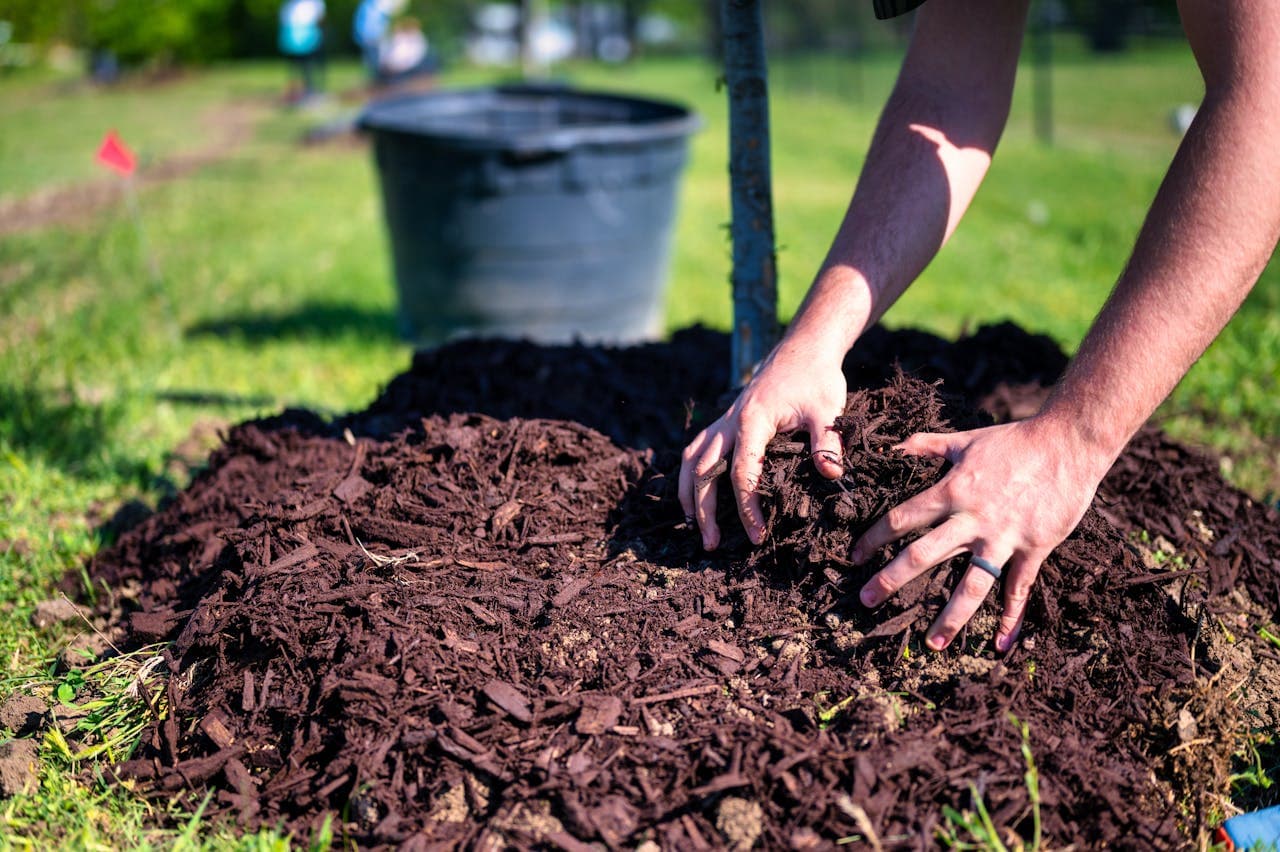
Mulching Alberta Garden Beds: What to Use, When to Apply, How Thick
Quick Care Summary
Mulching is the single highest-leverage habit you can build in an Alberta garden. A 5–8 cm layer of organic material over your soil cuts watering by a third to a half, suppresses 80% of weeds, moderates soil temperature in both directions, and feeds the soil as it slowly breaks down. The work of spreading mulch in spring saves you many times that work over the rest of the season.
What mulch actually does
- Holds water in. Bare soil loses 5–10 mm of moisture a day to evaporation in dry Alberta summers. Mulch cuts that to 1–2 mm.
- Keeps roots cool. A south-facing bed at 32°C in July is hostile to most vegetable roots. Under mulch, the same soil stays at 18–22°C.
- Smothers weeds. Most weed seeds need light to germinate. Block the light, block the weeds.
- Feeds soil organisms. Earthworms and microbes pull mulch down into the soil and convert it into humus. The soil under a mulched bed gets demonstrably better year over year.
- Prevents soil splash. Heavy rain on bare soil splashes pathogens onto leaves — the main vector for tomato early blight and septoria leaf spot. Mulch is the cheapest disease prevention going.
Best materials for Alberta gardens
Shredded leaves (the gold standard)
Free, abundant, breaks down at exactly the right speed, and adds humus as it goes. Run a lawnmower over fall leaves to shred them, then bag and store. Use through the following season as a multi-purpose mulch on every bed. Whole leaves can mat down and shed water; shredded leaves don’t.
Straw (not hay)
Available at any feed store, $8–12 per bale, covers about 10 m² at 5 cm deep. Make sure it’s straw (the stalks left after grain harvest, no seeds) and not hay (cut grass with seeds, will weed your beds for you). Excellent for vegetable gardens, especially around tomatoes, potatoes, and squash.
Grass clippings
Free if you mow your own lawn. Apply in thin layers (2–3 cm at a time) and let dry between layers — thick wet clippings ferment and produce ammonia. Don’t use clippings from a lawn treated with herbicides; many lawn herbicides persist through composting and damage broadleaf vegetables.
Wood chips and bark
Best for perennial beds, paths, and around shrubs — not annual vegetable beds. Wood chips break down slowly and tie up nitrogen at the soil surface as they decompose, which is fine around established perennials but stunts annual vegetables.
Compost
Compost as mulch is excellent — it does everything a mulch does plus adds nutrients. The downside: you need a lot of it, and most home gardeners can’t make enough to mulch every bed every year. A 2–3 cm compost layer covered with another mulch is a great compromise.
Avoid these
- Black plastic. Heats soil too much for most Alberta crops, kills soil life, doesn’t breathe.
- Landscape fabric (long term). Eventually weeds root through it and the fabric becomes unremovable. Better to mulch heavily without fabric.
- Dyed wood mulch. Often made from pressure-treated wood chips. Fine for purely ornamental beds, not for vegetables.
- Hay. See above — full of seeds.
- Walnut leaves or chips. Contain juglone, toxic to tomatoes, peppers, and many other plants.
Summer vs winter mulching
Summer mulch(5–8 cm, applied in late May or June) is about cooling and moisture conservation. Apply after the soil has warmed and seedlings are 10+ cm tall — mulching too early on cold soil delays warming and stunts growth.
Winter mulch(10–15 cm, applied after the first hard freeze) is about preventing freeze-thaw heaving on perennials and overwintering crops like garlic. Apply in late October or early November, after the ground has frozen at the surface but before deep freeze. Mulching too early traps warmth and can prevent dormancy. Pull winter mulch back in early April.
How to apply
- Weed first. Mulch suppresses new weeds; it doesn’t kill mature ones.
- Water the bed thoroughly before mulching. Mulch traps water in but doesn’t let much new water through, especially when it’s freshly applied.
- Spread evenly, 5–8 cm deep for summer, leaving a 5 cm gap around plant stems. Mulch piled against stems holds moisture and rots them.
- Top up mid-season as the layer breaks down. By August a 5 cm spring layer may be down to 2 cm.
The slug question
Mulch — especially straw — can shelter slugs in wet years. Alberta’s dry climate keeps slug populations modest, but if you’re in a wet pocket or watering heavily, watch for telltale silver trails and ragged-edge leaf damage. If slugs become a problem, switch to a coarser mulch like wood chips around affected plants, or pull mulch a few centimetres back from the most-vulnerable hosts (lettuce, hostas, basil).
Found this useful? Share it with someone who'd enjoy it.
Want to learn more?
Explore more plant care guides or find a nursery near you.
More plant care guides
Newsletter — early list
Get on the early list
We're putting together a slow, seasonal newsletter for prairie plant lovers. Drop your email and we'll send the first issue when it goes out. No filler, easy out.
Get on the list