Direct-Sowing Radishes in Alberta: 28 Days from Seed to Plate
Quick Care Summary
Radishes are the fastest crop in the garden. Sow them on Saturday, harvest the first ones four weeks later. They tolerate cold, germinate fast, and break up heavy soil with their fast-growing roots, making them an excellent first crop for new gardeners and an ideal companion crop in slower-growing rows. The downside: they bolt the moment heat arrives, so spring and fall are your only real windows.
When to plant
As soon as the soil can be worked — usually mid- to late-April. Soil at 5°C is enough. The first sowing can go in alongside peas and spinach. Stop sowing in early June; resume in early August for fall radishes that mature in cooler weather.
Winter radishes (daikon, watermelon, black Spanish) are sown later — mid-July through early August — for an October harvest. They need 50–60 days and resent summer heat.
How to plant
- Sow seeds 1 cm deep in furrows 15 cm apart.
- Aim for one seed every 2.5–5 cm. Seeds are big enough to space individually if you take your time.
- Cover, firm gently, water in.
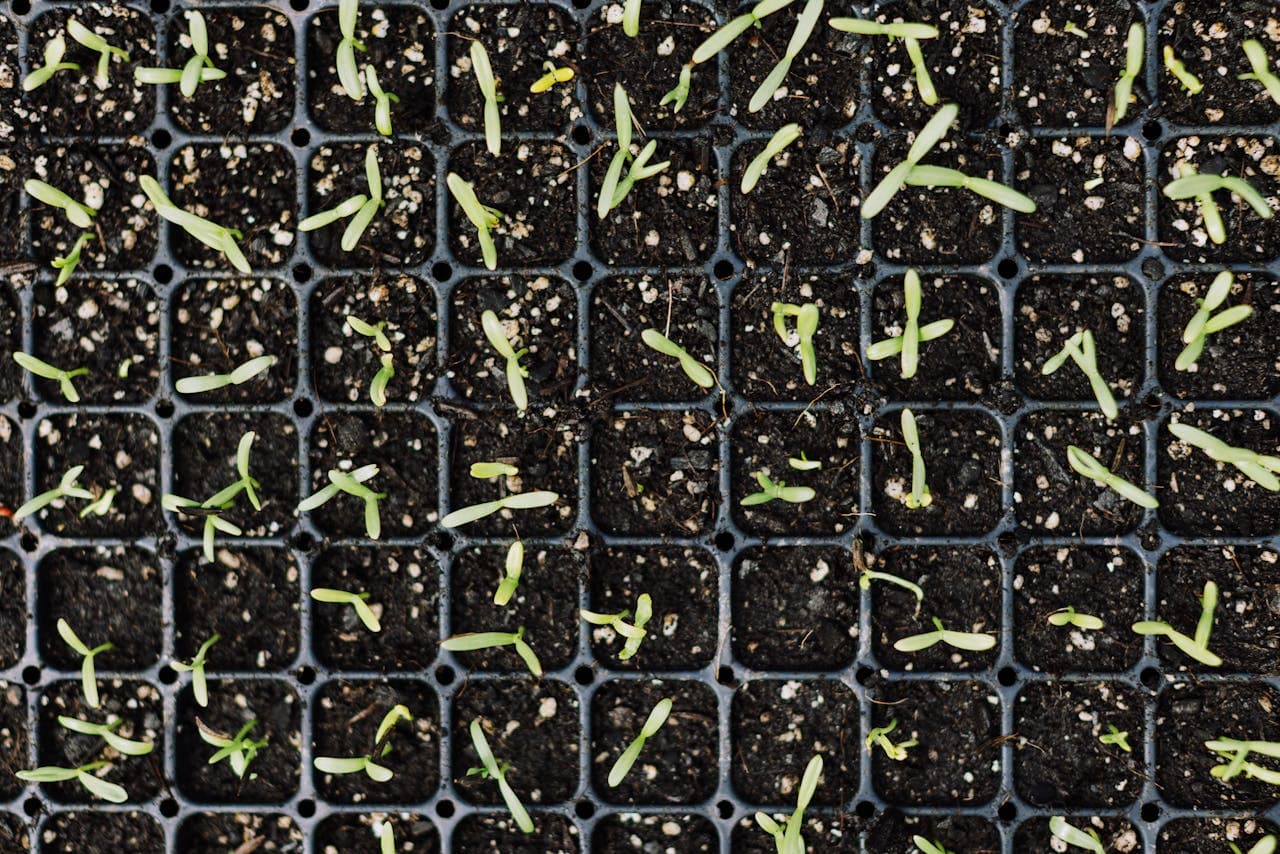
- Germination is fast: 4–7 days.
- Thin once seedlings have their first true leaves — pull or snip extras to leave one radish every 2.5 cm. Crowded radishes don’t make roots.
Succession sowing
Sow a short row every 7–10 days from late April through late May. Each row gives you about 7–10 days of harvest before the radishes turn pithy or split. A 1 m row is plenty for a household.
Pair radish rows with slower crops — carrots, parsnips, beets — and the radishes mark the row, break up the soil, and harvest before the slower crop needs the space.
Watering and the “hot radish” problem
Radishes need consistent moisture. Inconsistent watering is the cause of most bad radishes — drought stress makes them woody and pungently hot, while too much water late in the season splits them. Aim for steady, moderate watering: 2–2.5 cm per week, no big swings.
Slow growth = hot, woody radishes. Fast growth = mild, crisp radishes. Anything that slows them down (heat, crowding, poor soil, drought) makes them worse.
Variety picks
- Cherry Belle: Classic round red, 22 days. Mild, reliable, beginner-friendly.
- French Breakfast: Oblong red-and-white, 25 days. Slightly sweeter than Cherry Belle.
- Easter Egg: Mixed colours (red, pink, white, purple), 30 days. Beautiful in salads.
- Watermelon (winter): Round, green outside with shocking pink interior. 60 days, fall harvest.
- Daikon (winter): Long white Asian radish. 60 days, excellent for kimchi or grated raw.
Harvesting
Pull spring radishes when they’re between 2 and 4 cm across. Bigger doesn’t mean better — left in the ground past size, they go pithy and crack. The leaves are edible too: chopped finely and added to salads or soups, or sauteed like spinach.
Winter radishes can stay in the ground until hard frost. Harvest before the first deep freeze, brush off soil (don’t wash), and store in damp sand at 1–4°C. They keep for 3–4 months.
Found this useful? Share it with someone who'd enjoy it.
Want to learn more?
Explore more plant care guides or find a nursery near you.
More plant care guides
Newsletter — early list
Get on the early list
We're putting together a slow, seasonal newsletter for prairie plant lovers. Drop your email and we'll send the first issue when it goes out. No filler, easy out.
Get on the list