Dividing Perennials in Alberta: When, How & Which Ones
Quick Care Summary
Most perennials thicken into dense clumps over 3–5 years. The outer ring keeps growing strong, the centre dies out, and the plant blooms less and looks ratty. Dividing breaks the clump into smaller pieces, replants the vigorous outer growth, and discards the spent centre. The plant comes back stronger, you get free plants for the rest of the garden or to share, and the bed gets a refresh.
When to divide
Two windows work in Alberta:
- Early spring (mid-April to mid-May) as new growth emerges but before plants are tall. Best for most perennials — gives them the full season to re-establish.
- Early fall (early September) for spring- and summer-flowering plants. Gives 6–8 weeks of root growth before deep freeze. Don’t divide later than mid-September; new divisions need establishment time.
A general rule: divide spring-blooming perennials in fall (after they bloom), and divide fall-blooming perennials in spring (before they bloom). Either way, you’re not interrupting their flower show.
Avoid dividing in summer heat — transplant shock is severe and often fatal in dry July/August conditions.
Plants that need regular division
- Every 2–3 years: Daylilies, irises, daisies, asters, bee balm, hostas (when crowded).
- Every 3–5 years: Hostas, peonies (rarely need it), salvias, coreopsis, rudbeckia, sedums, ornamental grasses.
- Rarely or never: Bleeding heart, baptisia, butterfly bush, lupines, oriental poppies. They resent disturbance and may sulk for a year after.
The technique
- Water the plant well 1–2 days before dividing — hydrated roots handle the disturbance better.
- Dig wide around the plant — a spade-width past the foliage. You want most of the root mass intact.
- Lift the whole clump out. Shake off loose soil so you can see the root structure.
- Divide using your method of choice (see below). Aim for divisions with 3–5 healthy growing points each.
- Discard the centre of mature clumps if it’s woody or dead — that’s the spent core that won’t recover.
- Replant divisions immediately at the same depth they were growing. Water in deeply.
Methods of dividing
- Pull apart by hand for fibrous-rooted plants (daylilies, hostas) — just tug clumps apart along natural breaks.
- Two forks back-to-back for tougher root masses — insert two forks in the centre of the clump, pry apart by levering handles in opposite directions.
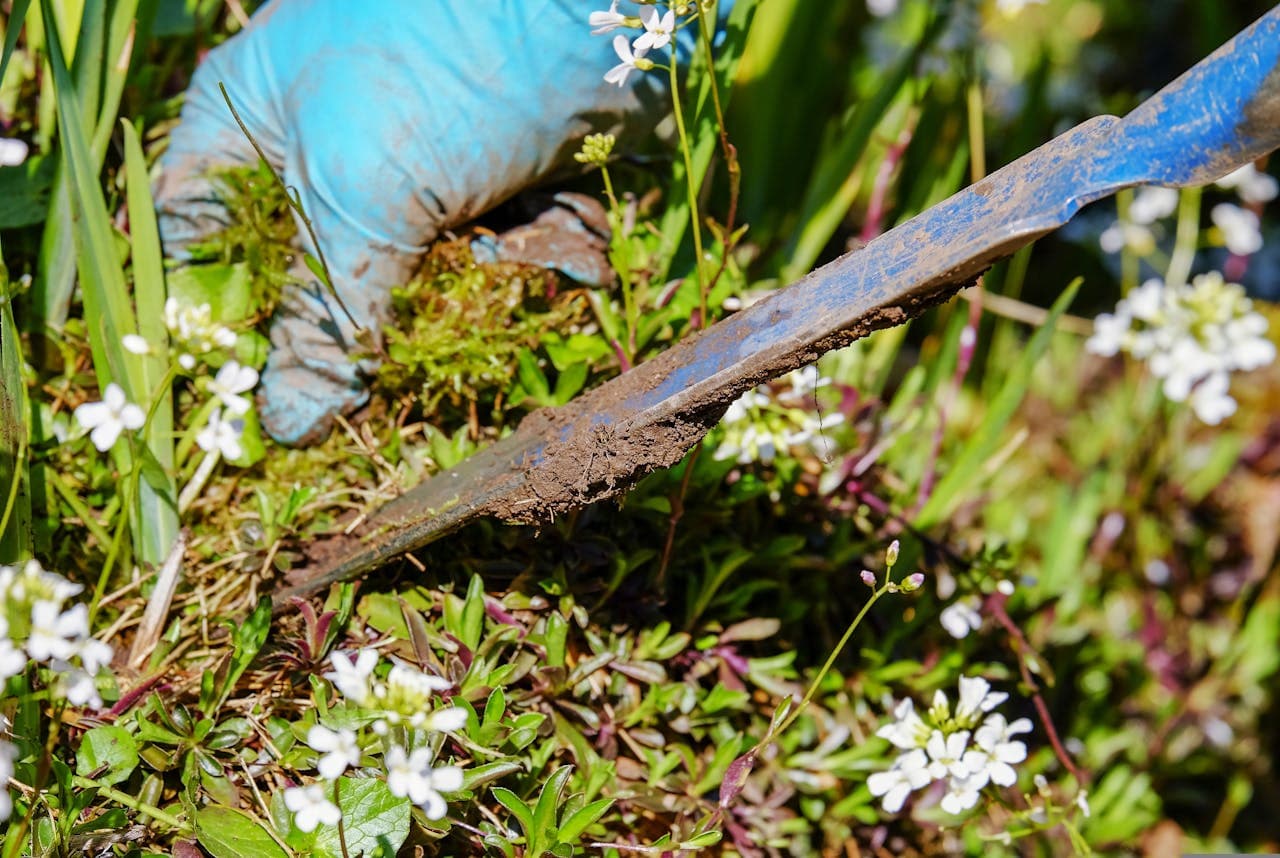
- Sharp spade or knife for rhizomes (irises) and woody crowns — one decisive cut, sterilize the blade between divisions.
- Saw or hatchet for ornamental grasses with tough crowns — this is brutal but necessary; the grass survives.
Settling the new divisions
Trim back top growth by a third to half — reduces water demand while roots recover. Plant at the same depth as before; planting too deep causes crown rot. Water deeply, then keep the soil consistently moist (not soggy) for the next 2–3 weeks while roots establish. Mulch around the new plant to conserve moisture.
Don’t fertilize newly-divided perennials — they need to focus on roots, not top growth. Resume normal feeding the following spring.
What to do with extras
A single division of an old hosta can yield 4–6 new plants. Plant them in other beds, give to neighbours, donate to the local horticultural society’s plant sale, or pot up extras to swap. The free-plant economy among gardeners is one of the great pleasures of getting into the habit.
Found this useful? Share it with someone who'd enjoy it.
Want to learn more?
Explore more plant care guides or find a nursery near you.
More plant care guides
Newsletter — early list
Get on the early list
We're putting together a slow, seasonal newsletter for prairie plant lovers. Drop your email and we'll send the first issue when it goes out. No filler, easy out.
Get on the list