Staking Tomatoes & Tall Perennials: Methods That Hold Through July Storms
Quick Care Summary
Alberta thunderstorms hit in July with sustained 60–80 km/h winds that knock indeterminate tomatoes flat in minutes. Delphiniums collapse the same way. Tall sunflowers snap. The fix is staking — ideally set up at planting, not when the plant is already toppling. Staking after the fact is always harder, less effective, and risks tearing roots.
Tomatoes: the four real options
Cages
The simplest method. Use the heaviest-gauge wire cages you can find, minimum 1.5 m tall. The flimsy “cone” cages from grocery stores fall over by July; pass on those. Better: galvanized concrete-mesh cylinders 60 cm wide. Anchor with a tall stake driven through the cage and 60 cm into the ground — the stake takes the wind load.
Single stake
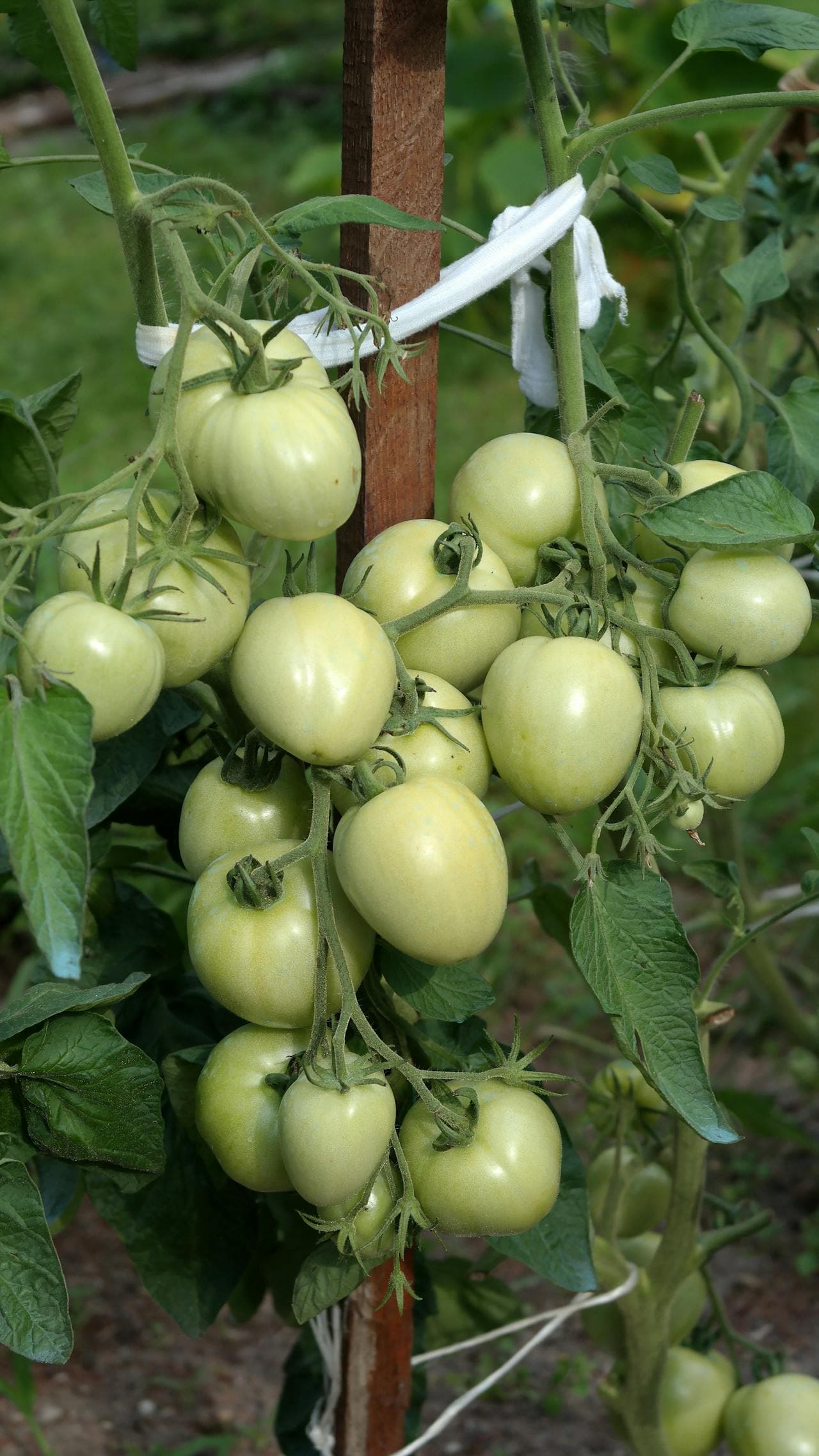
One sturdy 2 m wooden or metal stake driven 30 cm into the ground at planting, 5–8 cm from the stem. Tie the plant loosely to the stake every 30 cm as it grows. Works best for indeterminate varieties pruned to a single stem (more time-intensive but very productive).
Florida weave
For multiple plants in a row. Drive sturdy stakes between every 2–3 plants. Run twine horizontally on both sides of the row, weaving between plants and around stakes. Add another twine layer every 30 cm of growth. Fast for a lot of tomatoes; the standard for market gardeners.
Twine drop from overhead
For greenhouse or covered-bed setups: tie a twine to a horizontal bar overhead, drop it down, secure to the stem. The plant climbs the twine. Best for serious tomato growers; not practical in open garden.
Tall perennials
Delphiniums, hollyhocks, lupines, foxgloves, monkshood, and tall asters are the usual victims. Two methods:
- Linked stakes (Y-shaped or grow-through grids): Set up around emerging perennials in May, before they reach 30 cm. The plant grows up through the support and hides it. Reusable for years.
- Single stake per stalk: For tall single-stem flowers like delphiniums, drive a 1.5 m bamboo stake just behind the stalk and tie loosely every 30 cm.
Don’t wait until plants flop. Once a delphiniumis bent, the stem is permanently kinked — staking only props up the damage.
How to tie
Use soft material that won’t cut into stems — cloth strips from old t-shirts, garden twine, plant tape, or stretchy plant ties. Wire and zip-ties tear stems as they grow.
Tie in a figure-8 pattern: the tie crosses itself between the stake and the stem, leaving slack so the stem can grow without strangling. Loose enough that you can fit a finger between tie and stem. Check ties weekly — stems grow fast in July and a tie that fits in week one strangles by week three.
Sunflowers
Tall mammoth-type sunflowers (2 m+) need single sturdy stakes driven at planting. Tie the stem at 60 cm and 1.2 m, loose figure-8. Without staking, late-summer thunderstorms snap them at the base. Plant against a fence or wall when possible — cuts wind load dramatically.
When to set up
The key principle: set up supports at planting, before plants need them. Trying to add a cage to a 1-metre tomato that’s already sprawling means breaking branches and damaging roots. The 5 minutes spent at planting saves an hour of damage control later, and the plant grows up through its own support exactly the way it’s supposed to.
Found this useful? Share it with someone who'd enjoy it.
Want to learn more?
Explore more plant care guides or find a nursery near you.
More plant care guides
Newsletter — early list
Get on the early list
We're putting together a slow, seasonal newsletter for prairie plant lovers. Drop your email and we'll send the first issue when it goes out. No filler, easy out.
Get on the list