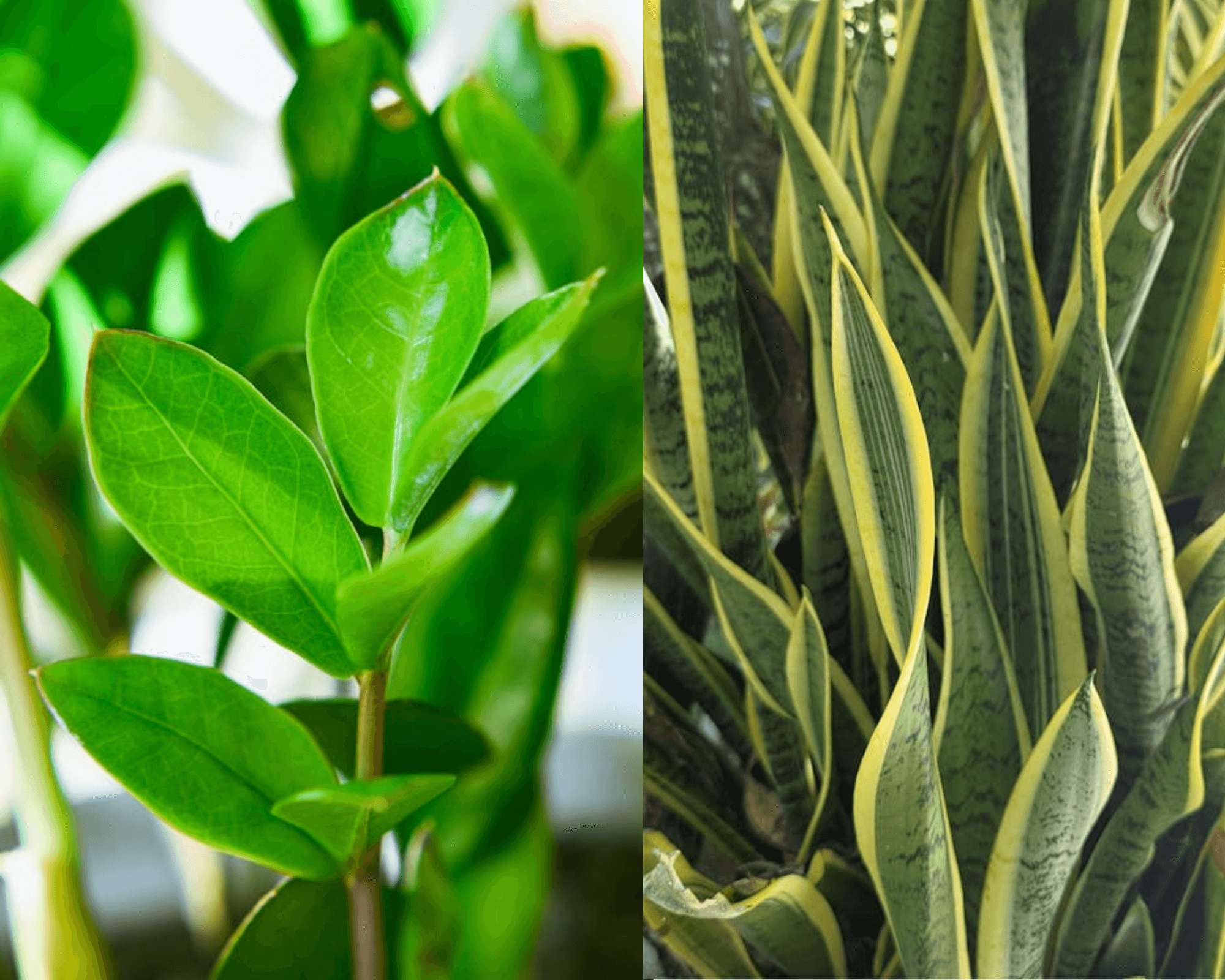
ZZ Plant vs Snake Plant: Which Is Right for You?
The ZZ plant and the snake plantget recommended in almost every "easy houseplants for beginners" article ever written. They both tolerate low light, both forgive missed waterings, and both look architectural enough to anchor a room. It is no surprise that new plant owners often end up choosing between the two.
They are not the same plant, though. They have different growth habits, different watering needs, different light tolerances, and different price points. Knowing which one suits your home (and your habits) saves you from buying the wrong plant and being disappointed when it does not behave the way you expected.
This guide compares the ZZ plant (Zamioculcas zamiifolia) and the snake plant (Dracaena trifasciata, formerly Sansevieria) head to head across the eight factors that matter most.
ZZ Plant vs Snake Plant: Quick Comparison
| Factor | ZZ Plant | Snake Plant |
|---|---|---|
| Light tolerance | Very low to bright indirect | Very low to direct sun |
| Watering (winter) | Every 4 to 8 weeks | Every 4 to 8 weeks |
| Watering (summer) | Every 2 to 3 weeks | Every 2 to 4 weeks |
| Growth rate | Slow | Slow to moderate |
| Mature height | 60 to 100 cm | 30 to 120 cm |
| Pet safe? | No (toxic) | No (toxic) |
| Typical 4 inch price | $15 to $30 CAD | $10 to $20 CAD |
| Best for | Dim rooms, frequent travellers | Bright rooms, sunny windows |
Light: The Single Biggest Difference
This is where the two plants actually diverge. Most other comparisons online describe both as "low-light tolerant" and stop there, which is misleading.
Snake Plant Light Range
The snake plant is the most light-flexible houseplant most people will ever own. It tolerates everything from a north-facing windowsill in February to a south-facing window in July. In bright light, it grows faster, produces more pups, and develops deeper colour in its leaves. In very dim corners, it slows almost to a stop but survives indefinitely.
If you have a sunny window, the snake plant will thrive there. The ZZ plant will not.
ZZ Plant Light Range
The ZZ plant tolerates low light better than almost any other common houseplant, including the snake plant. It is genuinely happy in a dim hallway or a north-facing bathroom with no direct sun at all. What it does not handle well is direct, hot sun.
A ZZ plant in front of a south-facing window in July can scorch, with leaflets yellowing or developing pale, papery patches. Move it back a metre or two from the glass.
Verdict
- Dim apartment or office with no real window light? Choose a ZZ plant.
- Bright sunny room or a south-facing window? Choose a snake plant.
- Medium light? Either works.
For a broader look at low-light options, see our low light indoor plants guide.
Watering: Both Forgive Neglect Better Than Overwatering
The most common cause of death for both plants is overwatering, not underwatering. Both store water internally (the ZZ plant in underground rhizomes, the snake plant in its succulent leaves) and both rot quickly if their soil stays wet.
How Often to Water a ZZ Plant
- Summer: every 2 to 3 weeks
- Winter: every 4 to 8 weeks
Always let the soil dry fully top to bottom before watering. Stick a finger 5 cm into the soil; if you feel any moisture, wait another week. ZZ plants signal thirst by their leaflets becoming slightly soft or starting to roll inward.
A dedicated ZZ plant care guide is coming soon; in the meantime, the same dry-out-fully rule applies to repotting and fertilizing.
How Often to Water a Snake Plant
- Summer: every 2 to 4 weeks
- Winter: every 4 to 8 weeks
Snake plants want the same dry-out cycle. A leaf that starts to wrinkle or fold is asking for water. A leaf that is soft and squishy at the base is showing the start of root rot from too much water, which is much harder to recover from.
See our snake plant care guide for full details.
Verdict
Almost identical watering needs. Both are excellent choices for frequent travellers, busy professionals, and anyone who tends to forget about their plants for weeks at a time.
Growth Rate and Mature Size
ZZ Plant Growth
ZZ plants are slow. A 4-inch nursery plant typically takes two to three years to reach 60 cm and another two to three years to fill out into the iconic glossy, vase-shaped form that mature ZZ plants are known for. They produce new stems from the rhizome a few times a year, usually in spring and summer.
If you want a large statement ZZ plant quickly, buy one already grown to size. They are not plants that get tall in a single season.
Snake Plant Growth
Snake plants are moderately slow but more variable. Tall varieties like Dracaena trifasciata'Laurentii' can reach 90 to 120 cm over five to seven years. Compact varieties like 'Hahnii' (bird's nest snake plant) stay under 30 cm forever.
Snake plants pup readily from the rhizome, especially in good light, which makes them easy to divide and share. Most owners end up with two or three plants from a single original within a few years.
Verdict
- Want it to stay roughly the same size for years? Either works, but the ZZ plant is more predictable.
- Want a plant that multiplies and that you can share? Snake plant.
- Want a large floor plant fast? Buy one large to begin with.
Pet Safety: Both Are Toxic
This is the section most pet owners skip and then regret. Both plants are toxic to cats and dogs.
Snake Plant Toxicity
Snake plants contain saponins, which cause nausea, vomiting, and excessive drooling in cats and dogs if chewed. The level of toxicity is generally mild to moderate. A small nibble usually causes stomach upset, not a medical emergency, but the plant is not safe for pets.
ZZ Plant Toxicity
ZZ plants contain insoluble calcium oxalate crystals in their leaves and rhizomes. These cause oral irritation, drooling, swelling, and vomiting if chewed. Like snake plants, ZZ plants are not deadly to dogs and cats in small amounts, but they are not pet safe.
Older internet posts sometimes call the ZZ plant "poisonous to touch." This is wrong. Handling the plant is fine. Just wash your hands after repotting because the sap can irritate skin and eyes.
Verdict
If you have cats that chew plants or curious puppies, neither is a great choice. See our pet safe houseplants guide for genuinely safe options like spider plant, parlor palm, calathea, and prayer plant.
Air Quality and Humidity Tolerance
Both plants were included in NASA's well-known 1989 clean air study, which is responsible for almost every "air-purifying houseplant" claim on the internet. The study was real, but its conditions (a sealed test chamber) do not translate to most homes. In a normal house, one or two houseplants do not meaningfully reduce indoor air pollution.
Both plants do, however, tolerate dry indoor air very well, which matters in Canadian homes from November to March. Forced-air heating drops indoor humidity to 15 to 25 percent, well below what tropical plants like calathea or fern prefer. Both ZZ and snake plants shrug this off.
Aesthetics and Style
Snake Plant Visual
The snake plant has tall, sword-shaped, upright leaves with green and pale yellow variegation in its most common form. It reads as architectural, modern, and slightly tropical. It pairs well with mid-century modern and minimal interiors.
ZZ Plant Visual
The ZZ plant grows in graceful, arching, glossy green stems lined with paired oval leaflets. The leaves are noticeably waxy and reflect light, which gives ZZ plants a permanent "freshly polished" look.
There is also a popular dark cultivar, the Raven ZZ, with near-black leaves at maturity. It is more expensive and a little slower growing but has become very popular for modern interiors.
Price and Availability in Canada
Snake plants are usually cheaper because they are easier to propagate at scale. A 4-inch snake plant typically runs $10 to $20 CAD; a 4-inch ZZ plant typically runs $15 to $30 CAD. Larger floor-sized specimens cost two to four times that.
Both are widely available at Canadian nurseries, big-box garden centres, and independent plant shops. Check our find a nursery directory for local Alberta sources.
For pots, soil, and accessories suited to either plant, see our shop page.
Which Should You Choose?
The short version:
- Choose a snake plant if: you have a bright window, want something that pups and multiplies, like vertical architectural lines, or want to spend less.
- Choose a ZZ plant if: your space is genuinely dim, you travel a lot, you prefer a softer arching form, or you want a glossy, polished look.
- Have both: they pair beautifully and together cover almost every light condition a Canadian home throws at them. Many plant owners end up with one of each.
Neither plant is fussy. Neither needs special humidifiers, grow lights, or daily attention. Both are excellent first houseplants, and both will outlive most of the higher-maintenance plants people buy alongside them.
If you are just starting out, the snake plant is slightly more forgiving in everyday use because it tolerates more light variation and is harder to overwater. But the ZZ plant wins decisively in dim spaces where almost nothing else thrives.
For more help building out a low-maintenance houseplant collection, see our low light indoor plants guide.
Found this useful? Share it with someone who'd enjoy it.
Want to learn more?
Explore more plant care guides or find a nursery near you.
More plant care guides
Newsletter — early list
Get on the early list
We're putting together a slow, seasonal newsletter for prairie plant lovers. Drop your email and we'll send the first issue when it goes out. No filler, easy out.
Get on the list