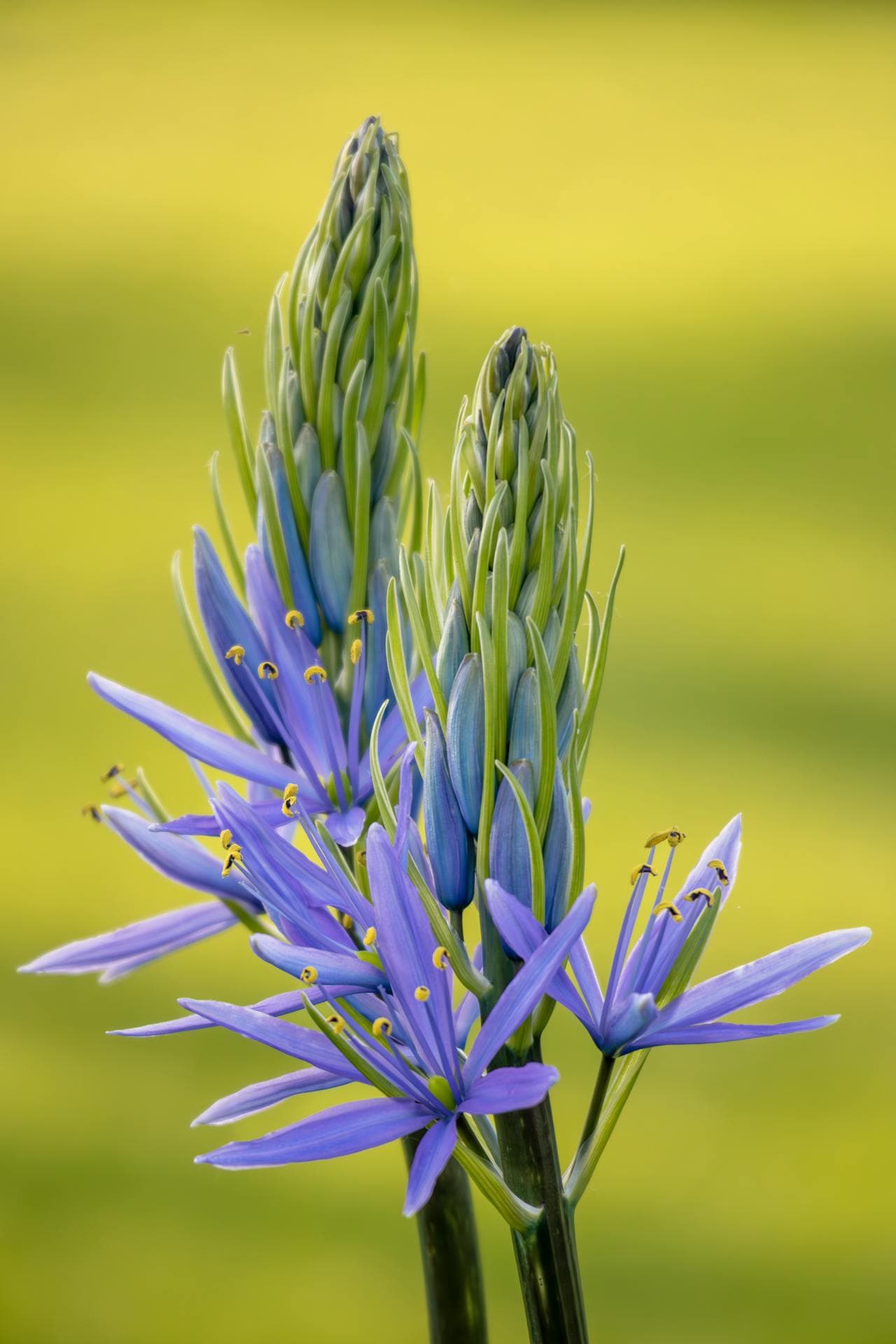
Blue Camas
Camassia quamash
quamash
Blue Camas was one of the most important traditional food plants of Indigenous peoples across western North America — the starchy bulbs were baked for days in earth ovens, transforming bitter inulin into sweet fructose. Only harvest when in flower, as the bulbs look identical to the deadly Death Camas (Anticlea/Zigadenus) when dormant. A spectacular late-spring meadow plant for naturalistic gardens — full sun after bloom allows the bulb to recharge.
Quick Facts
Distribution
Foothills, Peace River, Zone 4
Light
Part shade, moist
Bloom Time
May–June
Soil
Rich, moist in spring; tolerates summer drying once dormant
Water
Moist through bloom; dry in summer dormancy
Growing & Cultivation
Best Planting Time
Plant bulbs in fall, 10 cm deep
Propagation
Best from bulb offsets lifted and divided after foliage yellows in summer. Seed germinates after 60+ days cold moist stratification but takes 4–6 years to reach flowering size. Never dig wild plants.
Spacing
10–15 cm
Always verify plant identification with multiple sources before consuming any wild plant. This information is for educational purposes only.