Canada Yew
Taxus canadensis
ayapisk(Cree)
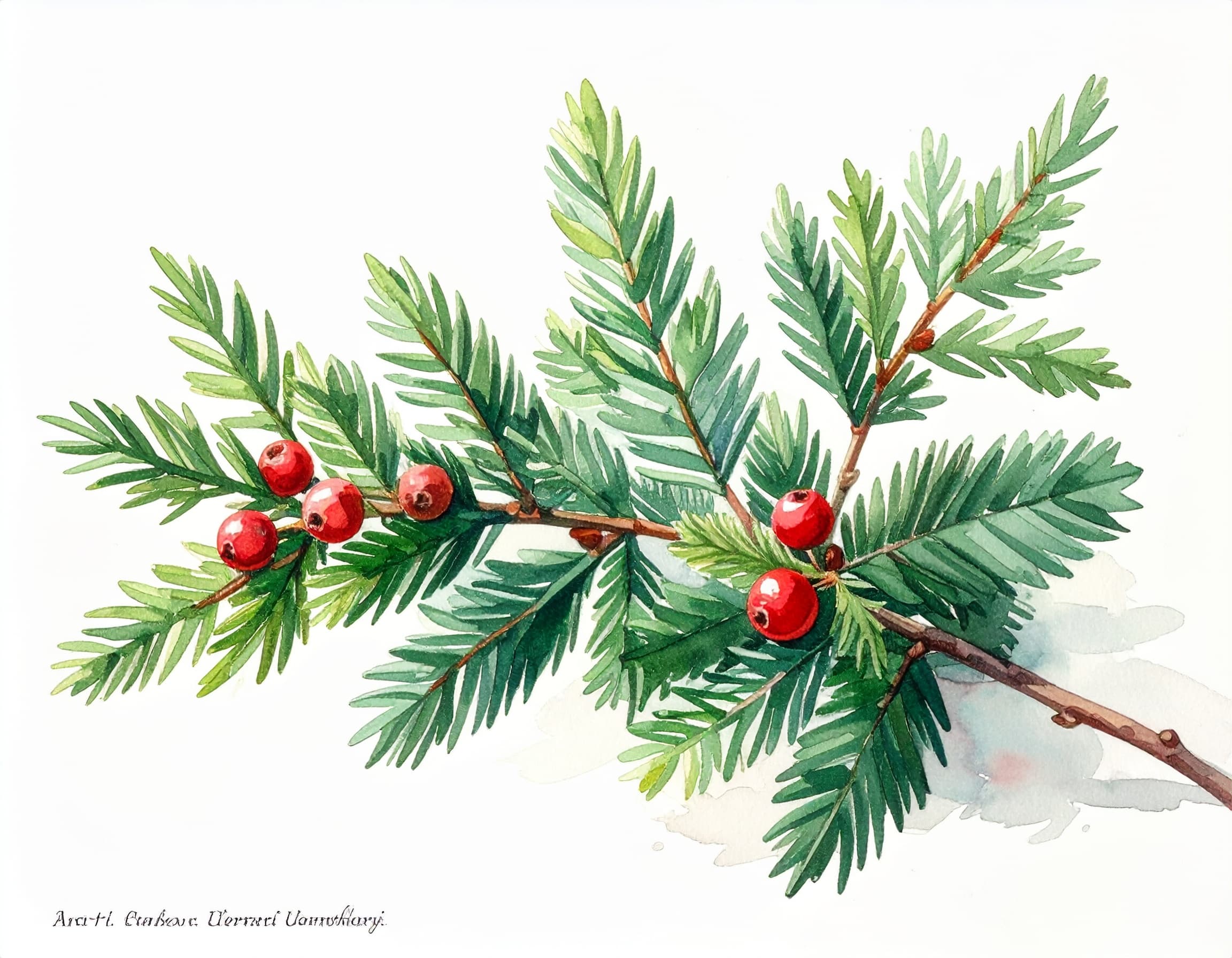
Also called Ground Hemlock — a low, spreading evergreen conifer of Alberta's deep boreal forests and shaded ravines, rarely exceeding knee height but sprawling metres wide. Soft dark-green needles and, on female plants, fleshy red berry-like arils in late summer. While the sweet red aril flesh is edible, the seed inside and ALL other parts (needles, bark, wood) contain highly toxic taxine alkaloids that can cause rapid cardiac arrest in humans, pets, and livestock. Paclitaxel (Taxol), the chemotherapy drug, was originally derived from yew species.
Quick Facts
Distribution
Boreal Forest, Peace River
Light
Deep shade, moist
Bloom Time
Aug–Oct (berries)
Soil
Rich, moist, humus-rich forest floor; tolerates acidic to neutral pH
Water
Consistently moist; dislikes drought
Growing & Cultivation
Propagation
Softwood cuttings in mid-summer root slowly (several months) under mist. Seed requires ~18 months of stratification alternating warm/cold and still germinates unpredictably. Layering of trailing branches is the easiest home method.
Always verify plant identification with multiple sources before consuming any wild plant. This information is for educational purposes only.