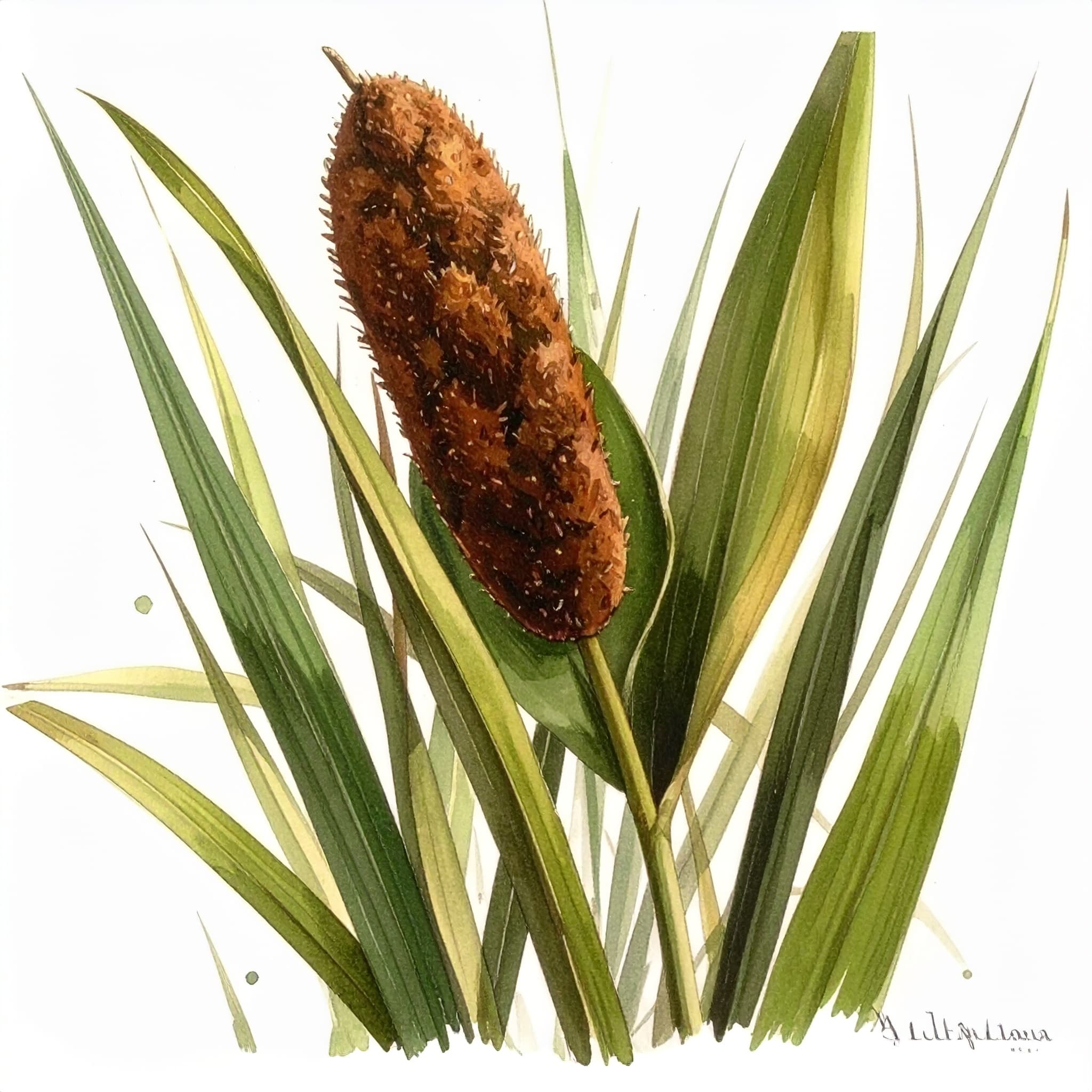
Cattail
Typha latifolia
One of the most useful plants in the province. Nearly every part is edible at some point in the year — young shoots like asparagus, pollen as flour substitute, immature green heads roasted, rhizomes ground into starch. Leaves woven into mats and baskets. Warning: do not harvest from polluted or roadside ponds — cattails bioaccumulate heavy metals. The non-native Narrow-leaf Cattail (T. angustifolia) can hybridize and should be distinguished by its narrower (< 2 cm) leaves.
Quick Facts
Distribution
Province-wide (wetlands), Zone 1
Light
Full sun, wet
Bloom Time
June–July
Soil
Wet, mucky; rooted in shallow standing water up to 50 cm deep
Water
Standing or saturated — grows in water 5–50 cm deep
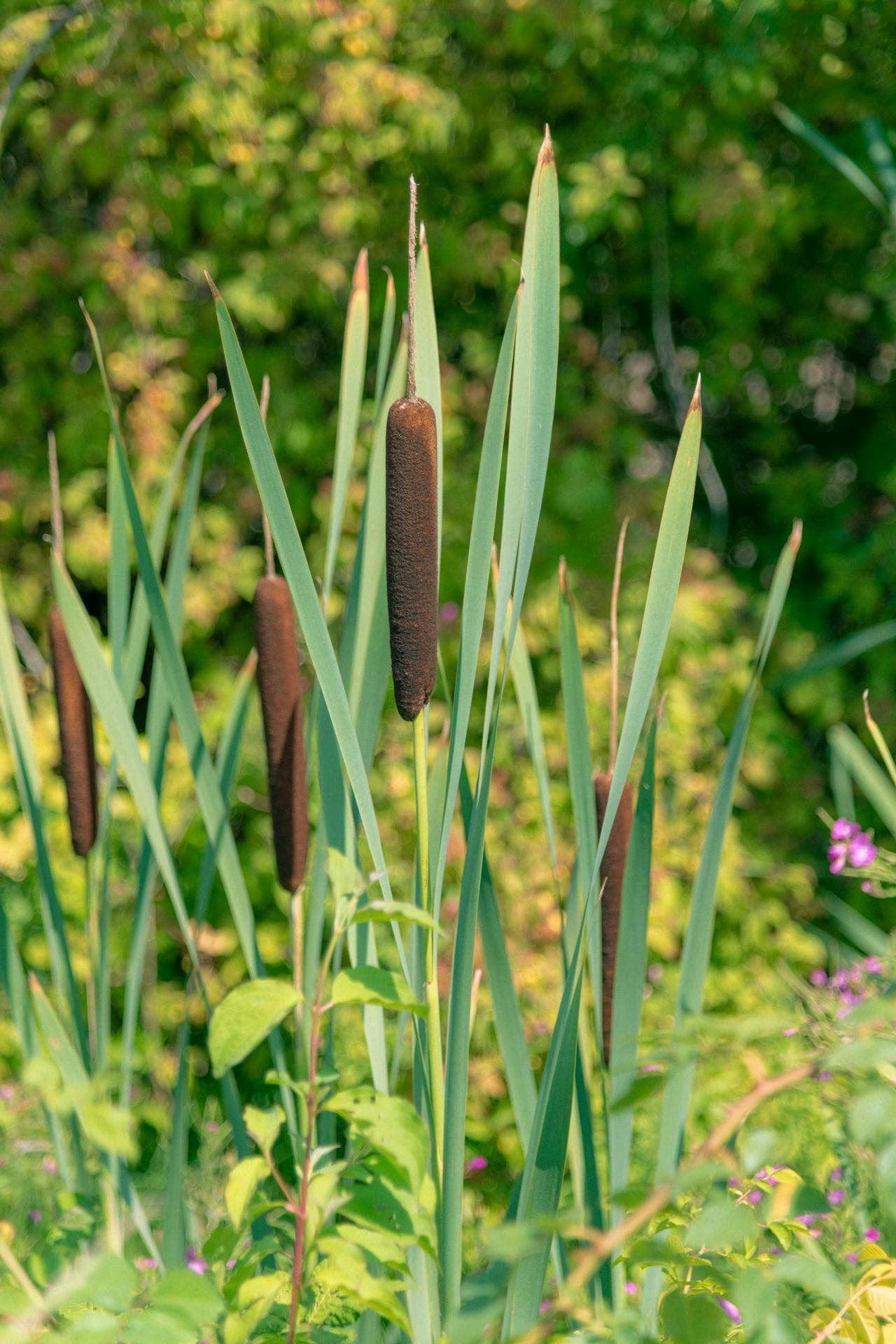
Growing & Cultivation
Propagation
Division of rhizomes in spring or fall — chop into pieces, each with a growing tip, and press into mud. Spreads aggressively once established — contain in ponds or use only where unrestricted spread is wanted.
Always verify plant identification with multiple sources before consuming any wild plant. This information is for educational purposes only.