Chokecherry
Prunus virginiana
takwahiminan(Cree)
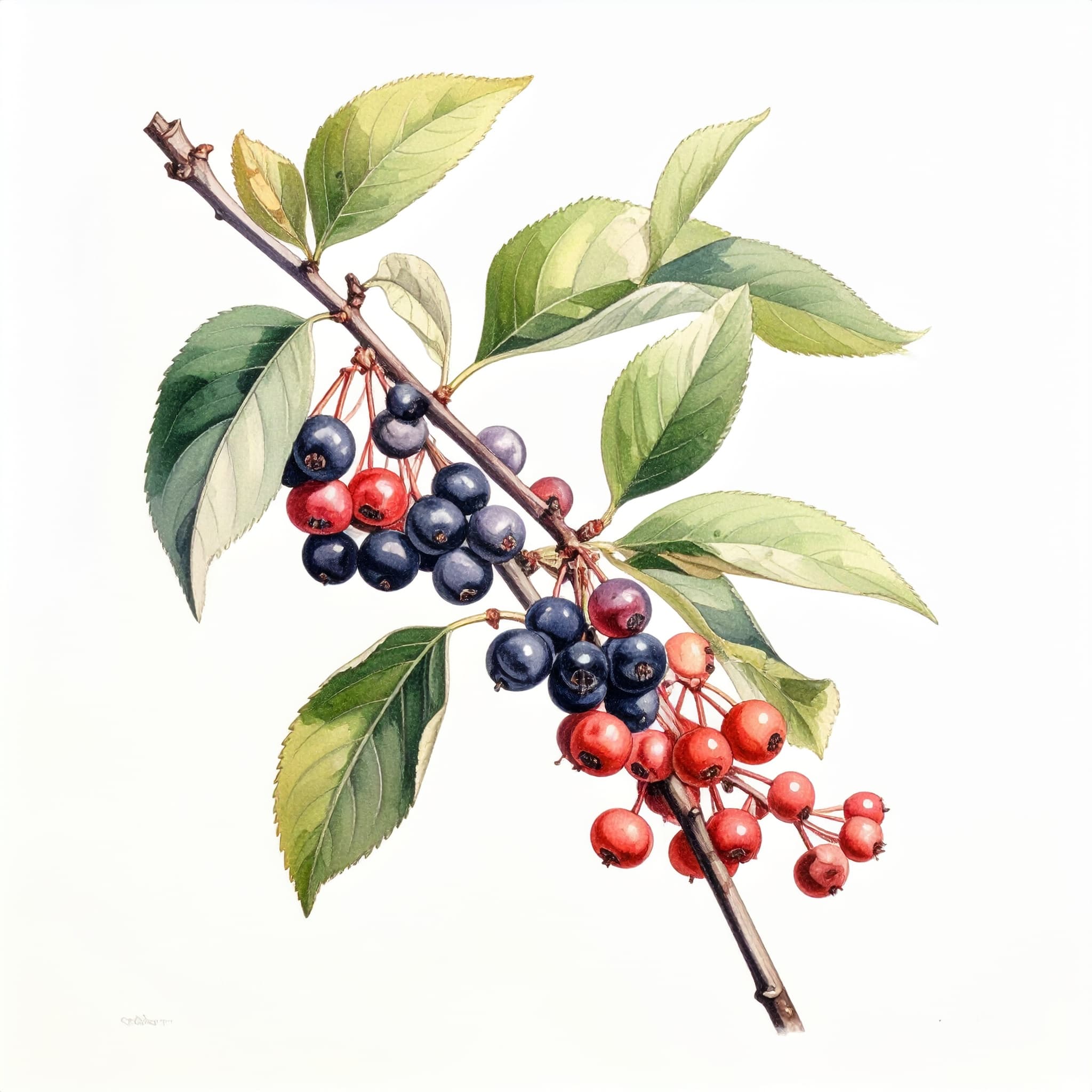
One of the most important traditional food plants on the Northern Plains. Tart and astringent fresh, they shine in jams, syrups, and were central to traditional pemmican. A suckering large shrub or small tree, 2–6 m tall, with fragrant white flower racemes in spring and dark purple-black fruits in August. Never crush or eat the pits — they contain cyanogenic compounds. Leaves wilting on heat-stressed branches are especially dangerous to livestock.
Quick Facts
Distribution
Province-wide (parkland), Zone 1
Light
Full sun
Bloom Time
Apr–May
Soil
Adaptable; tolerates poor dry to moderately moist soils
Water
Moderate; drought-tolerant once established
Growing & Cultivation
Propagation
Seed after 120–160 days cold stratification (sow fresh in fall for natural stratification). Root suckers transplant easily in early spring. Hardwood cuttings are slow/unreliable.
Pruning / Splitting
Can be cut back hard to renew old thickets — resprouts vigorously from the base
Always verify plant identification with multiple sources before consuming any wild plant. This information is for educational purposes only.