Common Milkweed
Asclepias syriaca
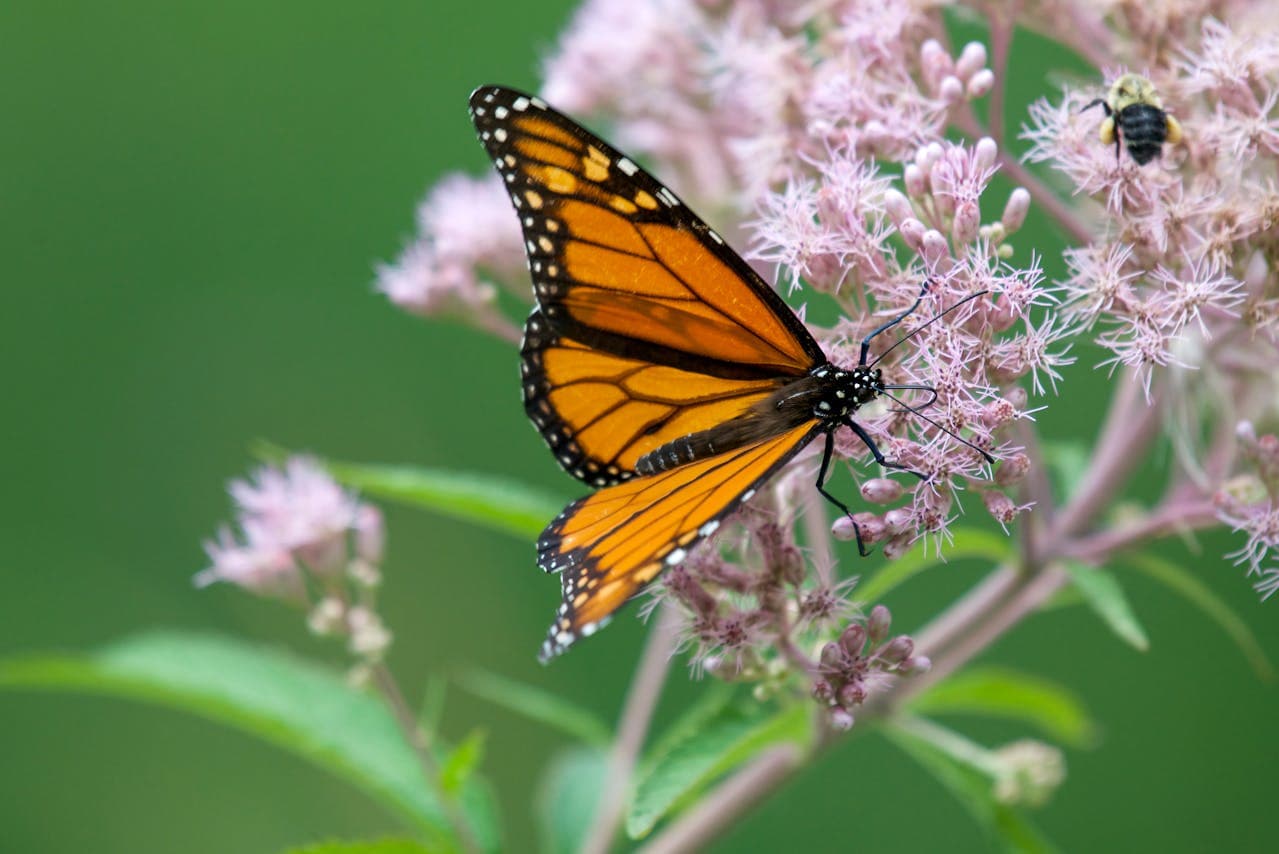
Common milkweed is the eastern North American milkweed, native from the Great Lakes east to the Atlantic and naturalized in some parts of the prairies. Like showy milkweed it is an obligate host plant for monarch butterflies and a top-tier nectar plant for native bees and wasps. Differs from showy milkweed in three ways: rosier-pink flowers with a stronger jasmine-vanilla scent, broader leaves, and a much more aggressive spreading habit through deep underground rhizomes. Common milkweed can colonize a flowerbed completely within a few years, so site it where you want a milkweed patch, not where you want a tidy border. Ideal for a dedicated pollinator strip, a hellstrip, or a back corner where it can run. Pods are larger and more dramatic than showy milkweed's. Reliably hardy in southern Alberta (Zone 3) and the Edmonton area with snow cover; less consistent further north.
Quick Facts
Distribution
Native to eastern North America (Great Lakes and east). Naturalized in parts of the prairies. Hardy to Zone 3 in southern Alberta and the Edmonton area with reliable snow cover.
Light
Full sun. Performance declines noticeably in shade.
Bloom Time
Early July through August (typically slightly later than showy milkweed and longer-blooming)
Soil
Average to lean, well-drained. Tolerates clay if it drains. Spreads more aggressively in rich soil.
Water
Low to moderate. Drought-tolerant once established.
Growing & Cultivation
Best Planting Time
Fall direct-sow, or spring after cold-moist stratification of 30 to 60 days.
Propagation
Seed (stratification required, see showy milkweed). Rhizome cuttings of mature plants root readily; this is how you accidentally spread it across the yard, so handle root soil deliberately.
Pruning / Splitting
Cut spent stems back in late fall. To contain spread, sever the rhizomes around the desired patch with a sharp spade once a year.
Seed Collection
Same as showy milkweed: harvest pods just before they split, dry, separate silk from seed.
Spacing
60 cm initially, but plan for a colony, not a clump.