Daylily
Hemerocallis
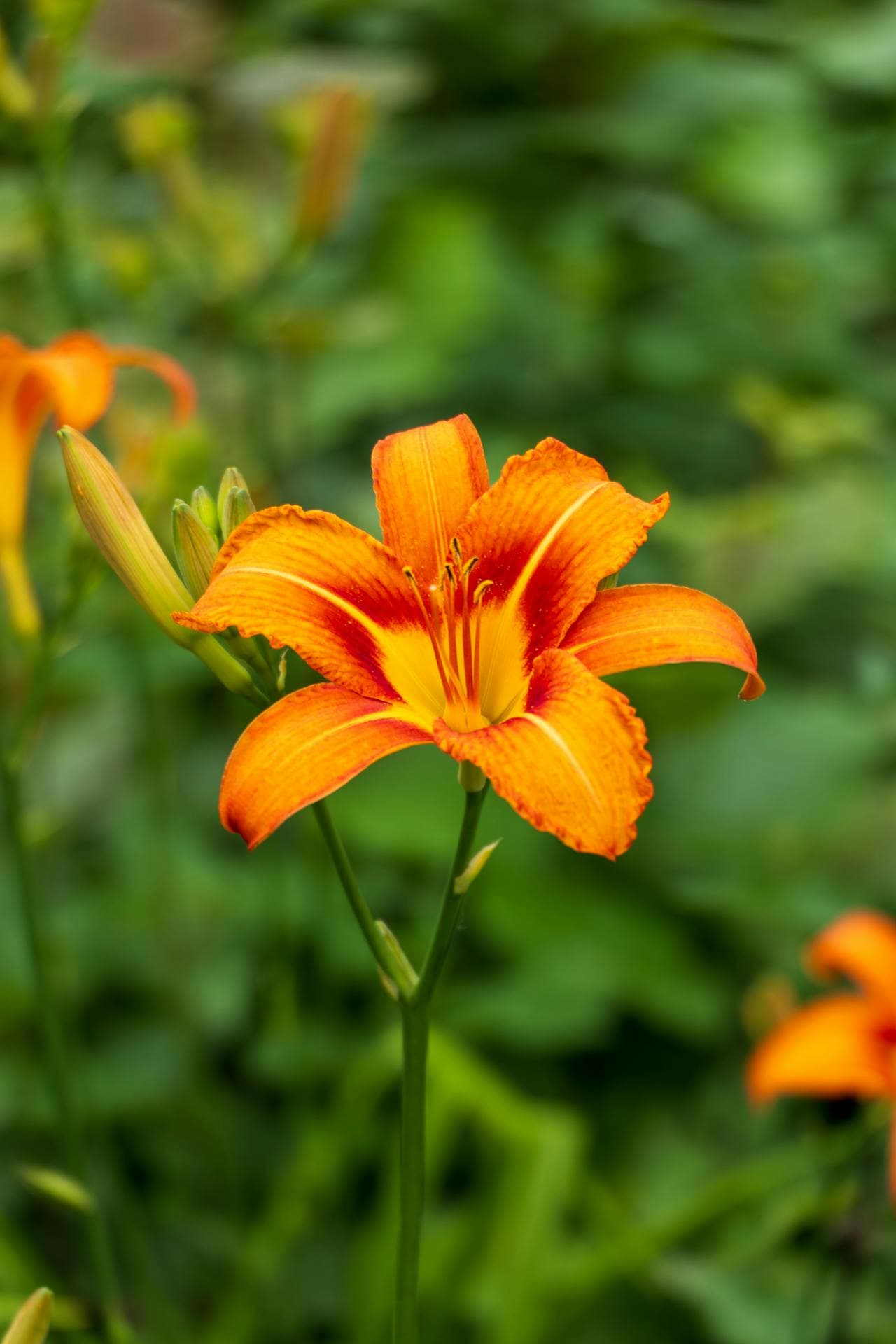
Daylilies are among the most forgiving long-bloom perennials in the prairie garden: each flower lasts only a single day (hence the genus name, Greek for 'beauty for a day'), but each scape carries 8 to 20 buds that open in succession over several weeks. Hardy to Zone 3 throughout Alberta with most modern cultivars, and to Zone 2 with the toughest old varieties (such as the classic orange 'ditch lily', H. fulva). Bloom colour spans every shade except true blue: yellow, orange, red, pink, mauve, melon, near-black, plus bicolours, eye-zones, and ruffled or spider-shaped petal forms. Re-blooming and extended-bloom cultivars (such as 'Stella d'Oro', 'Happy Returns', 'Pardon Me', 'Rosy Returns') flower from late June into September with deadheading. Daylilies tolerate clay, lean soil, drought once established, and almost any pH; their main need is sun. The biggest pet warning is for cats: ingestion of any plant part, even pollen on fur, can cause acute kidney failure in cats. Plant only in dog yards or yards with no cats; the risk to feline companions is not worth the bloom.
Quick Facts
Distribution
Garden perennial. Original species native to East Asia. Hardy throughout Alberta (Zone 3; many cultivars Zone 2).
Light
Full sun for heaviest bloom. Tolerates part sun.
Bloom Time
Late June through early August for single-bloomers; late June through September for re-bloomers
Soil
Adaptable. Tolerates clay, loam, sand. Best in moderately fertile, well-drained soil. pH 6.0 to 7.5.
Water
Moderate. Drought-tolerant once established. Bloom is larger and more sustained with consistent moisture.
Growing & Cultivation
Best Planting Time
Spring (late April through May) or early fall.
Propagation
Division of mature clumps in early spring or early fall every 3 to 5 years. Each fan with roots will become a new plant.
Pruning / Splitting
Deadhead individual flowers (snap off the spent bloom) to keep plants looking tidy. Remove entire spent scapes once all buds have bloomed. Cut foliage back in late fall after frost.
Spacing
45 to 60 cm.
Always verify plant identification with multiple sources before consuming any wild plant. This information is for educational purposes only.