Haskap
Lonicera caerulea
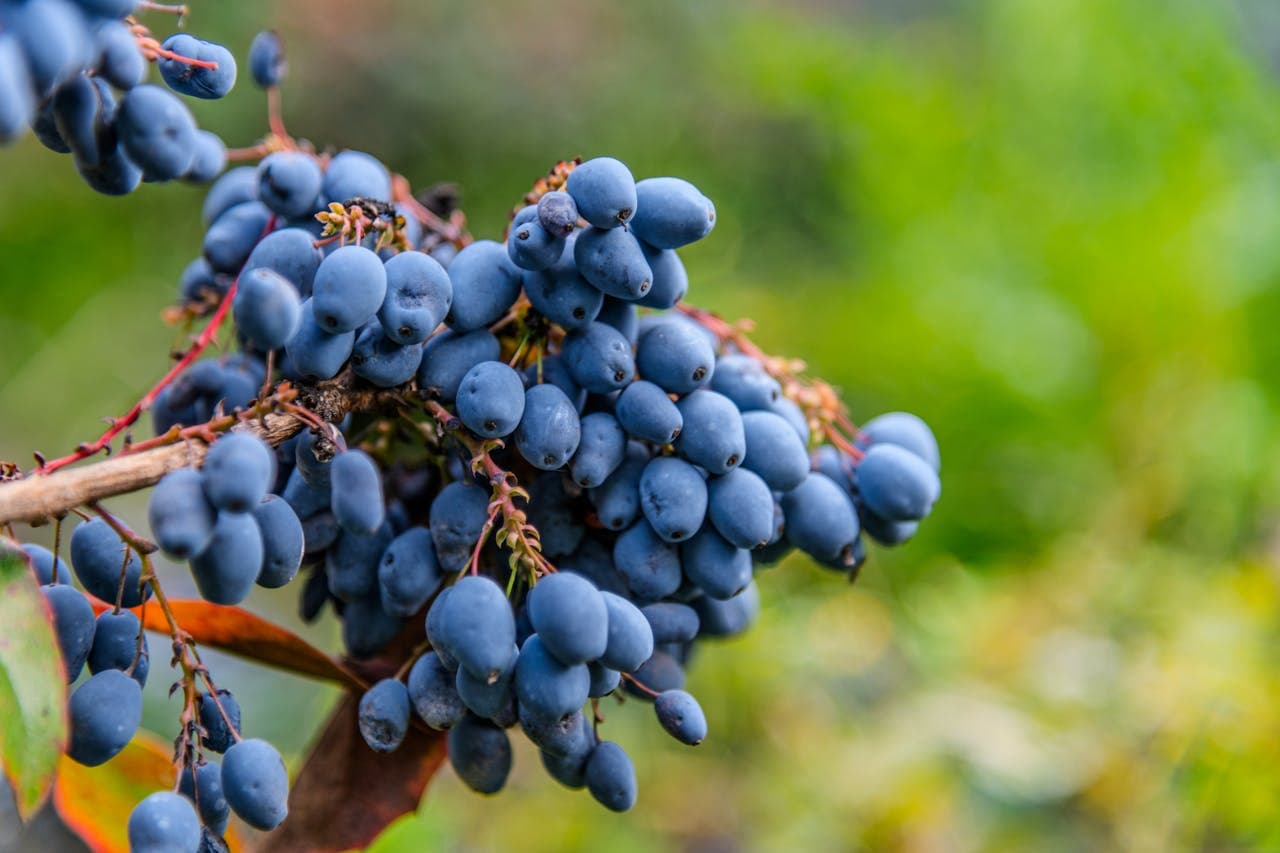
Haskap, also marketed as honeyberry, is a hardy circumpolar honeysuckle with oblong blue berries that ripen weeks before saskatoons (typically mid to late June in Edmonton). The name comes from the Ainu language of northern Japan, where the plant has been valued for centuries as the fruit of long life and good vision. Modern Canadian haskap cultivars were bred at the University of Saskatchewan and represent some of the best prairie-adapted fruit crops available: bone-cold-hardy to roughly minus 40 C, bird-resistant compared to saskatoons, productive on a wide range of soils, and almost trouble-free. The flavour reads like a cross between blueberry, raspberry, and blackcurrant. For any yield at all, plant at least two compatible cultivars for cross-pollination. The U of S Boreal series ('Boreal Beauty' x 'Boreal Beast') is a reliable late pollinator pair; 'Aurora' (early) with 'Honey Bee' or 'Indigo Gem' (early to mid) is another classic combination. Plants typically bear within 2 to 3 years and reach full production around year 5.
Quick Facts
Distribution
Garden fruit shrub. Original species circumpolar (Canada, Russia, Japan, northern Europe). Reliably hardy to Zone 1, easy across all of Alberta.
Light
Full sun for best yield. Tolerates a few hours of afternoon shade with reduced berry production.
Bloom Time
Late April to early May (one of the earliest flowering fruits on the prairie, important for early bumble bees)
Soil
Adaptable. Tolerates pH 5 to 8 and a wide range of textures. Edmonton's slightly alkaline Black Chernozem suits haskap well. Heavy clay is workable if it drains in spring.
Water
Moderate. Consistent moisture during flowering and fruit set (May into early June) gives the best berry size. Tolerates drought once established but yields drop in dry years without supplemental water.
Growing & Cultivation
Best Planting Time
Spring (late April through May) or early fall. Potted plants can go in any time the ground is workable.
Propagation
Hardwood cuttings in late winter, or softwood cuttings under mist in midsummer. Layering also works. Seed-grown plants do not come true to cultivar and take much longer to bear, so buy named pollinator pairs from a nursery for predictable results.
Pruning / Splitting
Light annual pruning in late winter once plants are 4 to 5 years old: remove the oldest, woodiest stems at the base each year to encourage productive new growth. Otherwise minimal.
Seed Collection
Berries ripen mid to late June. Mash ripe fruit, rinse seed clear of pulp, and dry on paper. Seedlings rarely match the parent cultivar.
Spacing
1.2 to 1.5 m between bushes; pollinator partner within 3 m for reliable cross-pollination.
Always verify plant identification with multiple sources before consuming any wild plant. This information is for educational purposes only.