Lavender
Lavandula angustifolia 'Munstead'
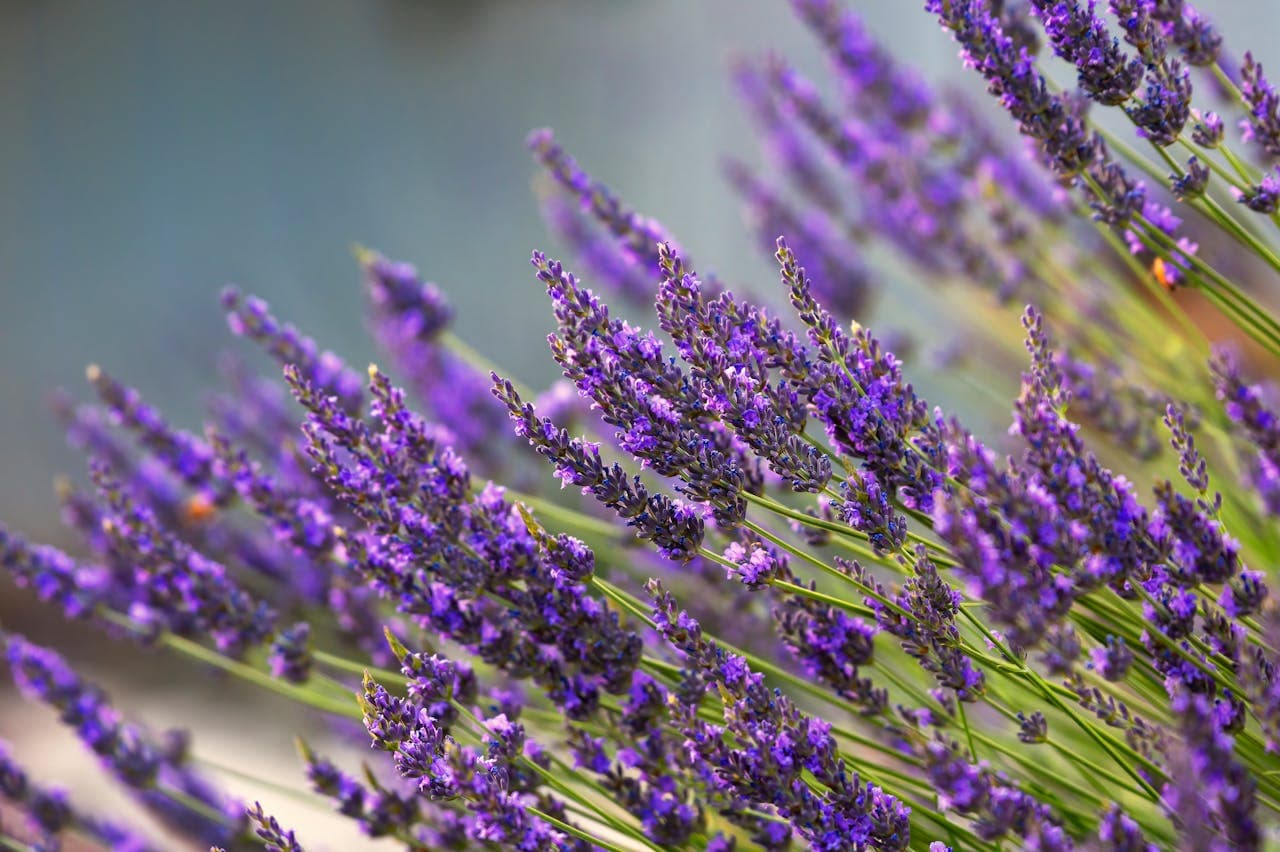
True English lavender, specifically the cultivar 'Munstead', is the only lavender that reliably survives Alberta winters in the open garden. Bred in the early 20th century at Munstead Wood (the garden of Gertrude Jekyll), it is hardy to Zone 4 with reliable snow cover, which means it works in much of Edmonton in a sheltered south-facing location with good drainage and a deep snow load. Plants are compact (40 to 50 cm), tightly mounded, with grey-green needle-like foliage that releases the characteristic lavender oil when brushed. Lavender-blue spike flowers in late June and July are intensely fragrant and a top draw for honey bees, native bumbles, and butterflies. Two non-negotiable requirements for prairie success: sharp drainage (the most common cause of failure is wet winter feet, not cold) and no fall pruning (cut back only in spring after new growth shows). Container-grown lavender can be brought into an unheated garage for winter in zones where it will not survive in the open. Other cultivars sometimes worth a gamble in protected sites include 'Hidcote' (deeper purple flowers, slightly less hardy) and 'Blue Cushion' (very compact).
Quick Facts
Distribution
Garden perennial. Native to the western Mediterranean. Hardy to Zone 4 with reliable snow cover; viable in the warmer, well-drained parts of Edmonton (south-facing, sandy, sheltered) but treat as a calculated risk.
Light
Full sun. Absolutely needs at least 6 hours of direct sun.
Bloom Time
Late June through July
Soil
Lean, alkaline (pH 7.0 to 8.0), sharply drained. Sand, gravel, or amended clay with significant grit. Heavy clay without amendment is a death sentence over winter. Plant on a slight mound to ensure drainage.
Water
Low. Drought-tolerant once established. The most common cause of plant loss is too much water, not too little.
Growing & Cultivation
Best Planting Time
Late May to early June, after frost risk passes, so the plant has the full season to harden off before winter.
Propagation
Softwood stem cuttings in early summer root reliably (10 to 14 days under mist or in a covered tray). Seed propagation works but is slow and seedlings vary; for 'Munstead' specifically, buy named cuttings.
Pruning / Splitting
Prune in spring only, after new green growth shows at the base of the stems. Cut back into the green wood (about 2/3 of the previous year's growth) to keep plants compact and prevent them from becoming woody. Never cut into bare brown wood; lavender does not regenerate from old wood.
Spacing
45 to 60 cm.
Always verify plant identification with multiple sources before consuming any wild plant. This information is for educational purposes only.