Nasturtium
Tropaeolum majus
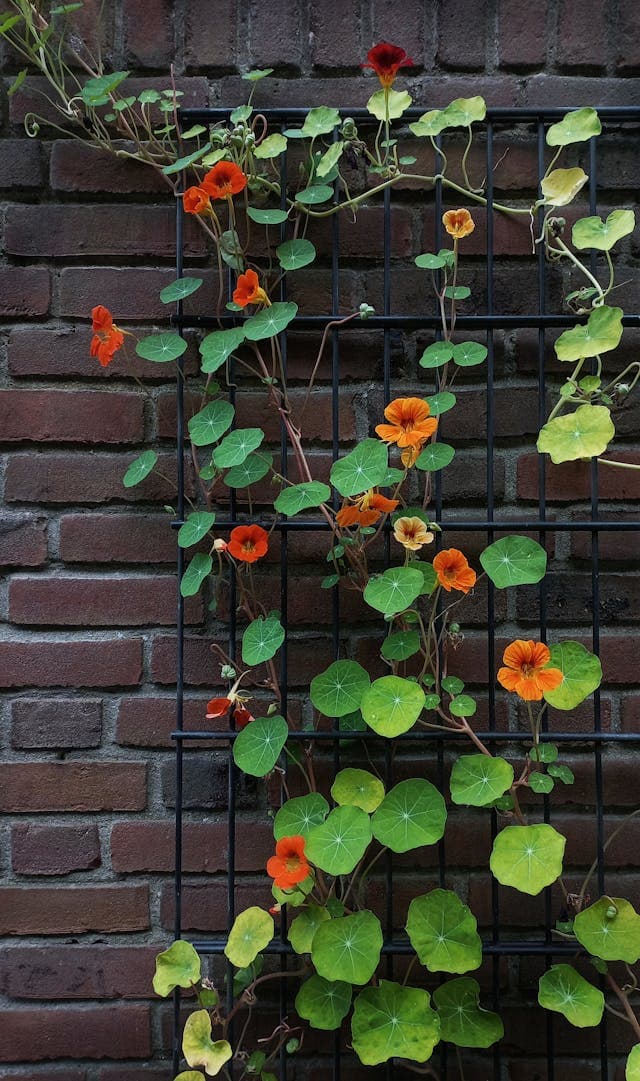
Nasturtium is the easiest edible flower for the Edmonton garden: trailing or bushy annuals with peltate round leaves and trumpet-shaped flowers in yellow, orange, scarlet, salmon, mahogany, and cream from July through hard frost. Every part of the plant is edible: peppery leaves go into salads, the flowers garnish summer dishes, and the green seedpods pickle as a caper substitute. Native to the Andes of South America (Peru and Bolivia). Two main forms: climbing or trailing varieties (vining 2 to 3 m, useful on trellises or spilling from containers) and dwarf bushy varieties (30 to 40 cm, tidy in beds and edging). The Alaska series has variegated leaves that brighten shady spots. The Empress of India series produces deep crimson flowers on blue-grey foliage. Nasturtiums classically prefer lean soil: rich beds produce all foliage and few flowers. Easy from direct-seed after last frost, fast to germinate (5 to 10 days), and one of the most pollinator-friendly annuals you can plant; native bumble bees and hummingbirds work the flowers heavily.
Quick Facts
Distribution
Summer annual across Alberta. Native to the Andes (Peru, Bolivia).
Light
Full sun to part sun.
Bloom Time
July through hard frost
Soil
Lean to average, well-drained. Rich soil reduces flowering dramatically.
Water
Moderate. Consistent moisture during establishment; drought-tolerant once established.
Growing & Cultivation
Best Planting Time
Direct-sow late May after last frost. Soak seeds overnight for faster germination. Indoor starts work but transplant shock is real; direct-seeding usually wins.
Propagation
Direct seed 1 to 2 cm deep, 25 to 30 cm apart. Self-seeds modestly if pods are left to drop.
Pruning / Splitting
Pinch back trailing varieties to keep them tidy. Deadhead spent flowers to encourage continuous bloom.
Seed Collection
Large pea-sized seed pods form below spent flowers, mature green to wrinkled tan in September. Pluck ripe seeds from the plant, dry indoors, store cool and dry.
Spacing
25 to 30 cm for bushy varieties, 30 to 45 cm for trailing types.
Always verify plant identification with multiple sources before consuming any wild plant. This information is for educational purposes only.