New England Aster
Symphyotrichum novae-angliae
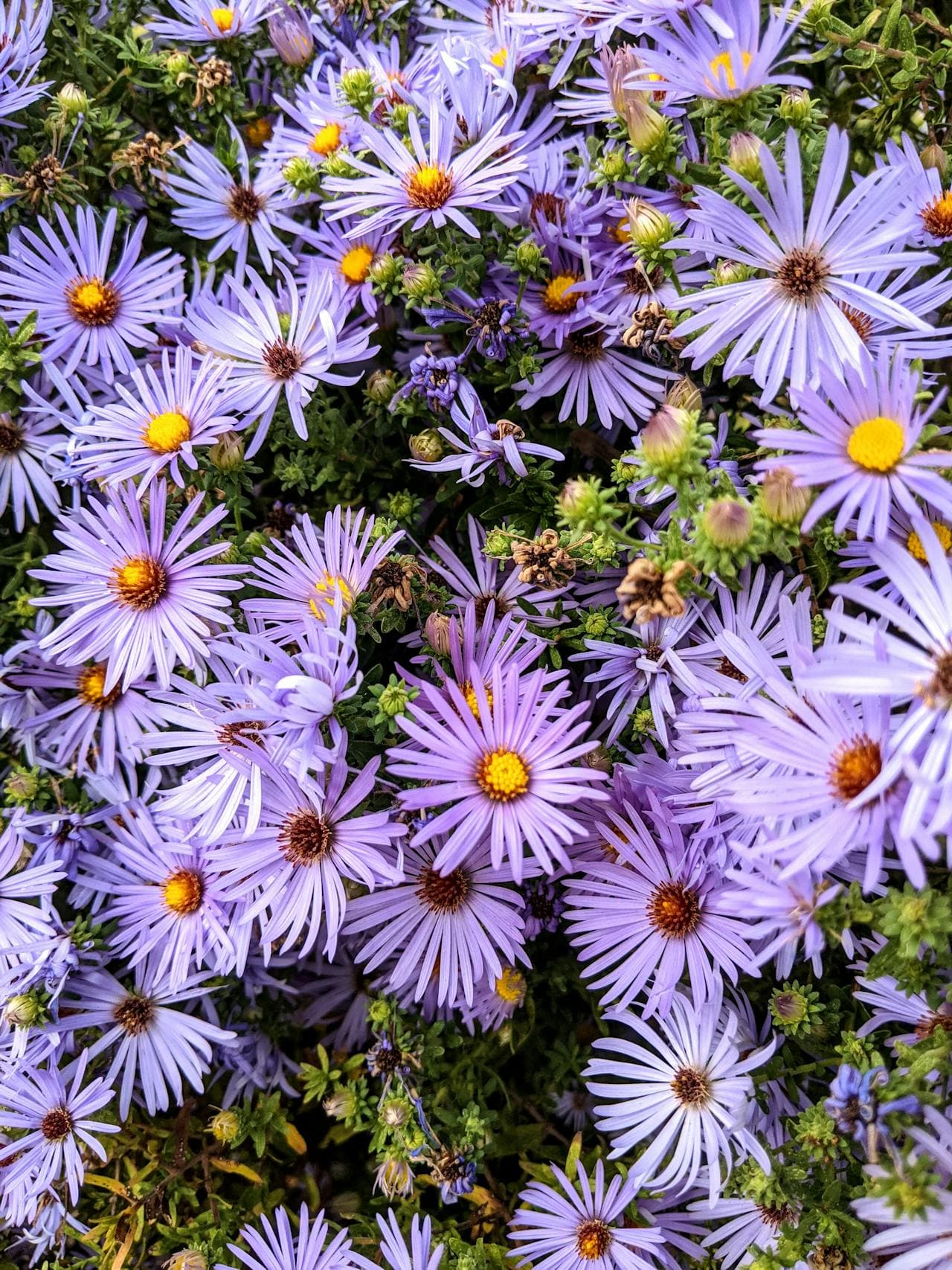
New England aster is the high-impact late-summer aster: tall (1 to 1.5 m), upright, and covered in dense clusters of 2 to 3 cm purple, pink, or magenta daisies from late August through October. Native to eastern and central North America; not native to Alberta but a top performer here, hardy to Zone 3, and one of the most valuable late-season pollinator plants in the prairie garden. Bumble bee queens, migrating monarchs (in years they reach us), painted ladies, and a dozen species of native bees rely on aster nectar to fuel the last weeks of the season. Tends to lose lower leaves and look leggy by bloom time; remedy by pinching back the stems by one-third in mid-June (the 'Chelsea chop') to force shorter, bushier, better-clothed plants. Reliable Edmonton-hardy cultivars include 'Purple Dome' (compact, 60 cm), 'Alma Potschke' (vivid pink), and 'September Ruby' (deep magenta).
Quick Facts
Distribution
Native to eastern and central North America (not native to Alberta). Hardy garden perennial to Zone 3 across the province.
Light
Full sun.
Bloom Time
Late August through October (one of the last meaningful pollinator plants of the season)
Soil
Moderately fertile, well-drained loam. Tolerates clay if not waterlogged.
Water
Moderate. Drought-tolerant once established but flowers more freely with consistent moisture.
Growing & Cultivation
Best Planting Time
Spring (late April through May) or early fall.
Propagation
Spring division every 3 to 4 years (the centre of old clumps dies out). Stem cuttings in early summer. Seed is possible but cultivars do not come true; species seed germinates after 30 days cold-moist stratification.
Pruning / Splitting
Pinch or shear back by one-third in mid-June for a shorter, bushier plant with more flowers and better lower-leaf cover. Cut to the ground after killing frost.
Spacing
45 to 60 cm.