Russell Lupine
Lupinus polyphyllus
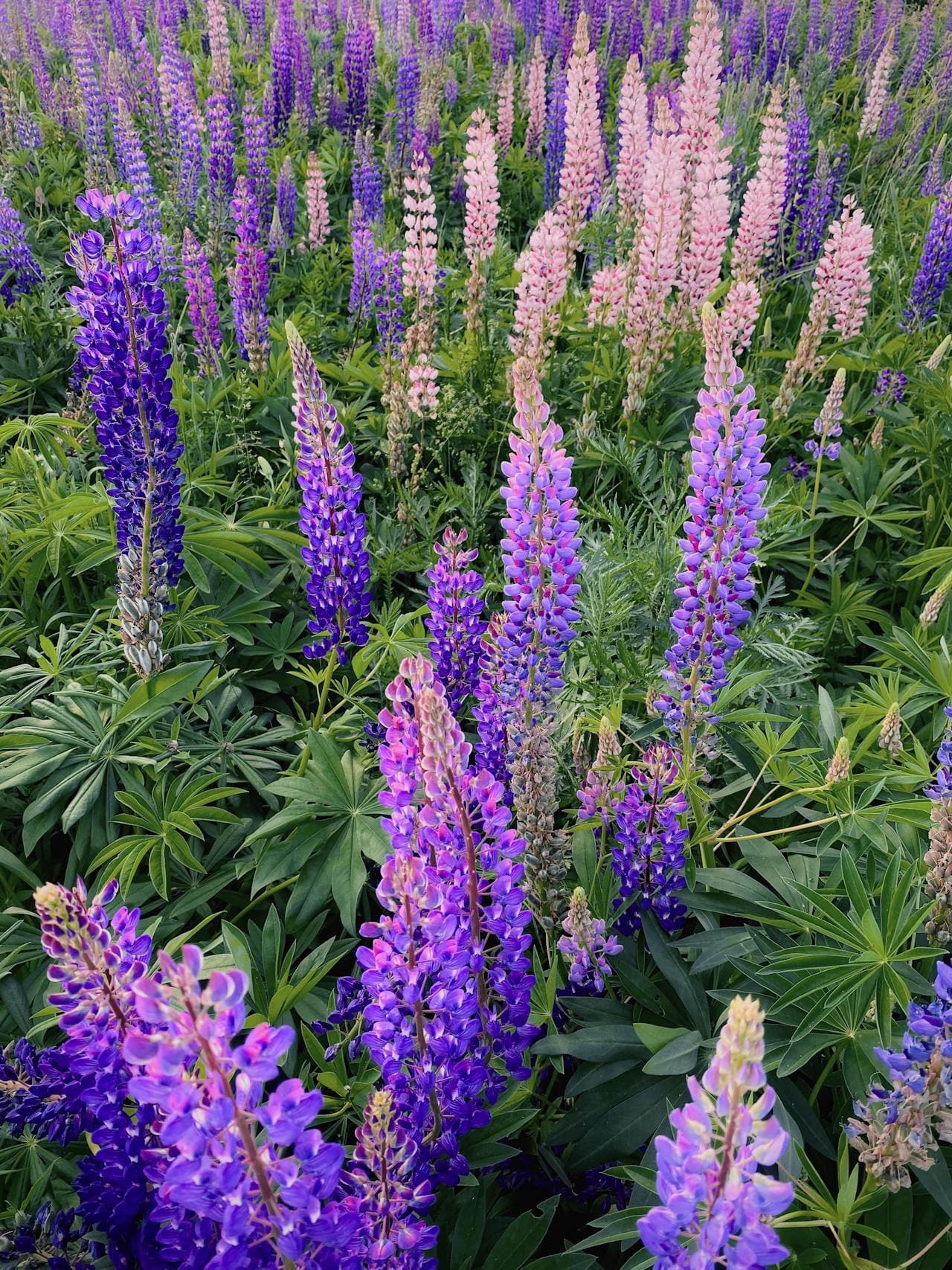
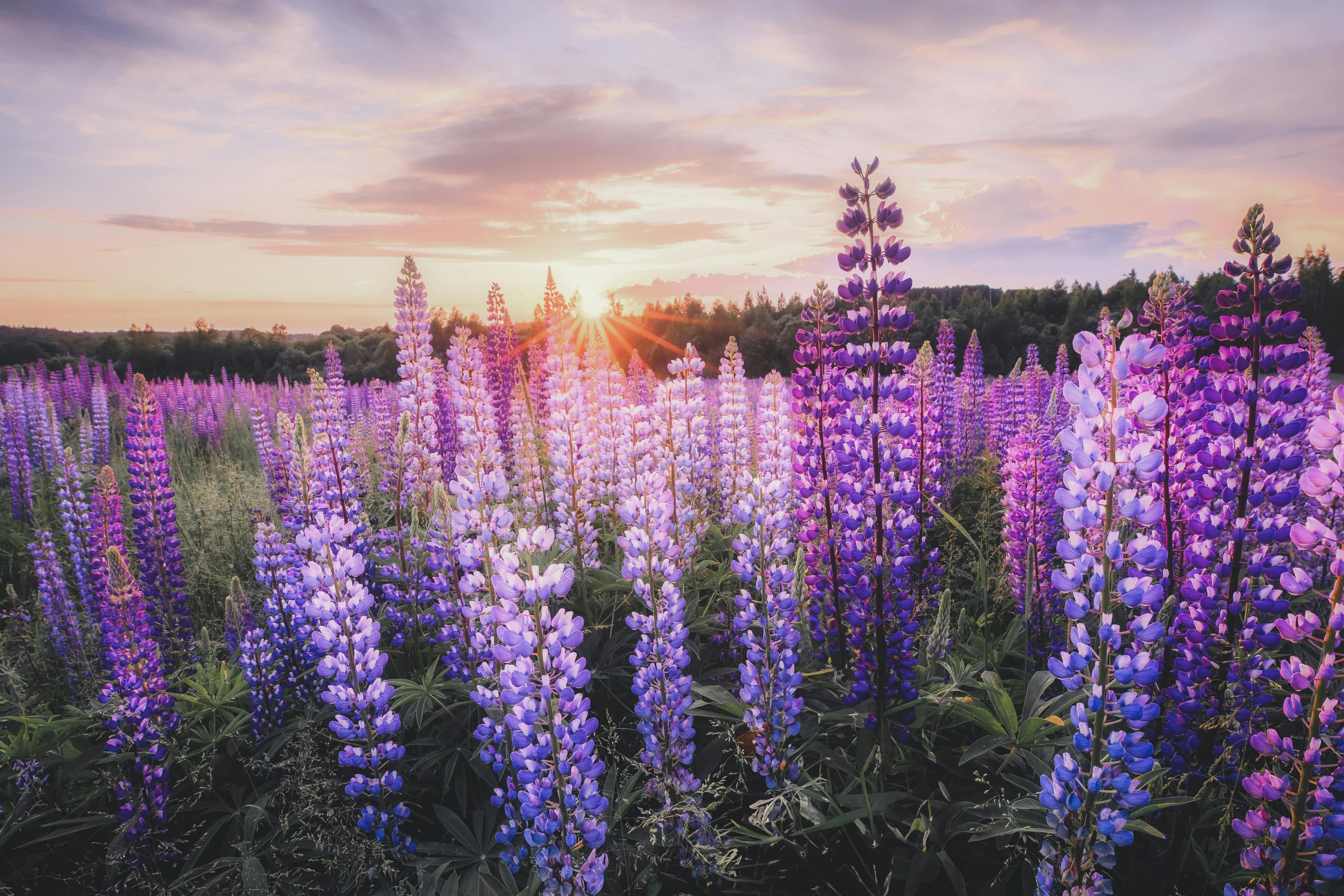
Russell lupines are the towering, multicoloured spires that fill prairie yards and ditches in late June and July: pink, lavender, blue, yellow, white, magenta, and bicolour cones of pea-shaped flowers on 1 to 1.2 m stems above palmate, hand-shaped leaves. Bred by George Russell in England in the early 20th century from the parent species Lupinus polyphyllus (a Pacific Northwest native), Russell hybrids are hardy throughout Alberta (Zone 3 reliably; Zone 2 with snow cover) and are widely naturalized along roadsides across the Foothills and into the Boreal. Treat as a short-lived perennial: most plants give 3 to 5 good years before declining, but self-seed reliably if you let pods mature. Like all legumes, lupines fix nitrogen and improve the soil. Bumble bees are the primary pollinators (the flowers' weighted keel petal is shaped for bumble bee mass). All Lupinus species are toxic to livestock and pets; if you keep grazing animals, choose another perennial. Native Lupinus arcticus (arctic lupine) is the smaller true-native option for Alberta wildflower meadows.
Quick Facts
Distribution
Garden perennial. Original species native to the Pacific Northwest. Naturalized in parts of Alberta. Hardy across the province (Zone 3 reliably).
Light
Full sun.
Bloom Time
Late June through July; sporadic re-bloom in September with prompt deadheading
Soil
Lean to moderately fertile, slightly acidic to neutral, well-drained. Dislikes rich soil (produces foliage at the expense of flowers) and absolutely dislikes heavy wet clay over winter.
Water
Low to moderate. Drought-tolerant once established.
Growing & Cultivation
Best Planting Time
Direct-sow in late April through May. Scarify (nick the hard seed coat) and soak overnight before planting for faster germination. Transplant nursery starts mid-May to early June.
Propagation
Seed is standard. Scarify, soak, sow 1 cm deep. Inoculate with Rhizobium for legume nitrogen fixation if planting in soil that has not grown lupines before. Self-seeds if pods are left to mature.
Pruning / Splitting
Deadhead spent spikes to encourage re-bloom and prevent excessive self-seeding (or leave for self-seeding). Cut entire plant down after killing frost.
Seed Collection
Pods mature in August, dry to brown, and split explosively to fling seed several metres. Harvest pods just before they split (when they have darkened but not yet curled), bag them in paper, and let them finish drying indoors.
Spacing
45 to 60 cm.