Russian Sage
Salvia yangii (formerly Perovskia atriplicifolia)
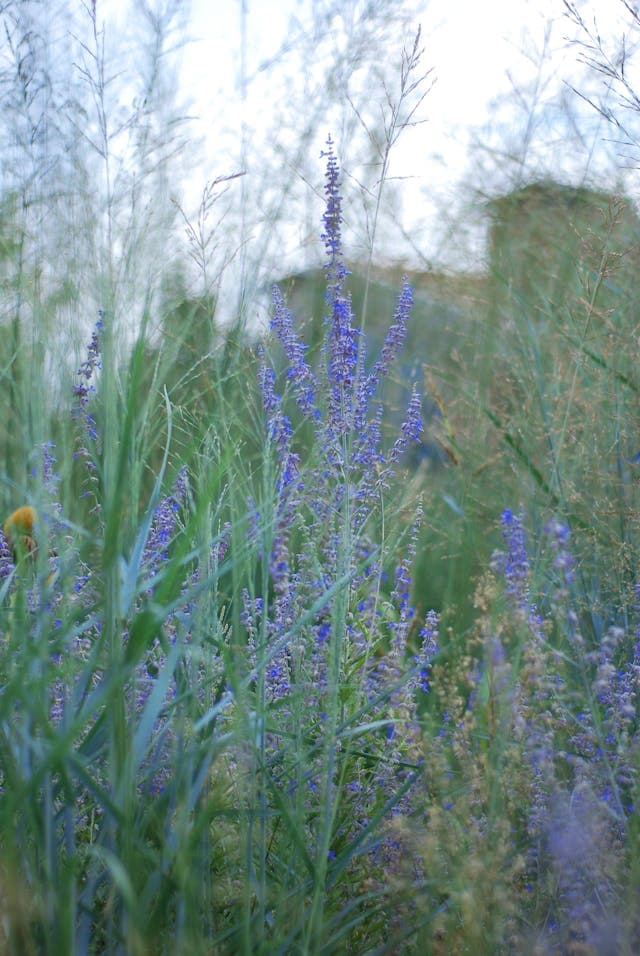
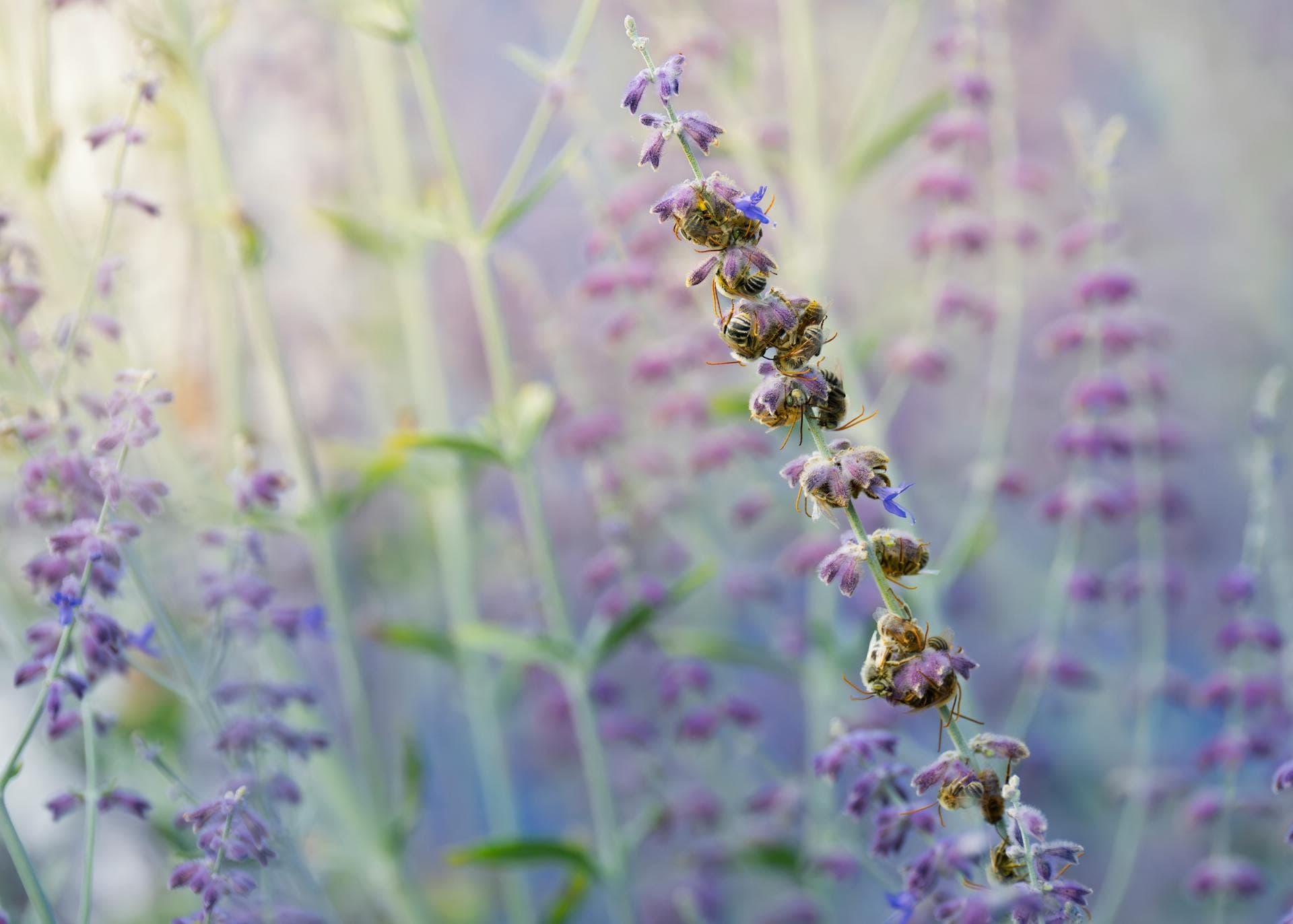
Russian sage is a tough, drought-tolerant subshrub native to the steppes of Central Asia (despite the name, it is not Russian or a true sage; the genus was reclassified from Perovskia to Salvia in 2017). Airy 60 to 120 cm stems carry silver-grey deeply cut leaves topped with hazy spikes of small lavender-blue flowers from mid-July through September. Hardy to Zone 4 throughout Alberta and to Zone 3 with good drainage and reliable snow cover. Exceptional for xeriscaping, drought-tolerant borders, and pollinator strips: a top nectar plant for native bumble bees and a magnet for hummingbirds. Treat the dead stems as semi-woody: leave them standing over winter (they catch snow and protect the crown) and cut back hard to about 15 cm above ground in spring once new growth shows. Compact cultivars worth seeking out for prairie yards include 'Little Spire' (45 to 60 cm), 'Lacey Blue' (50 to 60 cm), and 'Denim 'n Lace' (75 cm with strong upright stems that do not flop).
Quick Facts
Distribution
Garden perennial / subshrub. Native to Central Asia (Iran, Afghanistan, Pakistan, Tibet). Hardy to Zone 4 reliably across Alberta; Zone 3 with snow cover and sharp drainage.
Light
Full sun. Drainage and sun are the two non-negotiables.
Bloom Time
Mid-July through September
Soil
Lean, well-drained, neutral to alkaline. Excellent in sandy, gravelly, or amended Edmonton clay (with grit). Rich soil produces floppy, lax growth.
Water
Low. Drought-tolerant once established. The fastest way to lose a Russian sage is overwatering or wet winter soil.
Growing & Cultivation
Best Planting Time
Late May to early June.
Propagation
Softwood stem cuttings in summer root readily. Seed propagation works but is slow. Established clumps can be divided in spring but resent disturbance.
Pruning / Splitting
Leave standing over winter (the dead stems trap snow and insulate the crown). Cut back hard to 15 cm above ground in spring once green growth shows at the base.
Spacing
60 to 90 cm.