Tropical Hibiscus
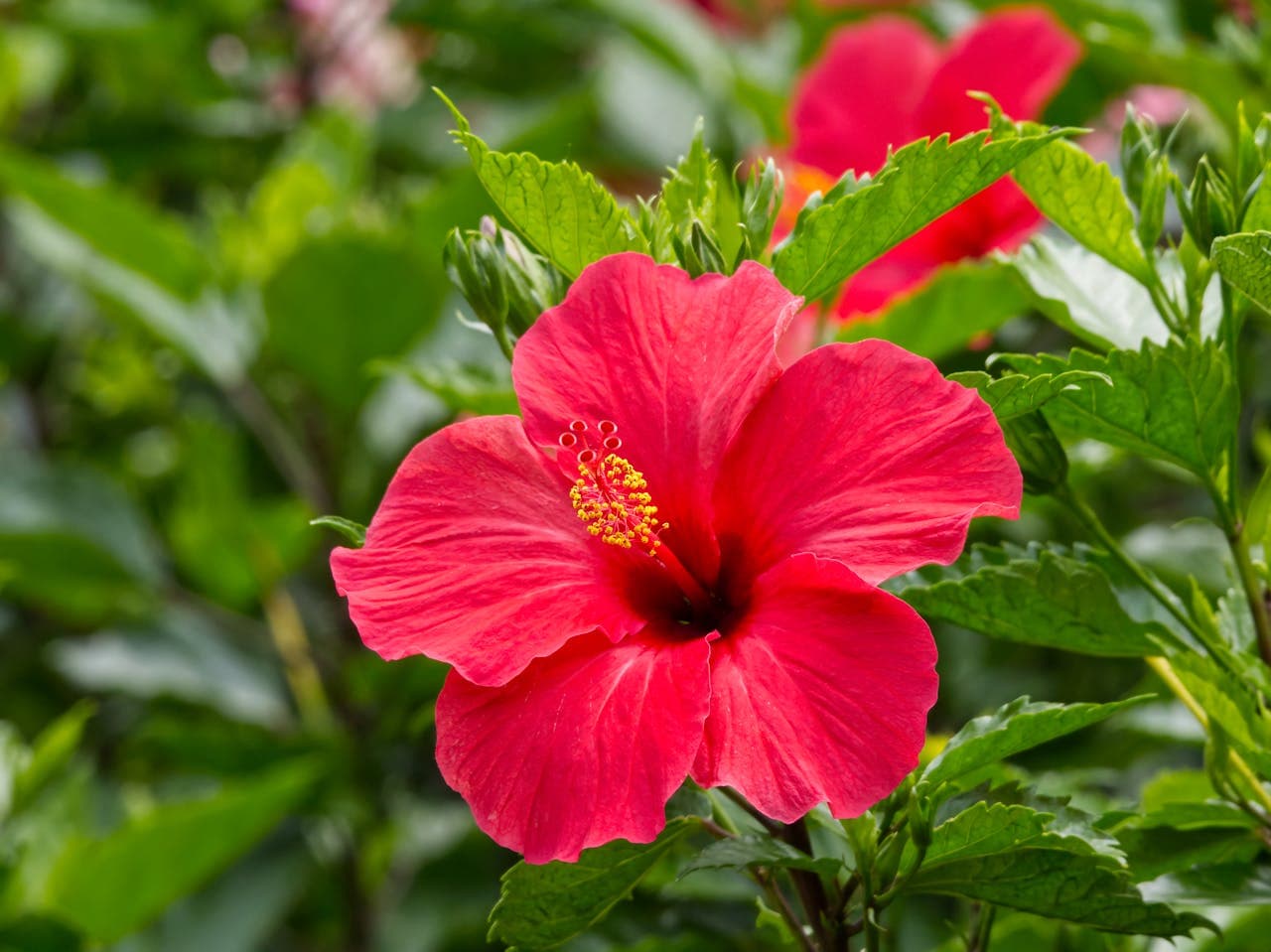
Hibiscus rosa-sinensis
A showy tropical shrub with saucer-sized red, pink, yellow, or orange single or double blooms. Each flower lasts only a day, but mature plants follow with steady waves of new buds through the warm months. Originally from East Asia and now grown across the tropics. Adapts well to summers on Alberta patios and decks if brought indoors before the first frost. Loves full sun and drinks heavily in summer heat. Indoors through winter it needs the brightest window in the house, slightly cooler nights, and a touch less water to rest before spring growth. Yellowing leaves usually mean the plant is either too dry, too cold, or sitting in a draft. Bud drop almost always means a sudden change in light, temperature, or watering rhythm.
Quick Facts
Distribution
Indoor or summer patio (native to East Asia, naturalized across the tropics)
Light
Full sun. 4 or more hours of direct light daily for reliable blooms
Bloom Time
Late spring through fall outdoors. Year-round indoors with enough light
Soil
Rich, slightly acidic, well-draining potting mix with extra perlite
Water
When the top 2 cm of soil is dry. Daily in hot summer outdoor conditions; weekly indoors in winter
Growing & Cultivation
Propagation
Softwood stem cuttings 10 to 15 cm long taken in late spring or early summer. Strip the lower leaves, dip the cut end in rooting hormone, plant in moist perlite-vermiculite mix, and cover loosely with a clear plastic bag for humidity. Roots form in 6 to 8 weeks at 21 to 24 C. Air-layering also works well on stiffer woody stems
Pruning / Splitting
Hard prune in early spring to encourage branching: each cut produces 2 to 3 new flowering shoots. Pinch growing tips through the season to keep the plant bushy