Direct-Sowing Beets & Swiss Chard in Alberta
Quick Care Summary
Beets and Swiss chard are the same species (Beta vulgaris) bred for different purposes — beets for fat sweet roots, chard for big tender leaves. Both grow well in Alberta, both are direct-sown, and both reward succession planting with months of harvest. They’re also among the easiest vegetables for beginners: forgiving on soil, tolerant of cool weather, and free of the pest pressure that plagues brassicas.
The seed-cluster trick
Beet and chard “seeds” aren’t single seeds — each one is actually a dried fruit cluster containing 2–6 individual seeds. Plant one cluster, get 3–5 seedlings. Two implications: sow more thinly than you think (one cluster per spot, not several), and plan to thin aggressively once seedlings emerge.
Modern monogerm varieties (Boldor, Moneta) are bred to produce one seed per cluster — a quality-of-life upgrade if you hate thinning. Available from most major seed catalogues.
When to plant
Direct-sow once soil reaches 10°C — mid-May for most of Alberta. Beets germinate slowly in colder soil and rot in wet cold conditions, so don’t rush. Sow successively every 2–3 weeks through late June for continuous harvest. A late July sowing of fast varieties gives a fall crop that frost-sweetens beautifully.
How to plant
- Soak seed clusters in water for 12–24 hours before sowing — speeds germination dramatically.
- Sow 2 cm deep, one cluster every 5 cm in rows 30 cm apart.
- Cover, water in, keep soil moist until germination (5–10 days).
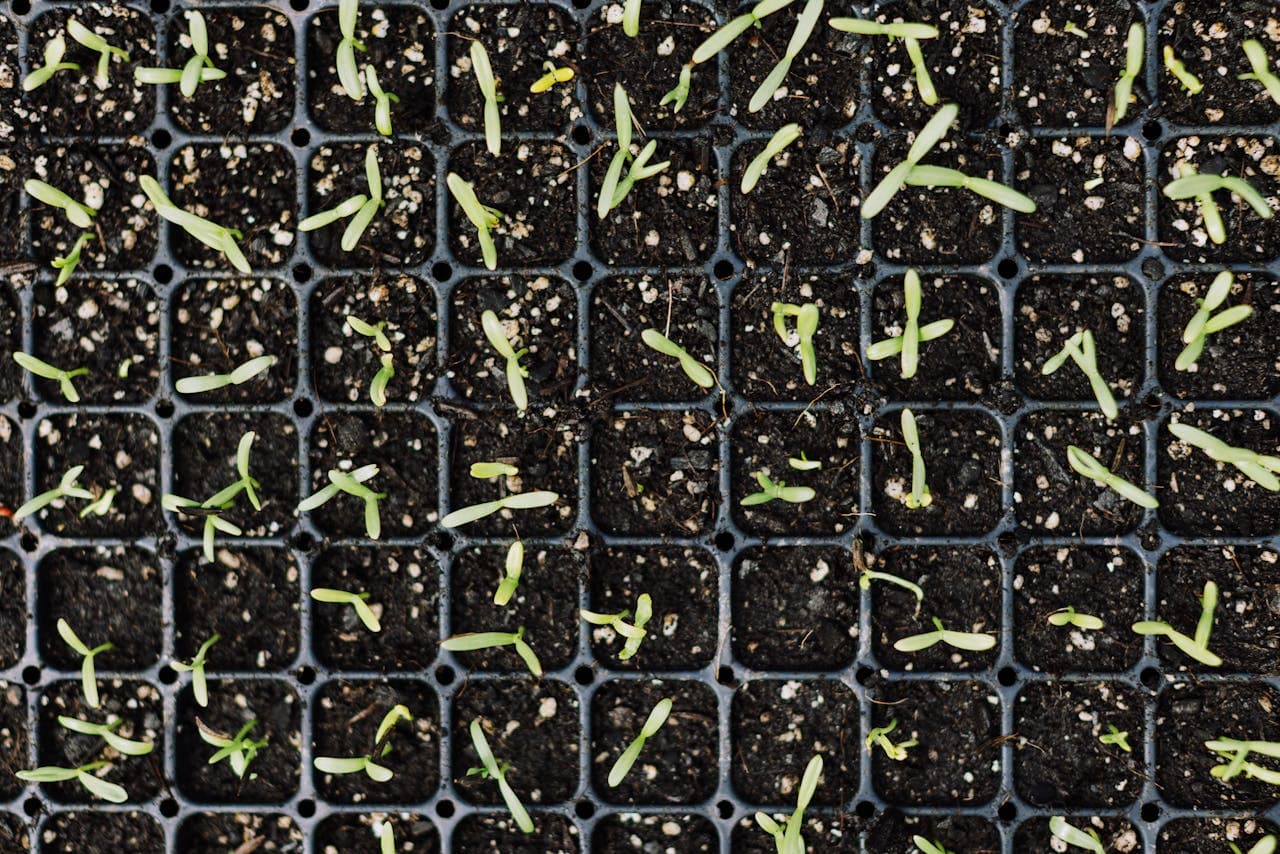
- When seedlings reach 5–7 cm tall, snip to one strong plant per spot. Use scissors, not a pull — pulling disturbs neighbouring roots.
- Thin to 10 cm apart for full-size beets, 20 cm for full-size chard.
- Eat the thinnings — beet greens and baby chard are excellent in salads.
Soil and water
Both crops want loose, fertile soil with consistent moisture. Beets bred for sweetness depend on potassium — a handful of wood ash or kelp meal worked into the bed at planting helps. Both are sensitive to drought, which causes woody roots and bolting in chard. Mulch with straw or grass clippings once seedlings are 10 cm tall.
Variety picks
- Beet — Detroit Dark Red: Heritage standard, 60 days, sweet, reliable.
- Beet — Bull’s Blood: Deep red leaves and roots. Excellent for baby leaf salads.
- Beet — Chioggia: Italian heirloom with concentric pink-and-white rings inside. Stunning sliced raw.
- Beet — Boldor (golden, monogerm): Sweet golden, no thinning needed.
- Chard — Bright Lights: Mixed-colour stems (red, yellow, pink, white). Beautiful in the garden and on the plate.
- Chard — Fordhook Giant: Heritage white-stem, very productive, classic mild flavour.
Harvesting
Beets:harvest baby beets at 4–5 cm, full-size at 7–9 cm. Don’t let them get bigger than a tennis ball — they go woody. Twist off tops to 2 cm rather than cutting (cutting bleeds juice and stains your kitchen).
Chard:Cut outer leaves at the base when they’re 25–30 cm long, leaving the centre to keep growing. One plant produces leaves continuously from June until hard frost — you’ll be giving chard away by August. It also overwinters in mild winters under heavy mulch.
Found this useful? Share it with someone who'd enjoy it.
Want to learn more?
Explore more plant care guides or find a nursery near you.
More plant care guides
Newsletter — early list
Get on the early list
We're putting together a slow, seasonal newsletter for prairie plant lovers. Drop your email and we'll send the first issue when it goes out. No filler, easy out.
Get on the list