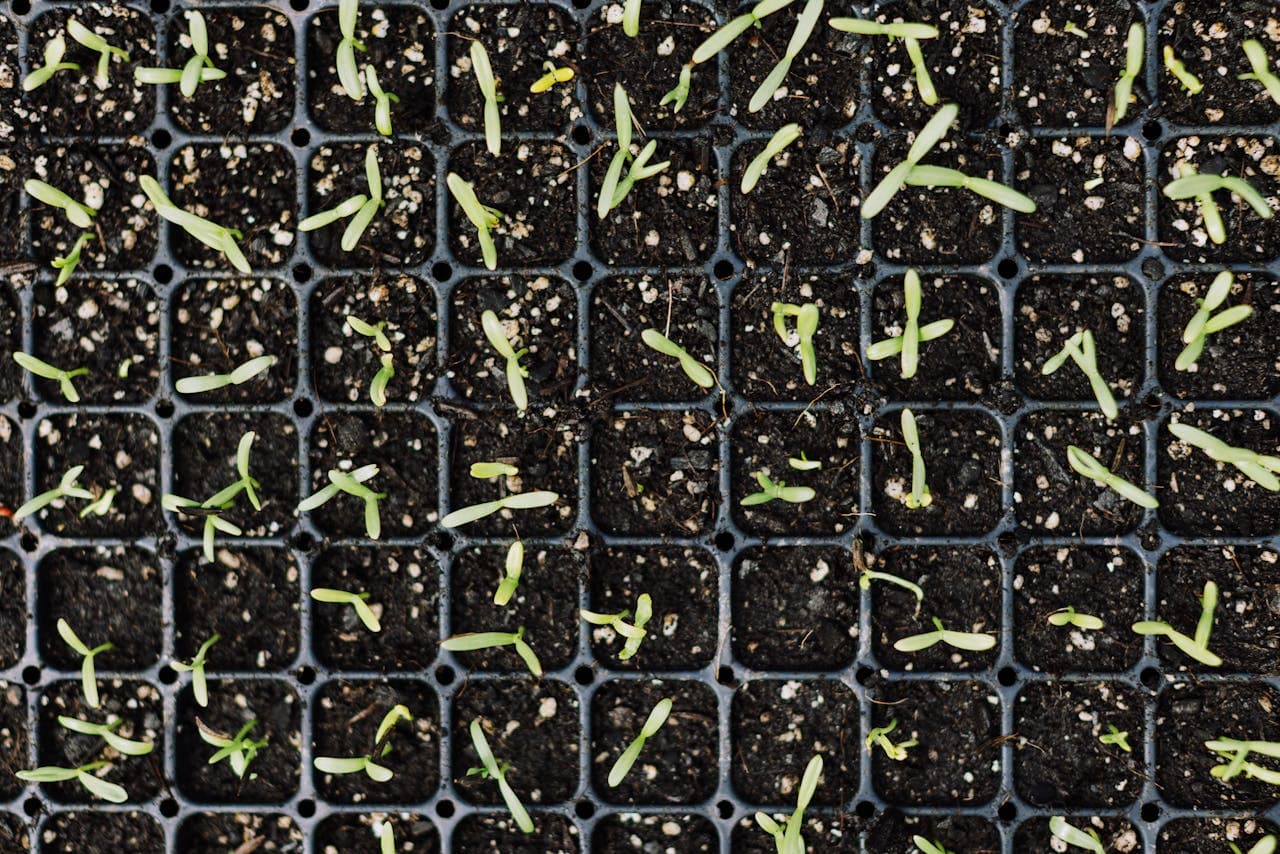
Direct-Sowing Peas in Alberta: One of the Earliest Crops in the Ground
Quick Care Summary
Peas don’t just tolerate cold — they prefer it. Soil temperatures of 5°C are enough for germination, and seedlings shrug off light frosts that would kill a tomato three times over. In Alberta, that means peas are usually the first thing in the ground, sometimes weeks before any other crop. They also fix nitrogen in the soil, leaving the bed richer for whatever follows.
When to plant
Plant peas as soon as the soil can be worked — meaning you can dig a trench without the soil clumping into mud. In southern and central Alberta this is usually mid-to-late April; in the north, early May. The earliest you can get them in is best, because peas hate heat. Once daytime temps consistently exceed 25°C, pea production drops and pods turn tough.
A second planting in late June can give a fall crop that matures in cooler September weather, but the May crop is reliably the bigger one.
Soil prep
Peas don’t need rich soil — they make their own nitrogen via root nodules with rhizobium bacteria. What they need is well-drained, neutral-pH soil. Heavy clay holds water and rots seeds; if your beds are clay-heavy, work in compost the previous fall or plant in raised rows.
If this is the first time you’ve grown peas (or beans) in a bed, treat the seed with garden inoculant powder. The right rhizobium isn’t always present in soil that hasn’t hosted legumes before, and inoculation can double yields. After the first crop the bacteria persist for years.
How to plant
- Make a furrow 2–3 cm deep along your trellis or fence line.
- Drop seeds every 5 cm. Don’t worry about too dense — peas like to grow shoulder-to-shoulder.
- Cover with soil, firm gently, water in. Don’t soak — peas can rot.
- For double rows (more vines per square metre), plant two parallel furrows 8 cm apart on either side of the trellis.
- Space rows 60 cm apart if growing multiple rows.
Trellising
Even “dwarf” pea varieties grow 60–90 cm and produce more, cleaner pods when supported. The simplest support: a row of bamboo stakes with chicken wire or pea netting strung between them, set up at planting time. Branched twigs (pea brush) pushed into the row also work and look beautiful.
Tall vining varieties (1.5–2 m) need sturdier support — a fence panel, cattle panel, or strung wire. They produce longer over the season because new growth keeps reaching higher into the air.
Watering and care
Peas need 2.5 cm of water per week once they start flowering. Before that, normal spring rainfall is usually plenty — overwatering young plants encourages root rot. Once the flowers open, consistent moisture means full pods rather than skinny ones. Mulch with straw or grass clippings once vines are 15 cm tall to keep roots cool and conserve water.
Variety picks for Alberta
- Sugar Snap (snap pea): Edible pods, eat whole. The reigning champion of garden-to-snack peas.
- Cascadia (snap pea): Shorter (75 cm), early, sweet. Great for small gardens or container growing.
- Oregon Sugar Pod II (snow pea): Flat edible pods, very productive. Stir-fry classic.
- Lincoln (shelling pea): Heritage variety from 1908, sweet and reliable. Open-pollinated — save seeds.
- Green Arrow (shelling pea): Long pods, 8–11 peas each. The serious freezer-stocking pea.
Harvesting
Pick pods every 2–3 days once production starts — regular picking keeps the plants flowering. Snap and snow peas are best when pods are bright green and tender, before the seeds inside swell to full size. Shelling peas are ready when pods are plump and rounded but still bright green; if pods start to turn pale or yellow, the peas inside have gone starchy.
When the plants finish in late June or early July, cut them at soil level and leave the roots in the ground — that’s where the fixed nitrogen lives. Plant brassicas, lettuce, or fall greens into the bed next to enjoy the free fertilizer.
Found this useful? Share it with someone who'd enjoy it.
Want to learn more?
Explore more plant care guides or find a nursery near you.
More plant care guides
Newsletter — early list
Get on the early list
We're putting together a slow, seasonal newsletter for prairie plant lovers. Drop your email and we'll send the first issue when it goes out. No filler, easy out.
Get on the list