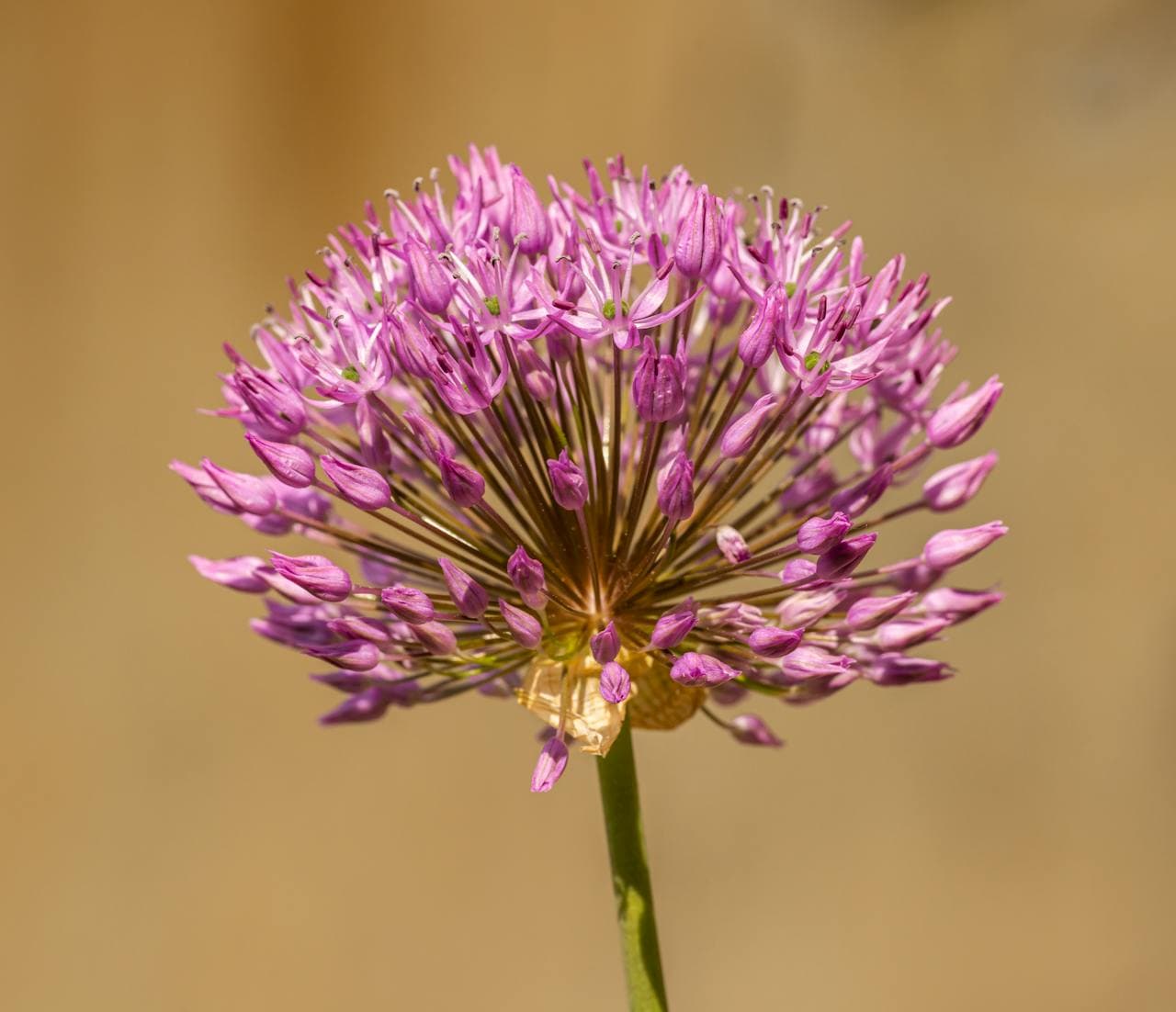
Planting Garlic in the Fall: An Alberta Garlic Calendar
Quick Care Summary
Garlic is the longest-tenant crop in an Alberta garden — nine to ten months from planting to harvest. You plant it in October, watch it shrug off winter under a blanket of mulch, and pull massive bulbs out of the ground the following August. Once you’ve grown your own garlic and seen the difference, the grocery-store stuff is a hard sell.
Why fall planting
Garlic needs a cold dormancy period (vernalization) of about six weeks at temperatures below 10°C to trigger bulb formation. Planted in fall, it sets a small root system before freeze-up, sleeps through winter, then explodes into growth as soon as the soil thaws. Spring-planted garlic produces small, single-clove bulbs at best — not worth the bed space.
Hardneck varieties (the type that thrives in Alberta) are particularly well-adapted to this cycle. They’ve been selected for centuries to handle exactly this kind of long, hard winter.
Hardneck vs softneck
Hardneckgarlic produces a flowering stalk (a scape) and 4–10 large cloves arranged around a central woody stem. It’s cold-hardy, complex-flavoured, and stores 4–6 months. This is what you want in Alberta. Almost all the garlic grown commercially in Canada is hardneck.
Softneckgarlic produces no scape, has more, smaller cloves, and stores up to 9 months. It’s milder and less cold-tolerant — popular in California but unreliable in Alberta winters without significant winter mulch protection.
When to plant
Aim for 4–6 weeks before the ground freezes solid. In Edmonton that means late September through mid-October; in southern Alberta, mid-October through early November. The goal is enough warm soil time for roots to establish (you want 5–10 cm of new root) without enough warm time for green tops to push through and get killed by frost.
If you miss the window, plant anyway. Even garlic planted in November (as long as the ground isn’t frozen) can succeed — it just makes smaller bulbs.
Choosing seed garlic
Buy seed garlic from a local grower if possible — bulbs that have already adapted to Alberta conditions perform best. Farmers’ markets in late August and September are the place. Pick the largest bulbs you can afford; the size of your seed clove directly predicts the size of next year’s bulb.
Don’t plant grocery-store garlic. It’s usually softneck, often imported, and frequently treated with sprout inhibitors that defeat the whole point. It’s also a vector for white rot — a soilborne disease that ruins beds for decades.
How to plant
- Just before planting, separate the bulb into individual cloves. Don’t do this earlier — cloves dry out fast.
- Skip any cloves that are bruised, mouldy, or smaller than a fingertip. Eat those.
- Plant cloves 5 cm deep, pointed end up, flat end down. Pointed end up is critical — upside-down cloves still grow but produce twisted, deformed bulbs.
- Space 15 cm apart in the row, 30 cm between rows.
- A 1.2 m × 1.2 m bed holds about 50 cloves and produces 50 full bulbs nine months later.
Winter mulching (the critical step)
After planting and a watering-in, wait 2–3 weeks for the cloves to root. Then, before the ground freezes hard, apply 10–15 cm of straw or chopped leaf mulch over the bed. This isn’t for warmth — it’s to prevent the freeze-thaw cycles that heave shallowly-rooted garlic right out of the soil.
Pull the mulch back to a 5 cm layer in early April once green shoots are pushing up. Leave that lighter layer in place all summer — it suppresses weeds and conserves moisture during the bulbing phase.
The growing season
April–May: green shoots emerge, plants put on leaves. June: scapes appear — the curly flower stalks. Cut them off when they’ve made one full curl (snap them by hand, no tools). Removing scapes redirects energy to the bulb and increases final size by 20–30%. Eat the scapes — they’re fantastic in stir-fries, pesto, or roasted.
July: bulbs are sizing up. Stop watering 10–14 days before harvest to let the wrappers cure on the bulb. August: ready to dig.
Knowing when to harvest
Watch the leaves. Harvest when 4–5 of the lower leaves have browned but 4–5 upper leaves are still green. Each green leaf corresponds to a layer of papery wrapper still on the bulb — you want enough wrappers to protect the bulb in storage but not so many that the bulb is over-wrapped and missing curing time.
Lift bulbs gently with a fork — pulling on the stem alone snaps cloves off the basal plate. Brush off (don’t wash) loose soil and hang the whole plant, leaves and all, in a shaded, well-ventilated spot for 3–4 weeks of curing.
Variety picks for Alberta
- Music: Large bulbs, 4–5 huge cloves, robust flavour. The most popular hardneck in Canada and reliably winter-hardy.
- Russian Red: Heirloom hardneck with purple-streaked wrappers. Hot, complex flavour. Excellent Alberta performer.
- Susan Delafield: Manitoba-bred porcelain hardneck. Huge bulbs, mild and sweet for hardneck.
- Persian Star: Fewer, larger cloves with subtle warmth rather than heat. Excellent storage.
Found this useful? Share it with someone who'd enjoy it.
Want to learn more?
Explore more plant care guides or find a nursery near you.
More plant care guides
Newsletter — early list
Get on the early list
We're putting together a slow, seasonal newsletter for prairie plant lovers. Drop your email and we'll send the first issue when it goes out. No filler, easy out.
Get on the list