Planting Potatoes in Alberta: Timing, Spacing & Hilling
Quick Care Summary
The May Long Weekend potato planting is an Alberta tradition for a reason: by mid-May the soil has usually warmed enough for sprouts to emerge, and any frost that hits the leaves afterward only kills back the top growth — the tubers underground keep going. Potatoes are forgiving, productive, and one of the few crops where the leftover seed (a kept tuber) gives you next year’s start for free.
When to plant
Soil temperature matters more than calendar date. Aim for 7°C at 10 cm depth — usually the third week of May in central Alberta, the second week in southern Alberta, and the last week of May in the north. If the soil is still cold and wet, seed potatoes rot rather than sprout. Better to wait an extra week than push early.
A simple test: stick your hand into the soil at planting depth. If it feels cool but not cold, you’re ready. If it feels chilly enough that you want to pull your hand out, give it a few more days.
Chitting (pre-sprouting) — optional but worth it
Three to four weeks before planting, set seed potatoes in a single layer in an egg carton or open tray with the “rose end” (the end with the most eyes) facing up. Keep them somewhere bright and cool — 10–15°C is ideal. They’ll produce stubby green sprouts about 1–2 cm long by planting time.
Chitted potatoes break ground 1–2 weeks faster, which matters in Alberta’s short season. They also tolerate slightly cooler soil at planting because they’re already actively growing.
Cutting seed potatoes
Larger seed potatoes (egg-sized or bigger) can be cut into pieces with at least two eyes per piece. Make the cuts 1–2 days before planting and let the cut surfaces dry — this “suberization” forms a callus that resists rot. Smaller seed potatoes plant whole.
How to plant
- Dig a trench 15 cm deep, or individual holes if working with a small bed.
- Place seed potatoes 30 cm apart along the row, eyes pointing up.
- Cover with 8–10 cm of soil — not the full 15 cm yet. You’ll fill the rest as you hill.
- Space rows 75 cm apart for room to hill on each side.
- Don’t fertilize heavily at planting — rich soil produces leafy plants and fewer tubers. Compost-amended beds are plenty.
Hilling — the step home gardeners skip
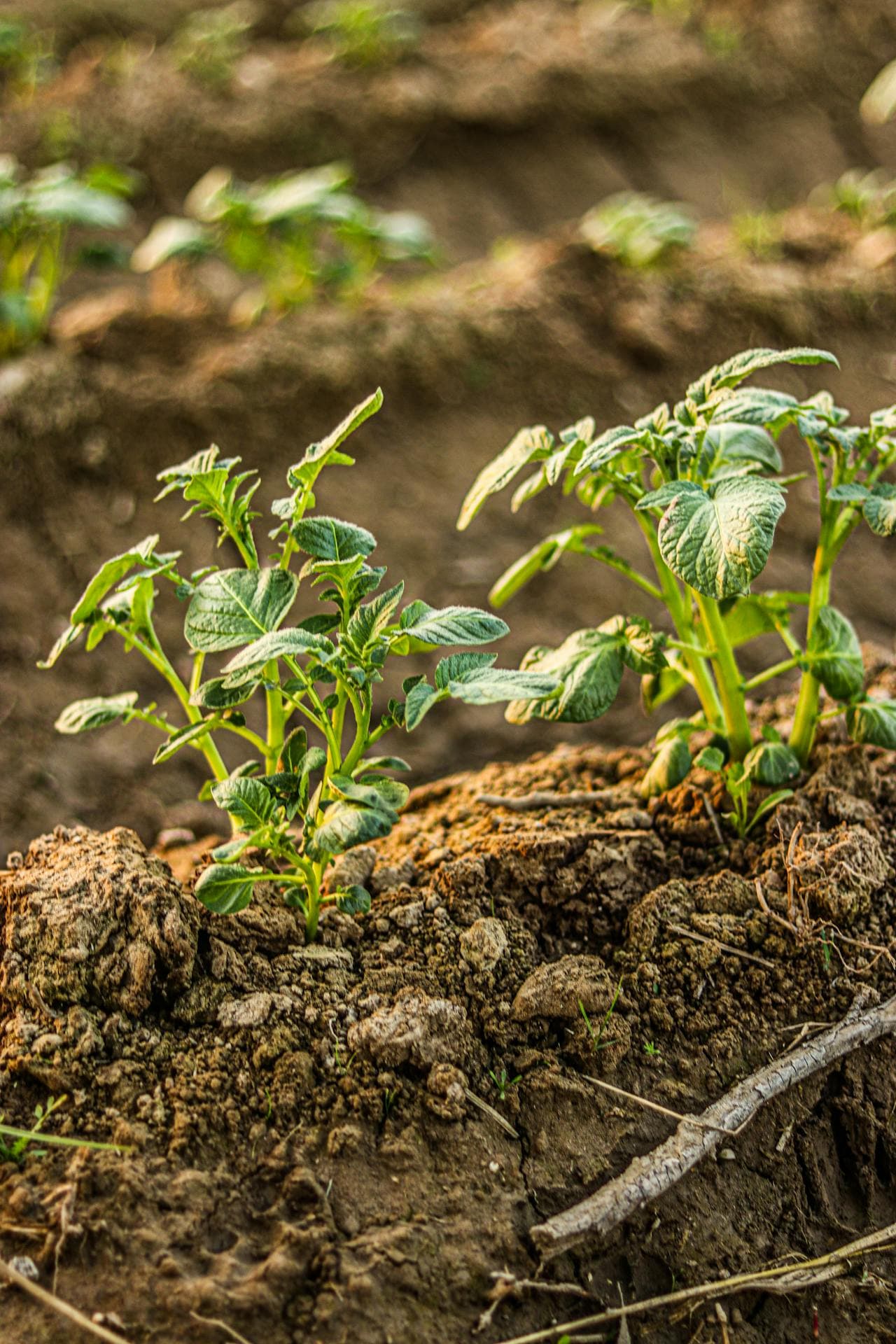
Potatoes form along the buried portion of the stem, not just at the seed piece. Hilling — piling more soil up around the growing stem — gives the plant more buried stem to set tubers along, dramatically increasing yield.
When the plants are about 20 cm tall, draw soil up around the stems until only the top 5–7 cm of leaves show. Repeat every 2–3 weeks until early July, when the plants flower. By harvest, you should have a 25–30 cm tall mound where the trench used to be.
Mulch hilling works too: instead of soil, pile straw or grass clippings around the stems. Cleaner harvest, but you need a thicker layer to block light from the developing tubers (any tuber exposed to light turns green and is mildly toxic).
Watering
Potatoes need consistent moisture from flowering through tuber-set (about late June through mid-August). Inconsistent watering causes hollow centres, growth cracks, and knobbly tubers. Aim for 2.5–4 cm of water per week including rainfall, applied in deep soakings rather than daily sprinkles.
Variety picks for Alberta
- Yukon Gold: Mid-season, all-purpose, the classic Canadian yellow. Reliable in Alberta.
- Russet Norkotah: Late-season, baking-quality. Needs the full season — chit early.
- Warba: Early (60 days), great for new potatoes. Doesn’t store well, eat fresh.
- Norland (red): Early, productive, scab-resistant. Excellent first-time grower potato.
- Russian Banana fingerling: Late, low-yielding but specialty market quality. Plant a few rows for variety.
When to harvest
For new potatoes, harvest 2–3 weeks after the plants flower. For storage potatoes, wait until the tops have died back naturally (usually mid- to late September), then leave the tubers in the ground for two more weeks for the skins to set. Lift on a dry day, brush off (don’t wash) loose soil, and cure in a dark spot at 10°C for two weeks before moving to storage.
Found this useful? Share it with someone who'd enjoy it.
Want to learn more?
Explore more plant care guides or find a nursery near you.
More plant care guides
Newsletter — early list
Get on the early list
We're putting together a slow, seasonal newsletter for prairie plant lovers. Drop your email and we'll send the first issue when it goes out. No filler, easy out.
Get on the list