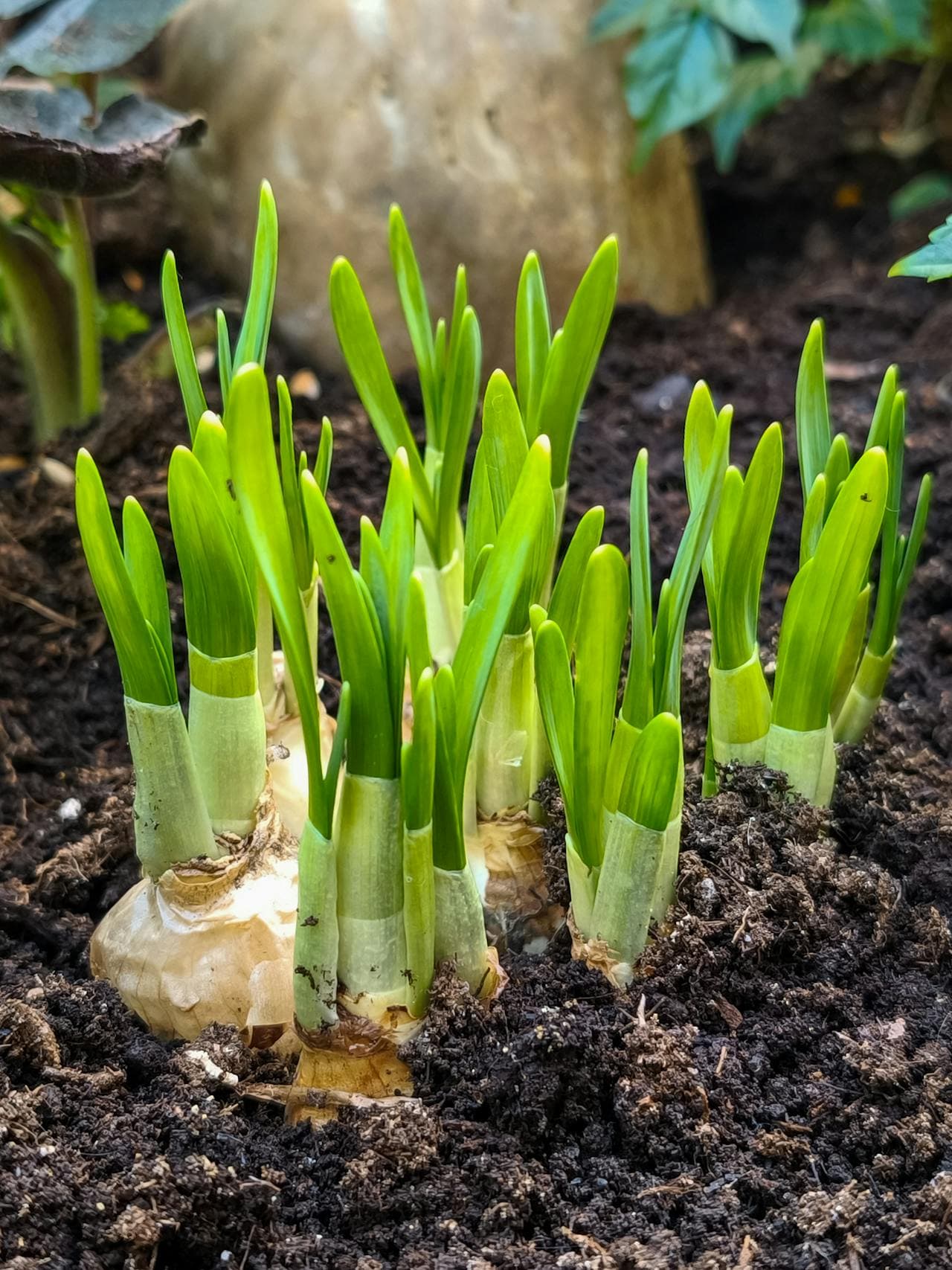
Planting Spring-Flowering Bulbs in Alberta: October Window
Quick Care Summary
Spring bulbs are an October job that pays off in late April and May, when the rest of the garden is still mud and bare branches. A handful of crocuses scattered through a flower bed, a row of tulips along a path, a clump of daffodils naturalizing in the lawn — small efforts, dramatic returns. Plant them once, get years of bloom from most varieties.
When to plant
Plant when soil temperatures consistently sit below 10°C — usually late September through mid-October in Alberta. Bulbs need 12–14 weeks of cold dormancy to bloom properly, and roots need to establish before deep freeze, so timing matters. Too early and they sprout before winter; too late and roots can’t establish before the ground locks up.
If you missed the window, plant anyway up until the ground freezes hard. Even early-November plantings can succeed; they just bloom slightly later than ideal.
Where to plant
- Sun: Most spring bulbs want full sun in spring — under deciduous trees works because leaves haven’t emerged yet.
- Drainage: Bulbs rot in standing water. Avoid low spots; on heavy clay, plant on a slight mound or in raised beds.
- Where you’ll see them: By front entryways, along walking paths, around mailbox posts — spots you pass daily in April and May.
Depth and spacing
Plant 3 times the bulb’s height deep, and 2–3 times the bulb’s width apart. For tulips, that’s 15–20 cm deep, 10 cm apart. For crocuses (small), 5 cm deep, 5 cm apart. For daffodils (medium), 12–15 cm deep, 10 cm apart. Larger alliums go 20–25 cm deep.
Plant pointy end up (where the green shoot will emerge), root plate down. If you can’t tell which is which, plant sideways — the shoot finds its way up regardless.
The clump principle
Bulbs look better in clumps than in straight lines. Plant in groups of 7–15 (odd numbers; clumps look more natural than even numbers, for reasons gardeners have argued about for centuries). Dig a wide bowl-shaped hole, place the bulbs in a tight cluster, cover. Three or four such clumps spaced through a bed give a much better display than fifty bulbs spaced evenly.
The squirrel and vole problem
Squirrels dig up tulips and crocuses freshly planted — the disturbed soil tells them something tasty was buried. Voles tunnel under and eat them in winter. Three defences:
- Plant deeper than the books say. 20+ cm deep deters squirrels.
- Top with chicken wire for the first month after planting. Lay flat over the soil, anchor with rocks; remove in spring before shoots emerge.
- Plant unappetizing varieties. Daffodils, alliums, fritillaria, scilla, and grape hyacinths all contain compounds that deter rodents and squirrels. Tulips and crocuses are favourites; if your yard has heavy pressure, focus on the safe varieties.
Variety picks for Alberta
- Crocuses: Earliest bloomer, often through snow. Naturalize freely in lawns.
- Daffodils: Reliable, long-lived, rodent-proof. Naturalize where left alone. Look for “narcissus” for the ruffled-trumpet types.
- Tulips: Showiest spring bulb. Most modern hybrids are short-lived in Alberta (3–5 years before declining); species tulips and Darwin hybrids last longer.
- Alliums: Late spring/early summer, dramatic round flower heads, bee magnets. Drumstick, ‘Globemaster’, ‘Purple Sensation’ all reliable.
- Hyacinths: Fragrant, mid-spring. Bloom 4–6 years before declining; replace as needed.
- Snowdrops, scilla, chionodoxa: Tiny early-spring bulbs that naturalize beautifully in lawn or under trees. Plant in dense clumps.
After planting
Water in well. Once the ground freezes (usually late October or early November), apply a 10 cm layer of straw or shredded leaf mulch to prevent freeze-thaw heaving. Pull mulch back in early April once shoots emerge.
After spring bloom, leave foliage alone until it yellows naturally — the bulb is recharging for next year. Cutting green leaves shortens the bulb’s life.
Found this useful? Share it with someone who'd enjoy it.
Want to learn more?
Explore more plant care guides or find a nursery near you.
More plant care guides
Newsletter — early list
Get on the early list
We're putting together a slow, seasonal newsletter for prairie plant lovers. Drop your email and we'll send the first issue when it goes out. No filler, easy out.
Get on the list