Christmas Cactus
Schlumbergera bridgesii
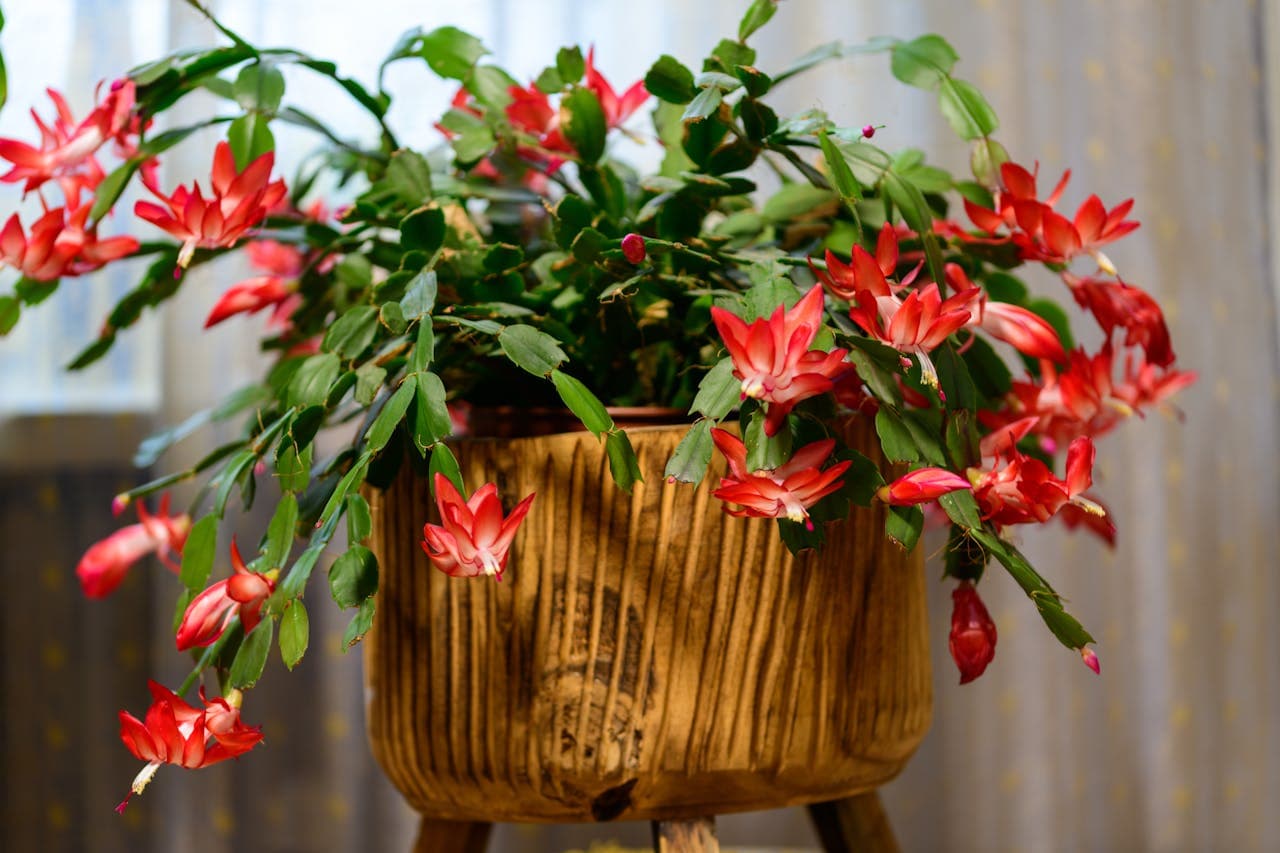
An epiphytic Brazilian cactus that grows on tree branches in the cloud forests of southeastern Brazil, not in deserts. Has flat segmented stems (technically modified stems called cladodes) that arch over the pot edge, with hot pink, red, white, salmon, or purple bell-shaped flowers in late November or December in northern homes. A long-lived heirloom plant: specimens passed down through generations sometimes reach 50 to 100 years old and grow into magnificent cascading clouds of blooms. To trigger reliable blooms, give the plant 6 to 8 weeks of cool nights (10 to 15 C) and 12 to 14 hours of complete darkness each night starting in mid-September. A spare bedroom or covered porch works well. Once buds form, return to normal light and warmth and stop moving the pot: drafts and rotation cause bud drop.
Quick Facts
Distribution
Indoor (native to coastal mountains of southeastern Brazil)
Light
Bright indirect light. An east-facing window is ideal. Direct afternoon sun scorches the cladodes
Bloom Time
Late November to December, sometimes a second smaller flush in spring
Soil
Loose, well-draining mix: standard potting soil with 30 percent added perlite or orchid bark. A pure cactus mix is too lean; this is a forest cactus, not a desert one
Water
When the top 3 cm of soil is dry. Less in winter once flowering finishes. Never let the pot sit in standing water
Growing & Cultivation
Propagation
Snap off a 2 to 3 segment piece at a natural joint, let it callous over for 24 hours, then push the cut end shallowly into moist potting mix. Keep barely moist. Roots in 3 to 4 weeks. Pieces also root readily in a glass of water
Repotting
Only every 3 to 4 years. Christmas cactus blooms best when slightly pot-bound. Repot in late winter after blooming finishes, into a pot just one size larger