Hummingbird Mint
Agastache (various species and hybrids)
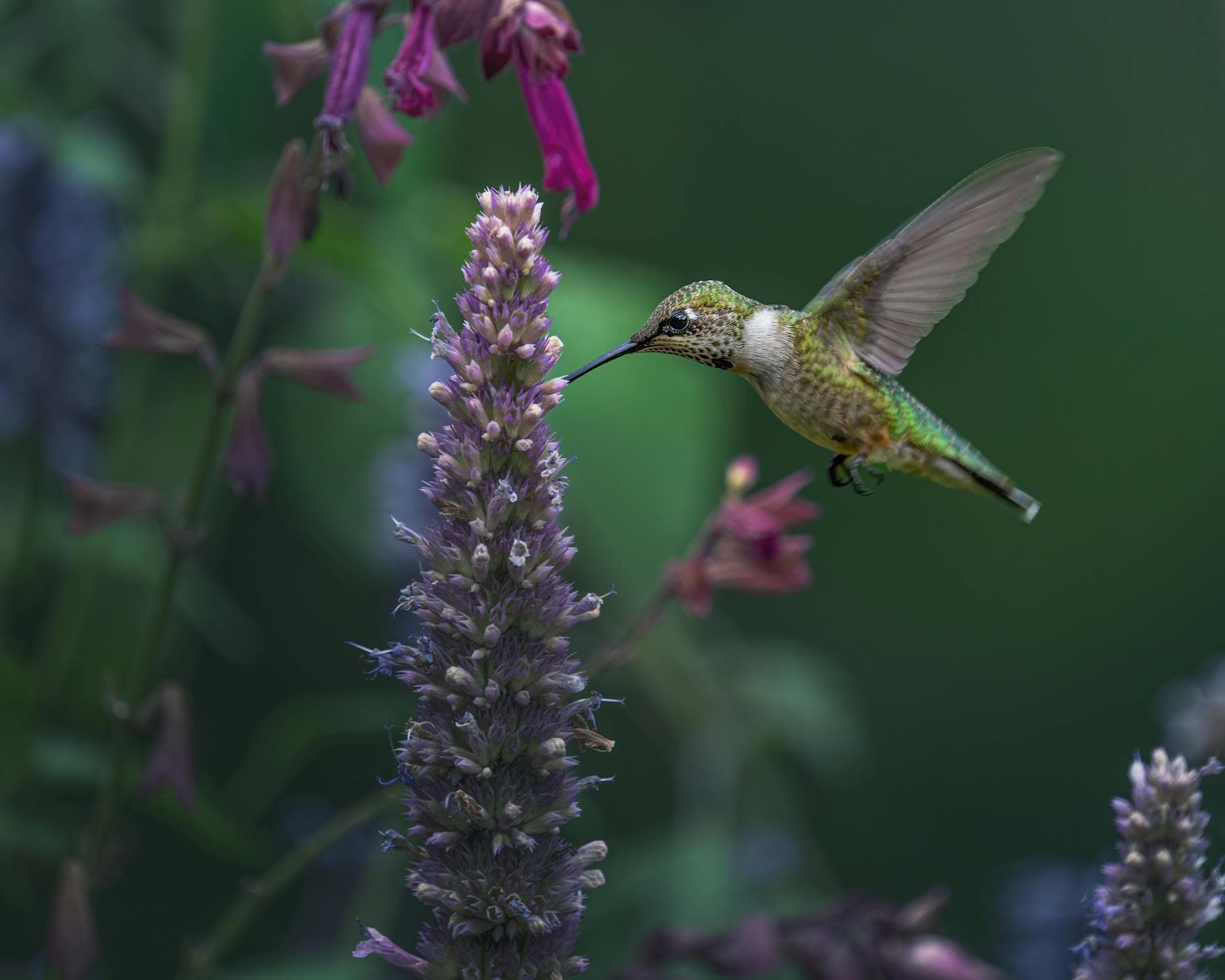
Hummingbird Mint refers to the broader Agastache genus grown as garden ornamentals. Hummingbirds love them. The most common species sold in Edmonton garden centres are the southwestern natives Agastache rupestris (sunset hyssop, coral flowers), Agastache cana (Texas hummingbird mint, magenta flowers), and Agastache aurantiaca (orange hummingbird mint), plus hardy hybrids like 'Blue Fortune' and Korean Hyssop (Agastache rugosa). Honest Edmonton note: most southwestern Agastache species are zone 5 or warmer, so they often act like short-lived perennials or annuals here. The reliably hardy options for Edmonton (zone 4a) are 'Blue Fortune' (A. rugosa x A. foeniculum) and the prairie native Anise Hyssop (Agastache foeniculum, profiled separately as Giant Hyssop in this catalogue). Spikes of tubular flowers from July to September on aromatic licorice or mint-scented foliage. Drought-tolerant once established and one of the highest-nectar pollinator plants for the prairie.
Quick Facts
Distribution
Garden ornamental in Alberta. 'Blue Fortune' and Korean Hyssop hardy to Zone 4 (reliable in Edmonton). Southwestern species (rupestris, cana, aurantiaca) are Zone 5 or 6 and often grown as annuals here.
Light
Full sun. Tolerates light afternoon shade but flowers and foliage scent are strongest in full sun.
Bloom Time
July–September (often re-blooms with deadheading)
Soil
Well-drained, lean soil. Hummingbird Mint dislikes Edmonton's heavy clay if it stays wet, especially over winter. In clay yards, plant on a slight mound or amend with grit and compost. Average to dry fertility is ideal; rich soil produces floppy growth.
Water
Low to moderate. Drought-tolerant once established. Avoid soggy winter soil, the most common cause of Edmonton overwinter loss.
Growing & Cultivation
Best Planting Time
Plant out late May to mid-June after last frost. Indoor seed starting 8 to 10 weeks before last frost (early to mid-March in Edmonton).
Propagation
Surface-sow seed (light required; do not cover). Germination 1 to 4 weeks at 21 C. Most ornamental cultivars are propagated by softwood stem cuttings in early summer or by spring division of clumps. Self-seeding occurs but seedlings of named cultivars will not come true.
Pruning / Splitting
Cut back hard in spring once new growth shows; do not prune in fall, as standing stems trap snow that insulates the crown and improves overwintering. Deadhead spent flower spikes in summer to extend bloom.
Spacing
30 to 45 cm. Good airflow prevents the mild powdery mildew that sometimes appears in humid late summer.
Always verify plant identification with multiple sources before consuming any wild plant. This information is for educational purposes only.