Showy Milkweed
Asclepias speciosa
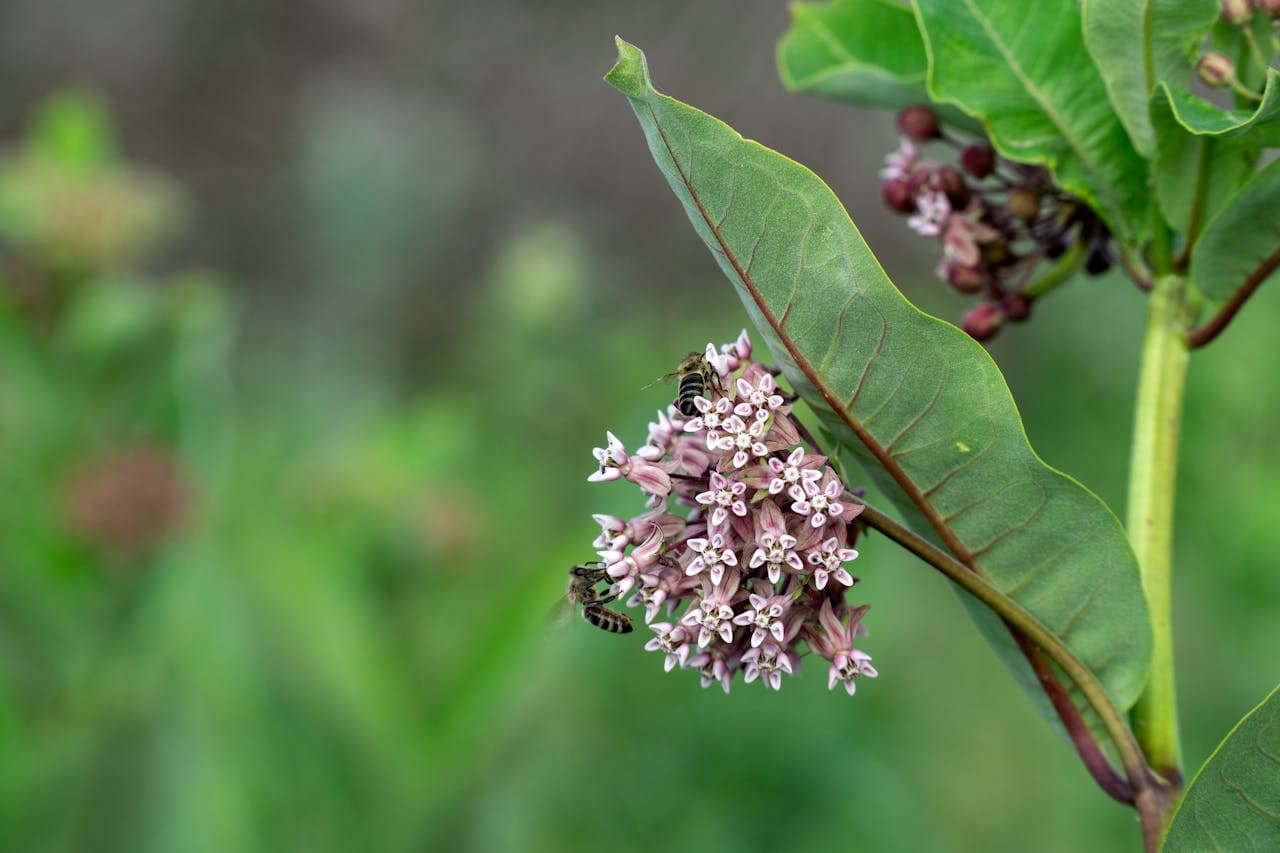
Showy milkweed is the prairie milkweed: native from southern Manitoba through Saskatchewan and into the southeastern corner of Alberta, also widely planted further north as the obligate host plant for monarch butterflies. Pinkish-mauve, sweetly fragrant umbel flowers appear in July, attended by dozens of pollinator species: bumble bees, native solitary bees, hummingbirds, hawk moths, and (in years when monarchs reach the prairies) the iconic monarch caterpillar itself. Monarchs lay eggs only on milkweeds; the caterpillars sequester milkweed alkaloids and become unpalatable to birds. Showy milkweed is more clumping and better-behaved than its eastern cousin Common Milkweed, making it the easier choice for ornamental beds. It spreads slowly by rhizomes but will not run away. Hardy to Zone 2 with reliable establishment from seed when winter-sown or cold-stratified.
Quick Facts
Distribution
Native to the southern prairies and intermountain west. Naturally occurs in southeastern Alberta but plant successfully throughout the southern half of the province (Zone 2 with snow cover, Zone 3 reliably).
Light
Full sun. Will tolerate light afternoon shade but flowers and monarch use are strongest in sun.
Bloom Time
Early July through early August
Soil
Average to lean, well-drained. Tolerates clay, loam, and sandy soil. Established plants resent disturbance because of the deep taproot.
Water
Low to moderate. Drought-tolerant once established. Seedlings need consistent moisture in year one to root deeply.
Growing & Cultivation
Best Planting Time
Direct-sow in fall (October to November, for natural stratification) or in spring after 30 to 60 days cold-moist stratification. Transplant young seedlings before the taproot develops, or accept some loss.
Propagation
Seed is the standard method. Surface-sow on prepared soil (light required for germination). Cold-moist stratify (in damp sand in the fridge) for at least 30 days before spring sowing, or sow in fall outdoors. Rhizome divisions of mature clumps work but transplant slowly.
Pruning / Splitting
Cut spent stems back in late fall or early spring. Leave seedpods to mature if you want self-seeding, or harvest the pods before they split for controlled propagation.
Seed Collection
Pods ripen in September. Harvest just before pods split fully; let dry in a paper bag, then strip seed from the silky parachutes (a hair dryer on low through a paper bag helps the floss release).
Spacing
45 to 60 cm. Will form slow-spreading clumps of 30 to 60 cm wide in 3 to 5 years.