Sour Cherry
Prunus × kerrasis (U of S Romance series)
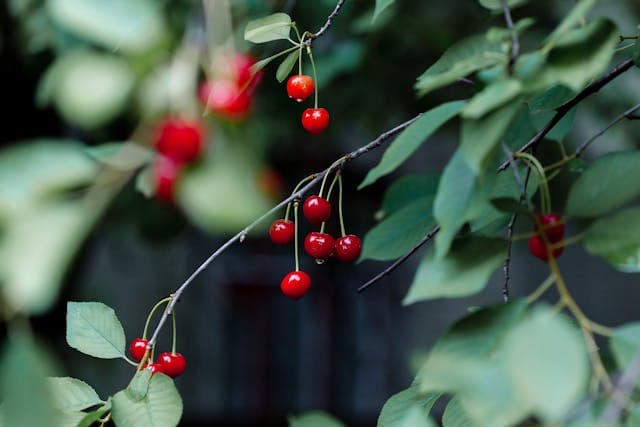
Prairie sour cherries are dwarf bush cherries (1.5 to 2.5 m tall) bred at the University of Saskatchewan to thrive on the Canadian prairies. The Romance series ('Carmine Jewel', 'Crimson Passion', 'Juliet', 'Romeo', 'Cupid', 'Valentine') was released between 1999 and 2004 and changed what was possible for prairie orchards: fully self-fertile (no pollinator partner required), bone-hardy to roughly minus 40 C, and capable of producing 25 kg or more of dark red cherries per mature bush. The fruit is sweeter than traditional Montmorency sour cherries, with brix levels typically reading 17 to 22 percent at full ripeness in early August. Excellent fresh, frozen, or processed into pies, sauces, wine, and jam. Plants begin bearing in year 3 and reach full production around year 7. The most common Edmonton mistake is harvesting too early: leave fruit on the bush until it is fully dark and slightly soft, usually a few weeks longer than you would expect.
Quick Facts
Distribution
Garden orchard shrub bred for the Canadian prairies. Hardy throughout Alberta (Zone 2/3).
Light
Full sun. South or west-facing sites give the best ripening and brix levels.
Bloom Time
Mid to late May (white flowers; reliable bee draws)
Soil
Well-drained loam, ideally pH 6.0 to 7.5. Tolerates Edmonton's Black Chernozem well. Heavy clay is workable on a slight mound.
Water
Moderate. Consistent moisture from bloom through fruit set (mid-May through July) gives the largest berries. Reduce water in August as cherries colour up.
Growing & Cultivation
Best Planting Time
Spring (late April through May) before bud break, or early fall.
Propagation
Hardwood or softwood cuttings of named cultivars, or tissue culture (most commercial supply). Seed propagation is possible but does not produce true cultivars.
Pruning / Splitting
Light annual pruning in late winter once bushes are 4 to 5 years old: remove the oldest woody stems at the base each year, keep the bush open enough for air and light to penetrate. Sour cherries fruit on second- and third-year wood, so do not strip all the old growth at once.
Spacing
1.5 to 2 m between bushes for a hedge, 2.5 m for free-standing specimens.
Always verify plant identification with multiple sources before consuming any wild plant. This information is for educational purposes only.