Sunflower
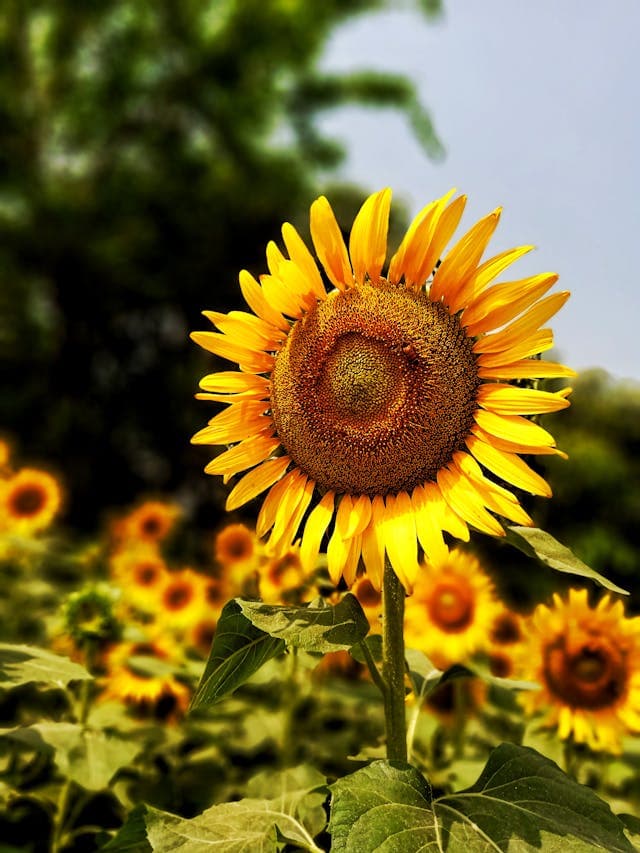
Helianthus annuus
The common annual sunflower is one of the few major crop plants domesticated in North America (Indigenous peoples of the central plains were growing improved sunflowers more than 4,000 years ago). Grown today as ornamentals, cut flowers, bird seed, oil seed, and snack seeds. In Edmonton, sunflowers are an easy, high-impact summer annual that direct-sows in late May, germinates within a week, and bursts into bloom in August and September. Tall classic varieties ('Mammoth', 'Russian Giant', 'Skyscraper') reach 2.5 to 3.5 m on a single stem with one massive head; branching varieties ('Autumn Beauty', 'Italian White', 'Velvet Queen') reach 1.5 to 2 m and produce a dozen or more flowers per plant from August through hard frost. Pollinator-friendly open-centered varieties feed bumble bees, leafcutter bees, and honey bees abundantly. The seed heads that follow feed chickadees, goldfinches, blue jays, and red-breasted nuthatches into winter if left standing. Sunflower seed germinates strongly at warm soil temperatures (15 C and up), so wait until late May before direct-sowing in Edmonton.
Quick Facts
Distribution
Summer annual across Alberta. Native to central North America (domesticated by Indigenous peoples of the central plains).
Light
Full sun. The single non-negotiable for sunflowers.
Bloom Time
August through hard frost (single-headed varieties), or July through hard frost (branching varieties)
Soil
Average to rich, well-drained. Edmonton's Black Chernozem grows excellent sunflowers. Heavy feeders; tall varieties need solid soil to anchor against wind.
Water
Moderate. Consistent moisture from germination through bud formation. Drought-tolerant once flowering.
Growing & Cultivation
Best Planting Time
Direct-sow late May after soil warms to 15 C. Indoor starts work but transplant shock is real; direct-seeding usually wins. Successive sowings every 3 weeks through late June extend bloom into October.
Propagation
Direct-sow seed 2 to 3 cm deep, 30 to 60 cm apart depending on variety. Germinates in 5 to 10 days at 15 to 21 C. Mass plantings should account for variable germination and birds digging up seed; cover beds with floating row cover until seedlings emerge.
Pruning / Splitting
None during the season. Tall single-head varieties may need staking in windy yards. Cut heads in September after petals drop and seeds plump, then dry indoors for winter bird feed.
Seed Collection
Cut heads when the back of the disc turns yellow to brown and seeds are plump. Dry indoors (hang upside down in a paper bag) for 2 to 3 weeks, then rub seed off the head. Save the largest seeds from the largest heads to plant next year.
Spacing
30 to 60 cm for branching varieties, 60 to 90 cm for tall single-head varieties.
Always verify plant identification with multiple sources before consuming any wild plant. This information is for educational purposes only.