Wild Plum
Prunus americana
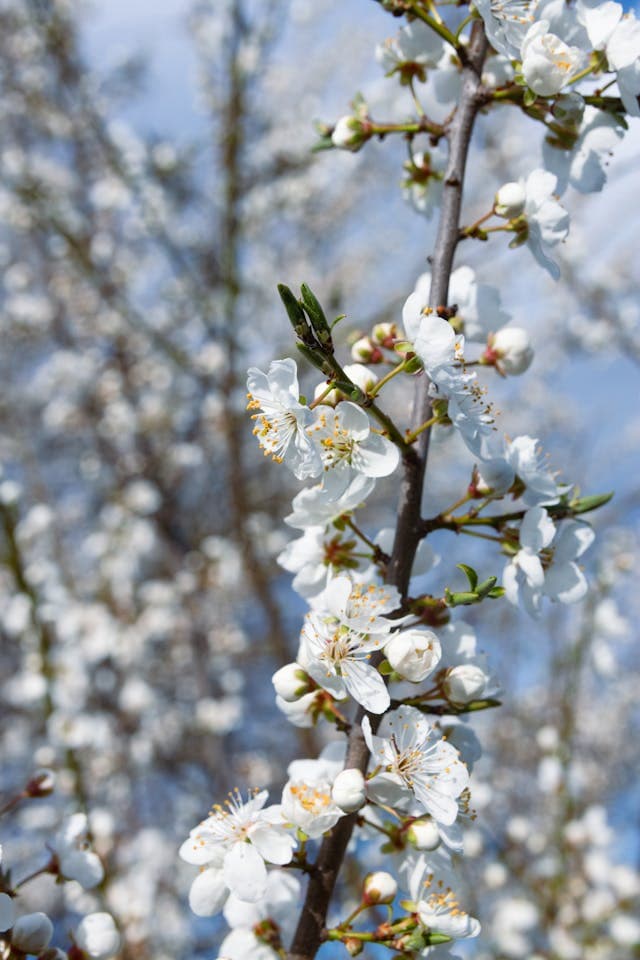
Wild plum is a small native suckering tree of southeastern Saskatchewan, southern Manitoba, and the eastern edge of Alberta's Aspen Parkland, often planted across the wider prairies as a shelterbelt and wildlife species. White spring blossoms cover the leafless branches in mid May, followed by red to dark purple plums about 2 to 3 cm across in late August and September. The flavour is tart and aromatic, excellent for jam, jelly, and country wine; some seedlings yield genuinely sweet fresh-eating fruit. Wild plum thickets are extraordinary wildlife habitat: pollinators (early bees especially), birds, small mammals, and deer all use them. The tree suckers vigorously from roots and will form a dense colony if not managed, so site it where you want a thicket or be prepared to mow suckers. Cross-pollination between two or more seedlings or cultivars (such as 'Brookgold', 'Pembina', or 'Brookred', all prairie-bred) dramatically improves yields.
Quick Facts
Distribution
Native to the Aspen Parkland and prairie regions of Alberta, Saskatchewan, and Manitoba. Hardy throughout Alberta (Zone 2/3).
Light
Full sun. Tolerates light shade at woodland edges but flowers and fruits more reliably in sun.
Bloom Time
Mid May (one of the earliest flowering native fruit trees, important for emerging native bees)
Soil
Adaptable. Tolerates a wide range of soils, from sandy loam to clay, as long as drainage is reasonable. Edmonton-area soils are well within its tolerance.
Water
Low to moderate. Drought-tolerant once established. Supplemental water during establishment (first two years) is helpful.
Growing & Cultivation
Best Planting Time
Spring (late April through May) bare-root, or any time potted.
Propagation
Seed (cold-stratify the pits for 90 to 120 days in moist sand at 1 to 5 C, then sow in spring). Root suckers from established trees transplant readily in early spring. Grafted named cultivars are sold for reliable fruit quality.
Pruning / Splitting
Light shaping in late winter. Remove crossing or damaged branches. Suckers can be mowed off if you want a tidy tree rather than a thicket.
Seed Collection
Pick fully ripe fruit (dark and slightly soft) in late August or September. Clean pits in water and dry briefly before stratification.
Spacing
3 to 4 m between trees, or plant intentionally as a thicket and let it knit together over time.
Always verify plant identification with multiple sources before consuming any wild plant. This information is for educational purposes only.